Yes, a gasoline-powered Stihl leaf blower needs oil, but it mixes with the gasoline, not separately. Stihl blowers use a 2-stroke engine that requires a 50:1 fuel-to-oil ratio. Mix high-quality 2-stroke oil, such as STIHL HP Ultra, with fresh unleaded gas to lubricate the engine and prevent damage.
Do STIHL leaf blowers need oil?
The answer to whether your STIHL leaf blower needs oil depends entirely on what type of blower you own. Understanding the oil requirements is fundamental to the proper operation and longevity of your equipment.
Gas-powered vs battery-powered models
Gas-powered and battery-powered STIHL blowers differ significantly in their maintenance needs. Gas blowers feature internal combustion engines that require proper lubrication to function. Conversely, battery-powered models use electric motors that don’t require oil.
Gas blowers offer a significant advantage in raw power, making them ideal for demanding tasks like clearing large areas or tackling stubborn leaf piles. However, this power comes with additional maintenance requirements, including precise fuel-oil mixing. Battery-powered models sacrifice some power for convenience, eliminating the need for oil mixing altogether.
Why is oil essential for 2-stroke engines?
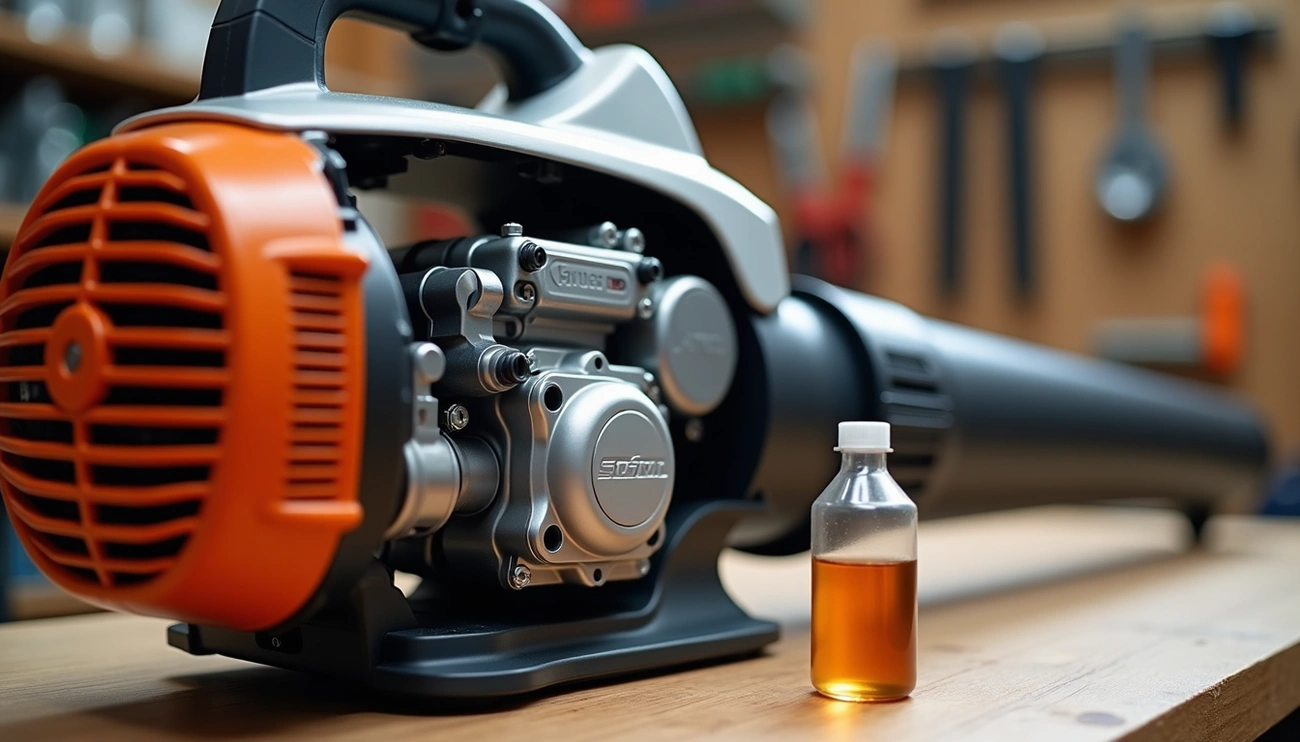
Most STIHL gasoline-powered leaf blowers use 2-stroke engines that require a specific oil-to-gasoline mixture. Unlike 4-stroke engines with separate oil reservoirs, 2-stroke engines mix oil directly with fuel.
Oil in a 2-stroke engine serves multiple critical functions beyond basic lubrication:
- Provides lubrication to moving parts that can operate at speeds up to 15,000 rpm
- Protects against harmful deposits accumulating in the exhaust system
- Keeps the combustion chamber and piston clean for efficient operation
- Prevents carbon buildup around engine components
- Protects against corrosion and keeps the crankcase clean
STIHL oils contain special additives that enhance performance and protection. Their formulations include a mineral base oil (HP) or a fully synthetic oil (HP Ultra), with additives that provide specific viscosity, anti-wear properties, and help reduce carbon deposits.
What happens if you skip the oil
Running a 2-stroke STIHL leaf blower without proper oil mixture is a recipe for disaster. With insufficient oil (a lean mix), your engine will experience inadequate lubrication of crucial components, such as crankshaft bearings and cylinder walls. This leads to overheating, rattling noises, power loss, and eventually, a seized piston. The damage can occur immediately with a very lean mixture or accumulate gradually with a slightly lean mixture.
On the other hand, too much oil (rich mix) creates its own problems: excessive carbon buildup, fouled spark plugs, poor combustion, and sluggish performance. Using the wrong type of oil, such as 4-stroke oil in a 2-stroke engine, can result in catastrophic failure, as these oils aren’t designed for the unique requirements of 2-stroke operation.
Therefore, understanding and following the correct oil mixing practices is non-negotiable for maintaining your gas-powered STIHL leaf blower.
Understanding the right gas mix for STIHL blowers
Getting the fuel mixture right for your STIHL leaf blower is crucial for maintaining engine health and performance. Proper mixing ensures optimal lubrication while preventing costly engine damage.
What is the correct STIHL leaf blower gas mix?
For most STIHL leaf blowers, the recommended fuel mix ratio is 50:1, which equals 1 part oil to 50 parts gasoline or 20ml of oil per litre of fuel when using STIHL 2-Stroke Engine Oil. This precise ratio provides the perfect balance between lubrication and combustion efficiency.
Notably, if you’re using non-STIHL-branded oil, you must follow the manufacturer’s mixing instructions. Furthermore, any two-stroke engine oil used must be TC-rated to ensure proper engine protection. Using inferior products can damage the engine, sealing rings, and fuel tank.
For your convenience, here are the correct oil quantities for various fuel amounts when using STIHL oil:
- 1 litre of fuel requires 20ml of oil
- 5 litres of fuel requires 100ml of oil
- 10 litres of fuel requires 200ml of oil
How to mix oil and gas properly
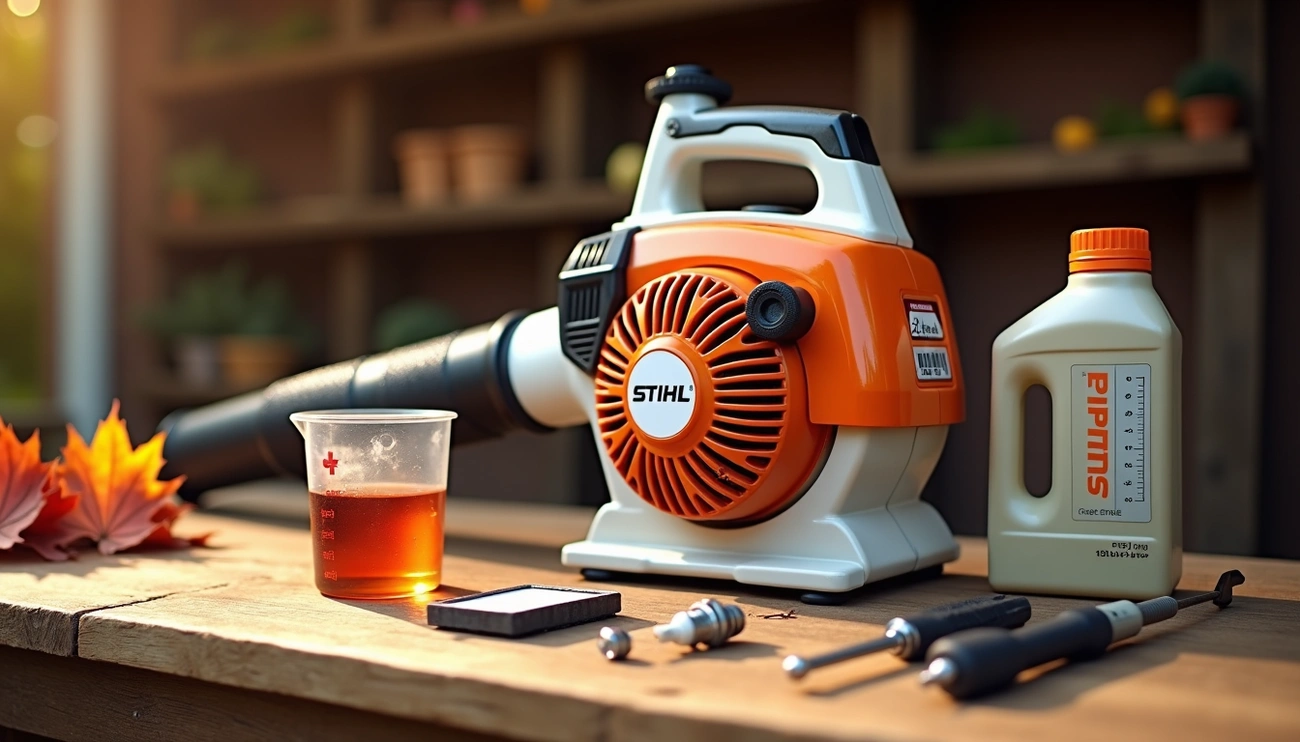
Mixing the fuel properly is just as important as using the correct ratio. Begin by using a container specifically approved for fuel use – STIHL offers specialized Fuel Mixing Bottles and 5-Litre Fuel Cans for this purpose.
The proper mixing procedure involves pouring the oil first, followed by the gasoline. After sealing the container tightly, shake it thoroughly to ensure the components are well combined. Remember that gasoline is extremely flammable, so maintain a safe distance from open flames when handling.
Of course, fuel freshness matters tremendously. Mixed fuel shouldn’t be stored for more than 30 days, as it can deteriorate, potentially leading to resinous “gum” formation that can deposit in the combustion chamber and clog fuel components.
Using STIHL MotoMix® as an alternative
If mixing your own fuel seems inconvenient, STIHL offers MotoMix® – a patented premixed fuel specifically formulated for optimal performance. This 50:1 mixture combines non-ethanol, high-octane fuel with premium STIHL HP Ultra Oil, eliminating the hassle of mixing while providing superior lubrication.
Besides convenience, MotoMix® offers exceptional stability, maintaining its quality for up to two years after opening. This makes it particularly valuable during off-season storage periods. As a bonus, purchasing MotoMix® (minimum one gallon) with your STIHL product doubles your limited warranty protection for personal, non-income-producing usage.
Common maintenance tips to avoid engine damage
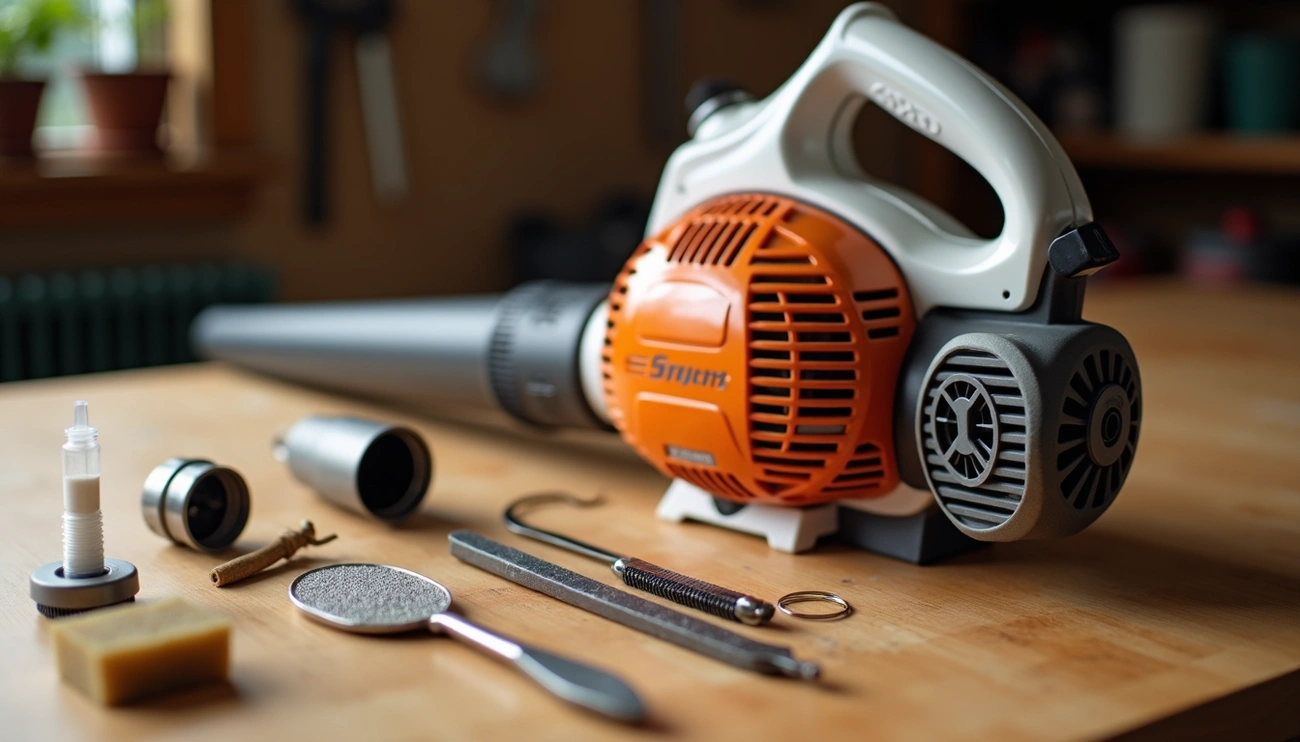
Proper maintenance beyond a correct gas-oil mixture is essential for keeping your STIHL leaf blower running smoothly for years. Regular upkeep prevents costly repairs and ensures consistent performance.
Check and clean the air filter regularly.
A clogged air filter restricts airflow, reducing engine efficiency and potentially causing damage. To clean it, turn the filter cover lock counterclockwise and remove the cover.
Clean away any loose dirt around the filter area before removing the air filter. Inspect it thoroughly—if only dirty, clean it; if damaged, replace it. Return the filter to its position, replace the cover, and turn the lock clockwise to secure it.
Replace spark plugs when needed.
Faulty spark plugs lead to starting issues and poor performance. First, ensure your blower is turned off. Remove the housing by unscrewing the screws, then release the spark plug cap. Using a 16mm socket spanner, unscrew the plug, inspect it, and either clean or replace it if worn. Secure the new plug with the socket spanner before reattaching the cap.
Clean the spark arrestor to prevent clogging.
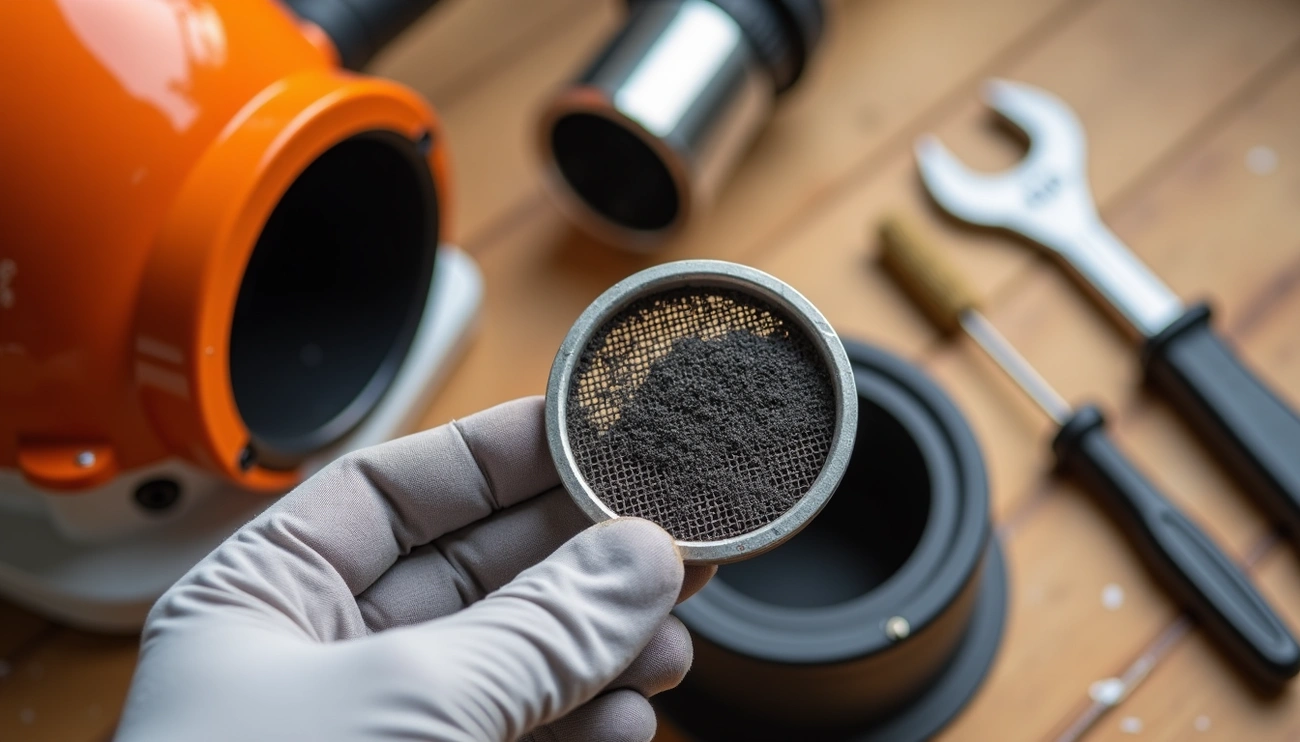
The spark arrestor screen typically clogs with carbon after about a year of use. When clogged, your blower will lose power dramatically. Remove the arrestor (about the size of a spark plug), then clean it with a wire brush, carb cleaner, or carefully heat it with a propane torch until the carbon burns off. A clean spark arrestor ensures optimal exhaust flow and maintains engine power.
Storage and seasonal care for your blower
Proper storage of your STIHL blower between seasons is essential for maintaining its lifespan and ensuring it starts right up when you need it again.
How to store your blower during the off-season
Preparing your gas-powered blower for extended storage starts with a thorough cleaning. Gently brush the air filter and cylinder fins with an old toothbrush to remove debris. For optimal storage, empty the fuel tank completely.
After draining the tank, start the engine and let it run at idle until it stops – this crucial step removes remaining fuel from the carburetor. Remember to run the engine only at idle speed to ensure proper lubrication throughout the system.
A dry, dust-free, and frost-free location is ideal for storing your blower. Many models can be hung on walls to save space while keeping them organized.
Why fuel freshness matters
Gasoline begins deteriorating in as little as one month when stored. Unlike cars that are regularly refuelled, outdoor power equipment often sits unused for extended periods. This inactivity creates a perfect environment for fuel breakdown, forming gum-like compounds that block the tiny fuel passages in small engines.
Old fuel left in your blower for more than 2-3 months can cause expensive damage. Indeed, STIHL recommends starting each season with a fresh fuel mix rather than using leftover mixture from previous seasons.
Battery storage tips for electric models
For battery-powered blowers, store the battery at 40-60% charge (indicated by 2 lit LEDs) to minimize aging and self-discharge. Lithium-ion batteries have exceptionally low self-discharge rates of just 1-3% per year.
Store batteries in a dry place with temperatures between 10°C and 20°C. Consider using dedicated storage solutions, such as STIHL battery boxes, to protect them from moisture and sunlight.
Conclusion
Proper maintenance of your STIHL leaf blower ensures you’ll enjoy years of reliable service from this powerful tool. Throughout this guide, we’ve seen that gas-powered models absolutely require a 50:1 oil-to-gas mixture for optimal performance, while battery-powered models eliminate this maintenance requirement completely.
Skipping oil in your 2-stroke engine can lead to catastrophic failure; therefore, mixing fuel correctly is non-negotiable for longevity. Many owners find STIHL MotoMix® a convenient alternative that eliminates guesswork when mixing and doubles your warranty protection.
Regular maintenance tasks make all the difference in your blower’s lifespan. Air filter cleaning, spark plug replacement, and spark arrestor maintenance prevent costly damage and keep your machine running smoothly. Additionally, proper storage during the off-season protects your investment from unnecessary wear.