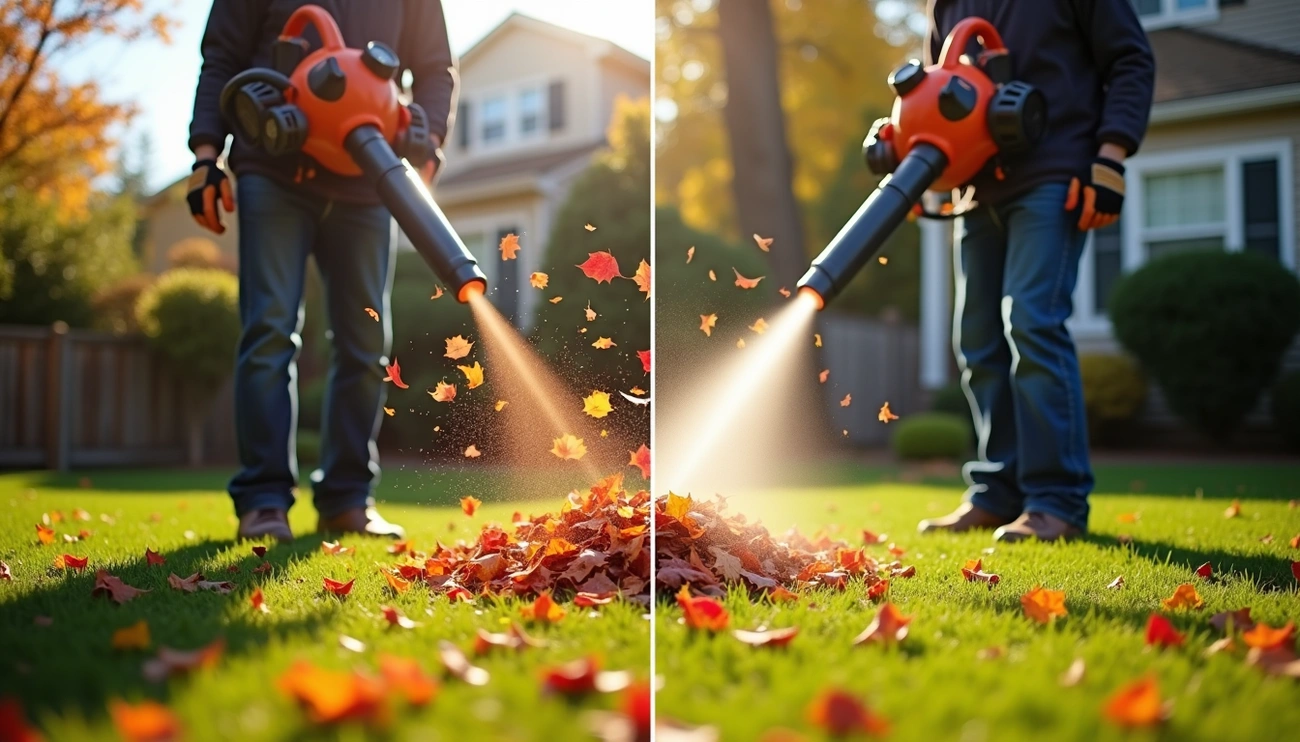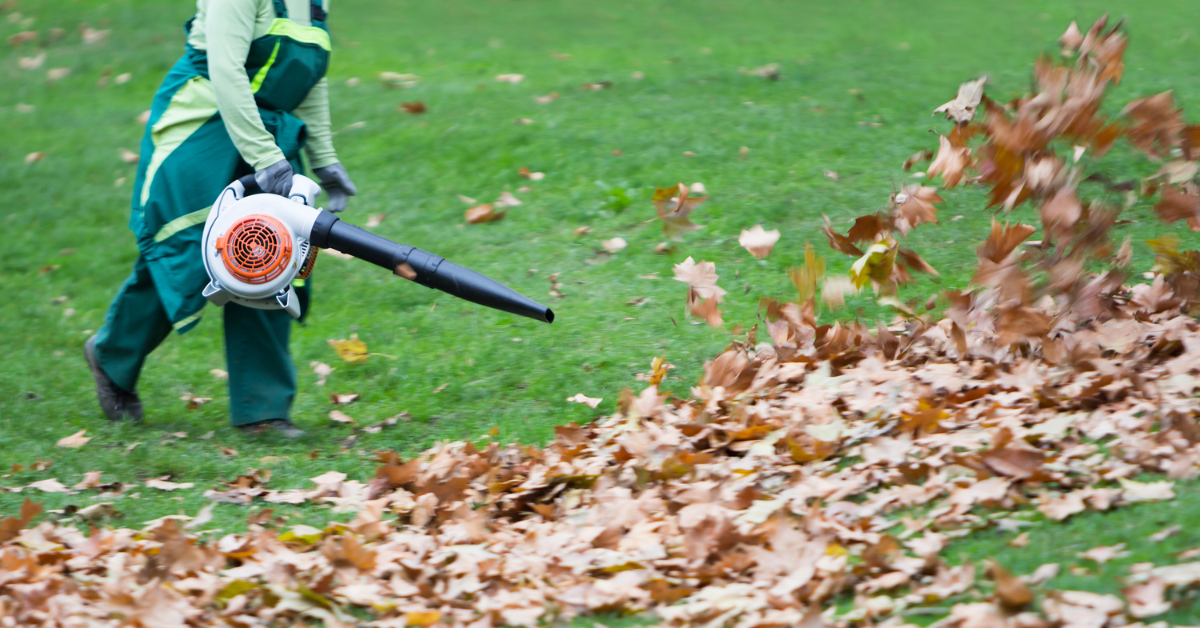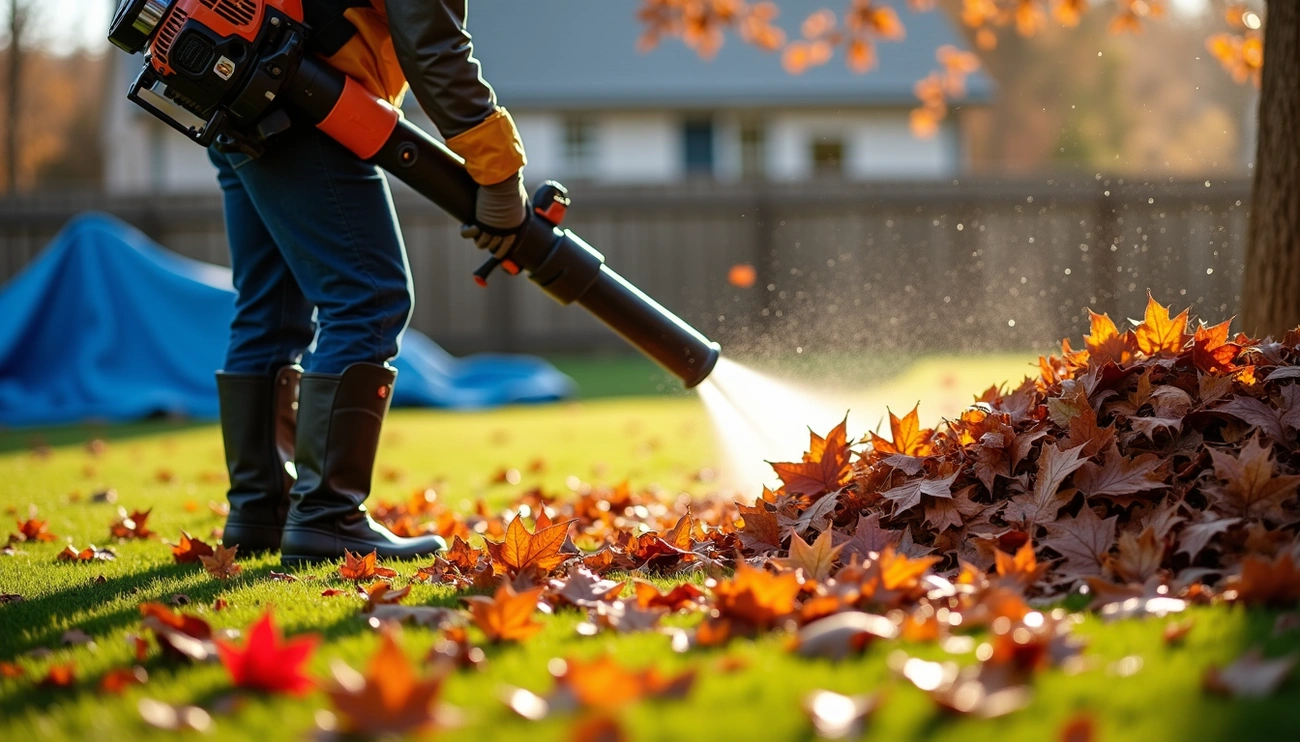
Yes, you can leaf blow wet leaves, but it requires more power and patience. Wet leaves are heavier and stick to surfaces, so use a high-power gas blower or a battery model with high CFM. Work in stages, push leaves into piles, and let soaked leaves dry slightly for better results.
Understanding Wet Leaves and Their Challenges
Working with wet leaves presents unique challenges that require proper understanding. Unlike dry foliage, damp or soaked leaves demand different approaches and techniques for effective removal.
Damp vs. soaked: why it matters
There’s a crucial distinction between merely damp leaves and completely soaked ones. Damp leaves still respond reasonably well to leaf blowers, especially those with powerful jets. However, soaked leaves become significantly more problematic and resistant to airflow.
In fact, if the leaves are thoroughly saturated, it might be better to wait until they dry somewhat before using a blower. The moisture level directly impacts how effectively you can move the leaves and which tools will work best.
Why are wet leaves harder to move
Wet leaves create several distinct challenges:
- They weigh 3-5 times as much as dry leaves, requiring substantially more force to move them.
- Moisture increases friction and adhesion between leaves and the ground—almost like an invisible glue fixing them in place.
- The added weight makes them cling to surfaces, especially on patios and lawns.
- Wet leaves form dense mats that resist airflow and become more difficult to separate.
Furthermore, these heavy, compacted leaves don’t just slow down your work—they can potentially damage equipment if you’re not using the right tools or techniques.
When to wait and when to act
Timing is essential when dealing with wet leaves. After rainfall or heavy morning dew, leaves reach maximum saturation. Therefore, waiting for a few hours allows some moisture to evaporate, making removal considerably easier. Nevertheless, sometimes immediate action is necessary despite unfavourable conditions.
You should act promptly when wet leaves:
- Create slipping hazards on walkways and driveways.
- Block drainage systems that could lead to flooding or water damage
- Form thick layers that block sunlight from reaching your grass, potentially causing lawn diseases.
Conversely, if leaves are completely soaked through and do not pose an immediate hazard, postponing cleanup until conditions improve can save significant time and effort.
Best Tools for Blowing Wet Leaves
Choosing the right equipment makes all the difference when tackling soggy yard debris. The right tools can transform a frustrating chore into a manageable task, even with the heaviest rainfall.
Gas vs. electric blowers
Gas-powered blowers traditionally offer superior performance for wet leaves. Their powerful engines provide the force needed to lift and move saturated foliage that sticks stubbornly to your lawn. Even though gas models excel in power, they come with drawbacks – they’re significantly louder (90-102 decibels compared to 65-78 decibels for electric models), require regular maintenance, and produce emissions.
Increasingly, battery technology has advanced to the point where cordless electric models offer comparable performance without the noise and maintenance headaches. For most homeowners with average-sized yards, modern electric blowers provide sufficient power while being more environmentally friendly and easier to maintain.
What airspeed and CFM do you need?
For wet leaves specifically, look for these specifications:
- Minimum airspeed (MPH): 190 or higher
- Minimum air volume (CFM): 500 or above
As one manufacturer explains, “Velocity helps lift the leaves. The volume helps blow them away”. Consequently, both metrics matter when handling wet debris. Higher MPH ratings are particularly important as they help dislodge stubborn, heavy leaves clinging to surfaces.
When to use a vacuum instead
Vacuum functionality becomes particularly valuable with wet leaves. Models with dedicated vac modes like the Flymo PowerVac provide an extra boost of suction to lift particularly stubborn wet leaves. Moreover, mulching moist leaves actually produces less dust than processing dry ones, making it a cleaner option.
Using mulching mowers for wet leaves
Granted, leaf blowers aren’t your only option. Mulching mowers can effectively handle damp leaves, often with surprising benefits. Indeed, some users report cleaner results with slightly damp leaves as they’re heavier and don’t scatter from the mower’s air turbulence. The added weight keeps leaves in place so the blade contacts each one.
Generally, standard discharge mode works better than mulching gear for wet conditions. Also, monitor for clogs by checking blades and deck every 10-15 minutes if processing significant amounts of wet leaves.
How to Use a Leaf Blower on Wet Leaves
Successfully handling wet leaves requires precise technique beyond just having the right equipment. First of all, mastering proper technique can make even moderately powered blowers effective against damp debris.
Proper nozzle angle and technique
The angle of your blower nozzle dramatically affects performance with wet leaves. Keep the nozzle pointed slightly downward rather than parallel to the ground. This downward angle helps lift stubborn wet leaves without pushing them deeper into the lawn.
Employ a sweeping motion, working side to side across your yard while maintaining this angle. For particularly stubborn patches, multiple passes over the same area are often necessary—wet leaves rarely move on the first attempt.
A flat, narrow nozzle works best for wet leaves as it concentrates airflow, creating more force to dislodge stuck leaves. Conversely, round nozzles are better suited for dry leaves and general cleanup tasks.
Working in layers for better results
When faced with thick mats of wet leaves, resist the urge to tackle everything at once. Instead, work gradually with thin layers, removing a small amount at a time. This layered approach prevents your blower from being overwhelmed and delivers better results. Begin at one edge of your yard and move methodically toward a central collection point.
Using tarps to collect and move leaves
Tarps dramatically simplify wet leaf disposal. Rather than creating piles that need to be picked up later:
- Position a tarp flat on the ground in your collection area.
- Direct leaves toward this tarp as you blow
- Once filled, simply pull the drawstring or fold the corners to contain everything.
- Drag rather than lift heavy loads of wet leaves.
Avoiding damage to your lawn
Protect your lawn by adjusting the blower speed based on the area. Use lower speeds around delicate flower beds while reserving maximum power for open lawn areas.
This prevents accidentally uprooting plants or blowing away mulch. When clearing beds, intentionally leave behind a thin layer of leaves—this natural mulch protects and nourishes soil during winter.
Watch for signs of lawn damage, such as exposed soil or disturbed grass roots, particularly when using higher-powered settings needed for wet leaves.
Extra Tips for Safety and Efficiency
Safety comes first when handling soggy yard debris. Proper precautions not only protect you but also make the job more efficient.
Wearing the right gear
For safe leaf blowing, I always use a complete set of protective equipment. This includes:
- Safety goggles to shield eyes from flying debris
- Ear protection to prevent noise-induced hearing loss
- A dust mask to reduce particle inhalation
- Gloves for better grip and hand protection[201]
- Work boots with deep treads to prevent slipping on wet leaves[202]
- Long-sleeved clothing for full coverage[202]
Avoiding clogs and overloading bags
To prevent frustrating clogs, I empty collection bags frequently since wet leaves fill them much faster than dry ones. Regarding bags, I’ve found heavy-duty reusable garden waste bags or 2-ply wet-strength paper bags work best for saturated leaves. These specialized paper bags use resin bonding between layers for superior water resistance.
When to use a dethatcher
Occasionally, wet leaves form thick, matted layers that resist conventional removal methods. In such cases, a dethatcher (power rake) becomes essential. These specialized tools feature rotating tines that effectively lift compacted leaves from grass surfaces[202]. I typically use a dethatcher when leaves have been sitting for weeks and have formed dense mats.
How to prevent mould and pests
Prompt removal remains key, as wet leaves emit an ammonia-like smell that attracts unwanted critters [202]. To prevent mould growth, I recommend:
- Removing visible mould signs immediately
- Reducing moisture by cutting grass shorter to increase sunlight exposure
- Clearing leaves from drainage areas
- Avoiding high-nitrogen fertilizer in the fall, which can encourage fungal growth
Conclusion
Dealing with wet leaves certainly presents unique challenges compared to their dry counterparts. Throughout this guide, we’ve seen that blowing wet leaves is indeed possible, but only with the right approach. Most importantly, a powerful blower with at least 190 MPH airspeed and 500 CFM air volume makes all the difference when tackling those stubborn, water-laden piles.
Gas-powered blowers generally offer superior performance for wet conditions, though modern electric models have significantly closed the gap. Additionally, your technique matters just as much as your equipment—working in layers, maintaining the proper downward nozzle angle, and using tarps for collection all contribute to successful results.
Safety should never be overlooked, especially when working with wet leaves that create slippery surfaces. Therefore, proper protective gear becomes essential, not optional. Likewise, timing your cleanup efforts strategically—waiting for leaves to dry partially when possible—can save considerable time and energy.