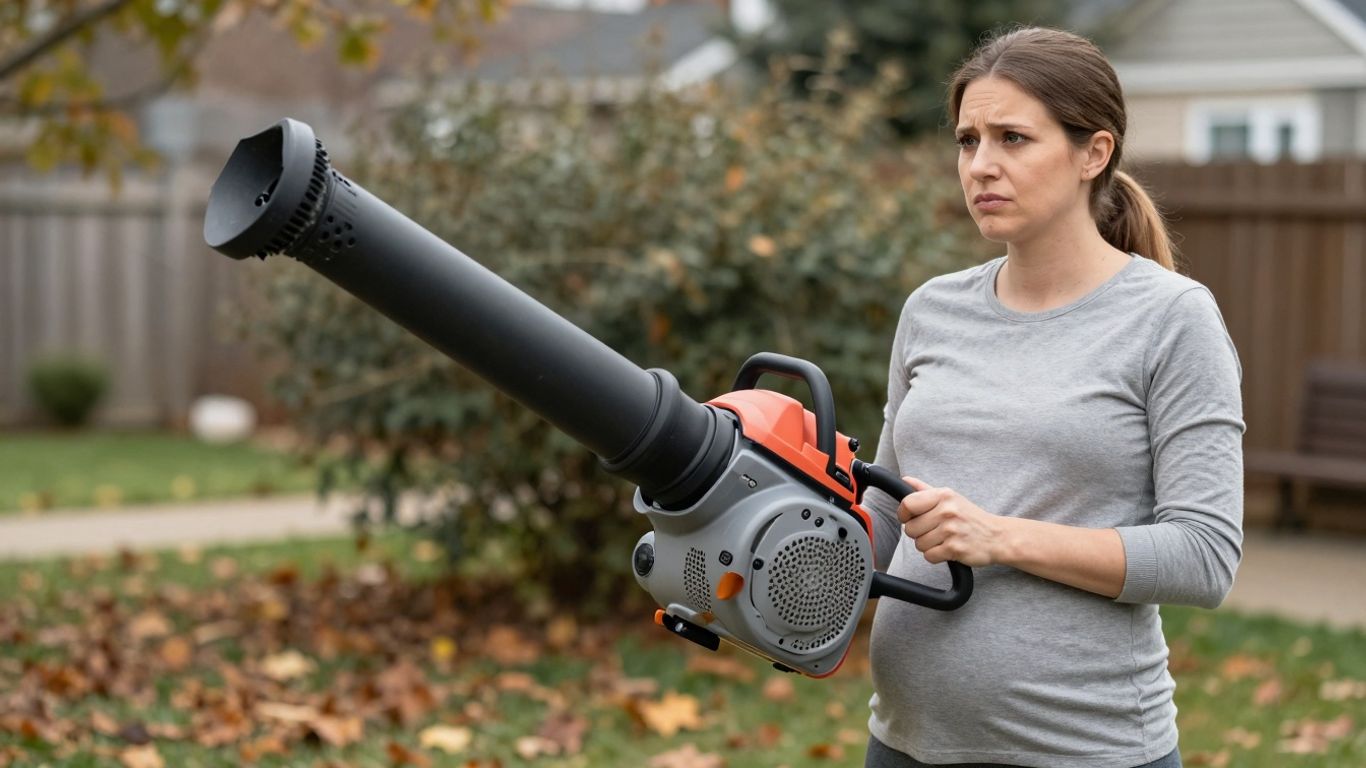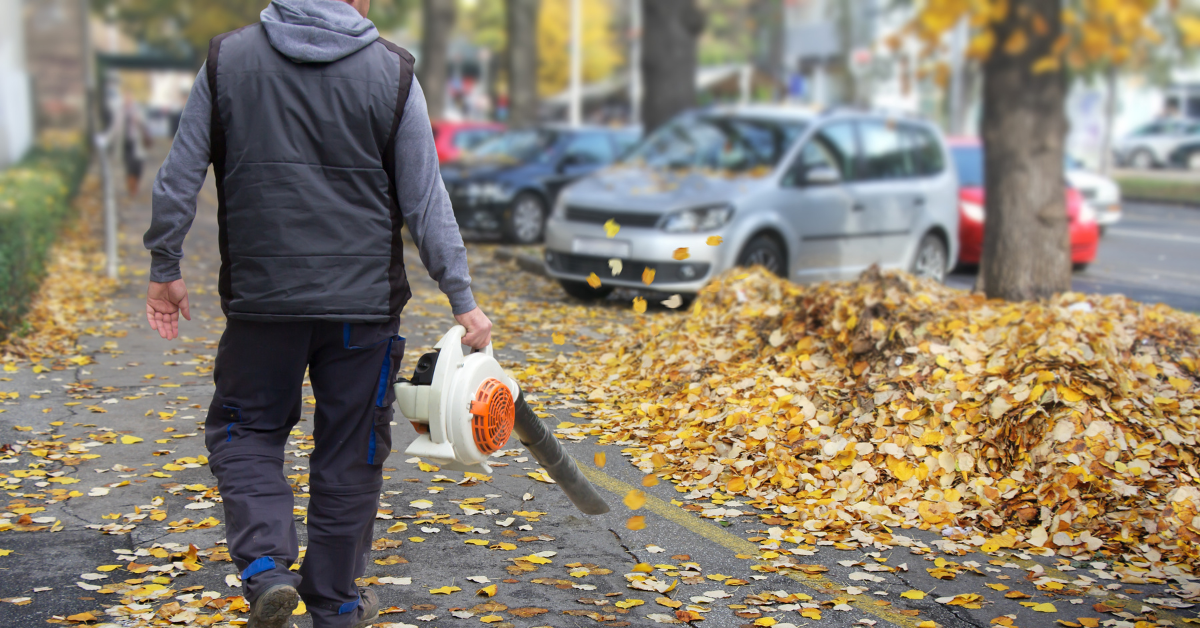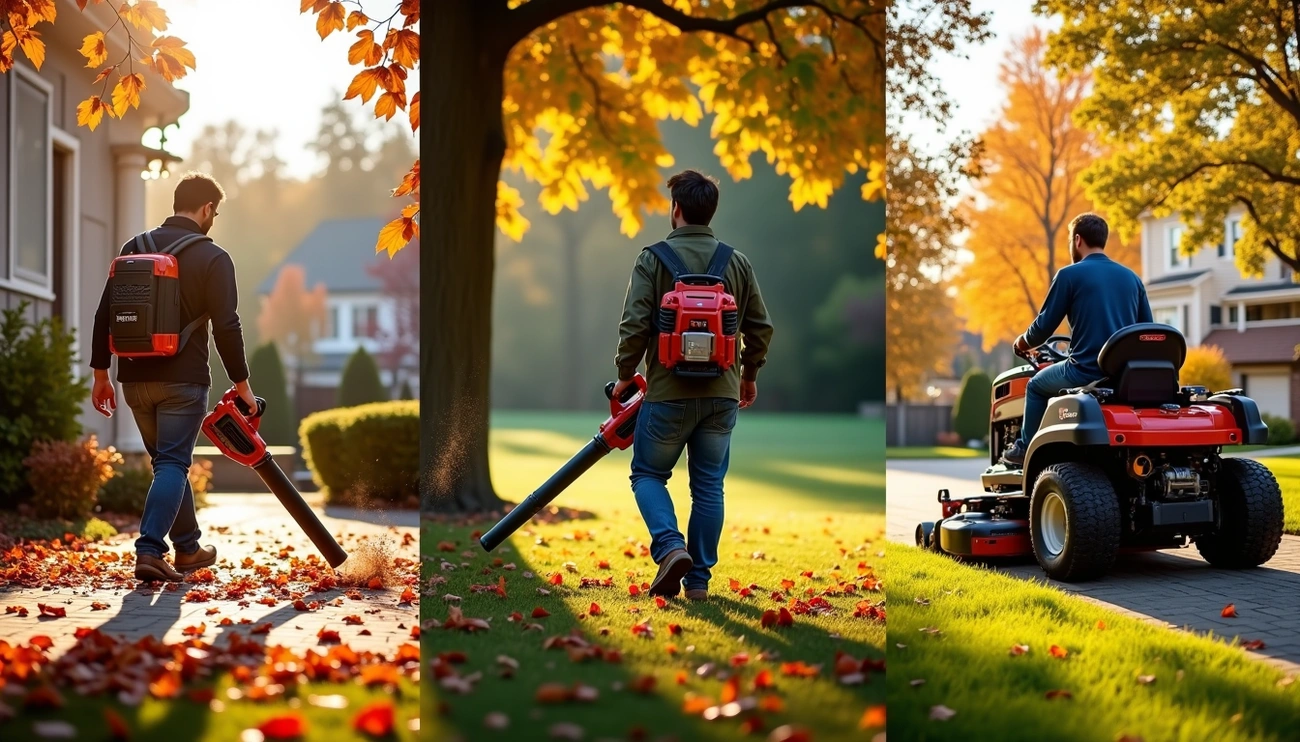
Choose the right leaf blower size by matching CFM and MPH to your yard and debris. Small yards need 150–200 CFM for light leaves and handheld blowers. Medium yards work best with 200–400 CFM using high-power battery or backpack models. Large yards or heavy, wet debris require 400+ CFM for efficient clearing.
Understanding Your Yard and Cleanup Needs
Before heading to the store to buy a leaf blower, take time to evaluate your property and your typical cleanup tasks. This assessment helps you match with a blower that fits your specific situation, rather than wasting money on excessive power or struggling with an inadequate machine.
Yard size: small, medium, or large?
The size of your property determines the size of the leaf blower you need. For small yards under a quarter-acre, a lightweight electric or battery-powered handheld blower provides sufficient power without unnecessary bulk. These compact models offer excellent maneuverability around garden beds and tight spaces.
Medium-sized properties between a quarter and half an acre typically require more substantial equipment. In these situations, a more powerful handheld gas model or a backpack blower strikes the right balance between power and usability. These options provide enough strength to handle larger areas without exhausting you during operation.
For properties exceeding half an acre, a backpack blower or even a walk-behind model becomes the most efficient choice. These powerful machines can save significant time and effort when clearing extensive areas. Specifically, walk-behind blowers are ideal for large maintenance contractors, landscapers, schools, parks departments, golf courses, and estate properties.
Types of debris: dry leaves, wet leaves, twigs
Not all yard debris responds the same way to air movement. Light, dry leaves are easily managed by most blowers, but wet leaves, pine needles, and small twigs demand more powerful equipment. Understanding your typical debris helps determine the necessary air volume and speed.
Dry leaves blow away effortlessly, making them ideal for any leaf blower. Consequently, if you primarily deal with dry leaves, a lower-powered model may serve you well. Conversely, wet leaves stick together and require substantially more power to move effectively. Many homeowners unnecessarily struggle because they try to clean wet leaves with an underpowered blower.
Besides leaves, consider other materials you’ll encounter. Pine needles, small twigs, grass clippings, and even acorns might be part of your regular cleanup. For heavier debris, look for a blower with stronger airflow and, if available, a vacuum or mulching feature.
Frequency of use and seasonal needs
How often you’ll use your leaf blower significantly impacts which type makes the most sense for your situation. For occasional light cleanup, a less expensive electric model might suffice. Furthermore, if you only need it for brief seasonal cleanups, investing in a premium high-powered model might be unnecessary.
On the other hand, if you anticipate frequent use across multiple seasons or have a large property that requires regular maintenance, investing in a more durable, powerful gas or high-end battery model proves more cost-effective in the long term. Some homeowners find leaf blowers useful beyond fall cleanup – they can clear job site debris, unclog gutters, and even blow fresh snow off vehicles and sidewalks.
Seasonal considerations also matter. In many regions, leaf blowers are most commonly used during fall leaf drop. Nevertheless, seasonal bans on gas-powered leaf blowers exist in some communities, with short windows allowed in spring and fall for heavy cleanup jobs. This might influence whether you choose a gas-powered STIHL leaf blower or an electric EGO model that faces fewer restrictions.
Types of Leaf Blowers and Their Ideal Use
Leaf blowers come in three main types, each designed for specific cleanup scenarios. Selecting the right model depends on your property size, frequency of use, and the kind of debris you typically encounter.
Handheld blowers: best for small yards
Compact and lightweight, at typically under 10 pounds, handheld blowers offer excellent maneuverability for small properties and tight spaces. These user-friendly tools come in three power variants:
- Battery-powered models provide mobility without cords, operating quietly with zero emissions. Most run for about 30 minutes on a charge, making them ideal for quick cleanup tasks.
- Corded electric versions deliver consistent power without recharging, typically cost between $50 and $100, and weigh 8 pounds or less. They’re perfect for properties where an outlet is always within 100 feet.
- Gas handheld blowers offer unlimited mobility without charging constraints but require regular maintenance. Most weigh around 10 pounds and range from $140 to $350.
Ultimately, handheld blowers are most effective for yards under a quarter-acre with light to moderate leaf coverage. Their compact design makes them easy to store, making them practical for homeowners with limited space.
Backpack blowers: for medium to large areas
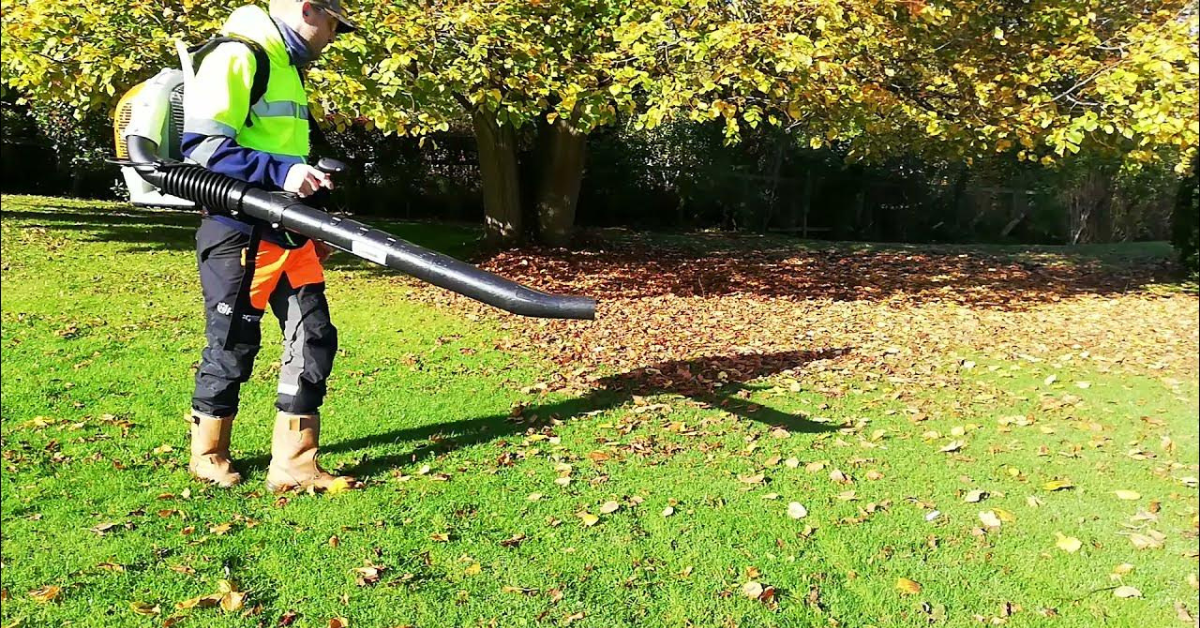
When tackling larger properties, a backpack blower distributes weight evenly across your shoulders and back, reducing fatigue during extended use. These more powerful units are ideal for:
- Properties around an acre or larger
- Areas with many trees and heavy leaf accumulation
- Homeowners seeking more power without arm strain
Backpack models typically weigh 17 pounds or more—almost twice as heavy as handheld units—yet feel less tiring over extended periods thanks to their harness systems. They’re substantially more powerful than handheld versions, with many models pushing air speeds of up to 250 MPH and moving up to 900 cubic feet per minute.
Walk-behind blowers: for commercial or large properties
For heavy-duty applications or commercial use, walk-behind blowers deliver maximum power and efficiency. These wheeled machines excel at:
- Clearing large estates, golf courses, parks, and commercial properties
- Moving substantial volumes of leaves and debris quickly
- Reducing operator fatigue during extensive cleanup jobs
Despite their advantages, walk-behind blowers have drawbacks: they’re bulky (weighing 100+ pounds), require significant storage space (about 8 square feet), and typically cost between $350 and $975. Unlike smaller models, these powerhouses can’t vacuum or shred debris, yet their raw blowing power makes them indispensable for professional landscapers.
What size backpack leaf blower do I need?
Determining the appropriate backpack leaf blower size depends primarily on your property’s characteristics:
- For medium-sized yards (around 1 acre with moderate tree coverage), look for models with 400-500 CFM output.
- For heavily wooded properties, select more powerful options with 600+ CFM and air speeds exceeding 200 MPH.
- For professional landscaping, consider top-tier models like Echo’s PB-9010T, which delivers an industry-leading 48N of blowing force.
Besides property size, consider engine capacity (measured in cubic centimetres for gas models) as an indicator of power. Notably, STIHL gas-powered leaf blowers offer excellent performance for tough cleanup tasks but require more maintenance than battery alternatives.
Remember that backpack blowers should balance power with weight distribution for comfortable extended use. For most homeowners with properties larger than a quarter-acre and multiple trees, a mid-range backpack blower offers the ideal balance of power and practicality.
Choosing the Right Power Source
Selecting the right power source for your leaf blower is just as crucial as choosing the correct size and type. Each option offers distinct advantages depending on your specific needs and property characteristics.
Gas-powered blowers: power vs. maintenance
Gas blowers deliver unmatched power and unlimited runtime, making them ideal for large properties with heavy debris. These models excel at moving wet leaves and can handle the toughest cleanup jobs without being limited by battery capacity. A tank of gas lasts substantially longer than a battery charge, allowing you to cover more ground without stopping.
In fact, most professional landscapers choose gas models precisely for their superior power. However, this performance comes with tradeoffs – gas blowers require regular maintenance, including fuel mixing, oil changes, and spark plug replacements. Additionally, they produce more noise and emissions, which may violate local regulations in some communities.
Electric corded blowers: consistent but limited range
For yards up to ¼ acre, corded electric blowers provide reliable, consistent power without recharging or refuelling concerns. These lightweight machines offer several benefits:
- Zero emissions and quieter operation than gas models
- Minimal maintenance requirements
- Lower initial cost than comparable battery models
- Unlimited runtime as long as power is available
The main limitation? Your mobility is limited to the length of your extension cord (typically 100 feet), which can be problematic on larger properties or in areas far from power outlets.
Battery-powered blowers: mobility and convenience
Battery blowers offer excellent mobility without cords or fuel, making them increasingly popular for residential use. Modern lithium-ion technology has dramatically improved its performance, with some models approaching gas-level power. These blowers are significantly quieter than gas alternatives and produce zero emissions.
The primary drawback is limited runtime – typically 15-60 minutes depending on speed settings. For perspective, running a leaf blower on its highest setting can drain the battery extremely quickly – sometimes in as little as 15 minutes.
What size EGO leaf blower do I need?
EGO stands out in the battery-powered category, with models that deliver impressive power. Their popular 765 CFM model delivers performance that exceeds most handheld gas blowers. For typical home use, expect 35-45 minutes of runtime, though this varies depending on the speed setting.
When selecting an EGO model, match blower size to yard requirements:
- Small yards: Consider their standard handheld models
- Medium to large yards: Look at their 765 CFM model
- Extensive properties: Explore the EGO 880 CFM model with 90 minutes of runtime capability
STIHL gas-powered leaf blower: when to choose it
STIHL offers exceptional gas-powered options ranging from lightweight handhelds to professional backpack models. Their gas blowers are particularly valuable for:
- Properties exceeding ½ acre with substantial tree coverage
- Areas requiring maximum power for wet or heavy debris
- Situations demanding extended runtime without recharging
Models like the STIHL BR 600 deliver professional-grade performance with improved fuel efficiency and reduced emissions compared to older gas models. For smaller properties or noise-sensitive areas, STIHL also offers battery models, such as the BGA 57, ideal for residential use.
Key Features That Affect Performance
Understanding technical specifications is critical when deciding which leaf blower size you need. Several key features directly impact performance and suitability for your specific situation.
CFM vs MPH: what matters more?
Cubic Feet per Minute (CFM) measures air volume—how much air moves through the blower nozzle per minute. Meanwhile, Miles Per Hour (MPH) indicates air speed—how fast the air travels. For most yard work, CFM often matters more since it determines how many leaves you can move at once.
Essentially, “velocity helps lift the leaves. The volume helps blow them away”. High CFM (500-700) is best for clearing large areas of dry debris, whereas high MPH is more effective for wet or stubborn materials.
Noise levels and local regulations
Noise restrictions may limit your options, as many communities have enacted leaf blower regulations. Some cities ban gas models entirely, others enforce maximum decibel limits (typically 65dB), or restrict operating hours.
Battery-powered blowers generally run quieter, producing less noise pollution. Always check local ordinances—violations can result in substantial fines for property owners and operators.
Weight and ergonomics
Design features like weight, handle grip, and balance determine how long you can comfortably use your leaf blower. Handheld models typically weigh between 6 and 11 pounds, whereas backpack styles distribute weight across your shoulders.
For extended use, ergonomic controls and comfortable grips become increasingly important. Some models even feature variable-speed triggers and cruise control for reduced hand fatigue.
Vacuum and mulching capabilities
Many leaf blowers offer vacuum and mulching functions. These 3-in-1 systems allow you to blow, vacuum, and mulch simultaneously, shredding leaves as they’re collected.
This significantly reduces waste volume, making disposal or composting easier. Such features add versatility to your purchase, making the tool useful beyond basic leaf blowing.
Brushless motors and variable speed control
Modern leaf blowers increasingly feature brushless motors that deliver superior efficiency. These motors provide longer runtime, reduced vibration, and extended lifespan.
Coupled with variable speed control, they allow precision adjustments based on the task—from gentle cleaning around flower beds to maximum power for wet leaves. Some models include turbo buttons for instant power boosts when encountering stubborn debris.
Matching Blower Size to Yard Size
Choosing the perfect leaf blower ultimately comes down to matching the CFM rating with your specific yard size. Let me break down exactly which leaf blower size you need based on the area you’re clearing.
Small yards: 100–400 CFM
For smaller yards up to 2,000 square feet, a blower with 100-400 CFM provides sufficient power. These lighter models excel at cleaning patios, driveways, and small outdoor spaces. At this range, handheld electric or small battery-powered blowers deliver ideal performance without unnecessary weight.
Even at the lower end, 150-200 CFM can effectively handle light debris and routine maintenance. These compact units typically weigh under 7 pounds, allowing one-handed operation.
Medium yards: 400–700 CFM
Medium-sized properties between 2,000 and 5,000 square feet benefit from blowers in the 400-700 CFM range. This sweet spot balances power with usability, providing efficient airflow for most conditions.
For properties around half an acre, a model with 400 CFM and 180 MPH air speed offers excellent performance. Battery-powered handhelds or backpack blowers work well in this category, depending on your comfort preferences.
Large yards: 700+ CFM
Properties exceeding 5,000 square feet demand 700+ CFM blowers for effective clearing. These powerful machines quickly move substantial leaf piles and heavy debris.
Accordingly, professional landscapers and owners of large properties (1+ acres) typically choose models with airflow rates of around 650 CFM and air speeds of around 250 MPH.
For extensive properties with heavy leaf coverage, backpack or walk-behind blowers in this range provide maximum efficiency.
Summary table: yard size vs blower type
| Yard Size | Square Footage | Recommended CFM | Ideal Blower Type |
|---|---|---|---|
| Small | Up to 2,000 sq ft | 150-400 CFM | Handheld (Electric/Battery) |
| Medium | 2,000-5,000 sq ft | 400-700 CFM | Powerful Handheld/Backpack |
| Large | 5,000+ sq ft | 700+ CFM | Backpack/Walk-Behind |
Conclusion
Choosing the right leaf blower ultimately comes down to matching your specific needs with the appropriate equipment. Throughout this guide, we’ve seen that yard size directly correlates with the required CFM rating: small yards require 100-400 CFM, medium yards require 400-700 CFM, and large yards require 700+ CFM.
Your typical cleanup tasks also play a crucial role in determining the ideal blower. Dry leaves need less power, whereas wet leaves, pine needles, and small twigs require substantially more airflow to move effectively. Additionally, the frequency of use helps determine whether a basic electric model will suffice or whether investing in a premium gas or battery option makes more sense in the long term.
Power source selection deserves careful consideration as well. Gas blowers offer unmatched power and runtime but require regular maintenance. Electric corded models provide consistent performance without recharging, though their range remains limited. Battery-powered options strike a balance between mobility and convenience, making them increasingly popular despite runtime limitations.