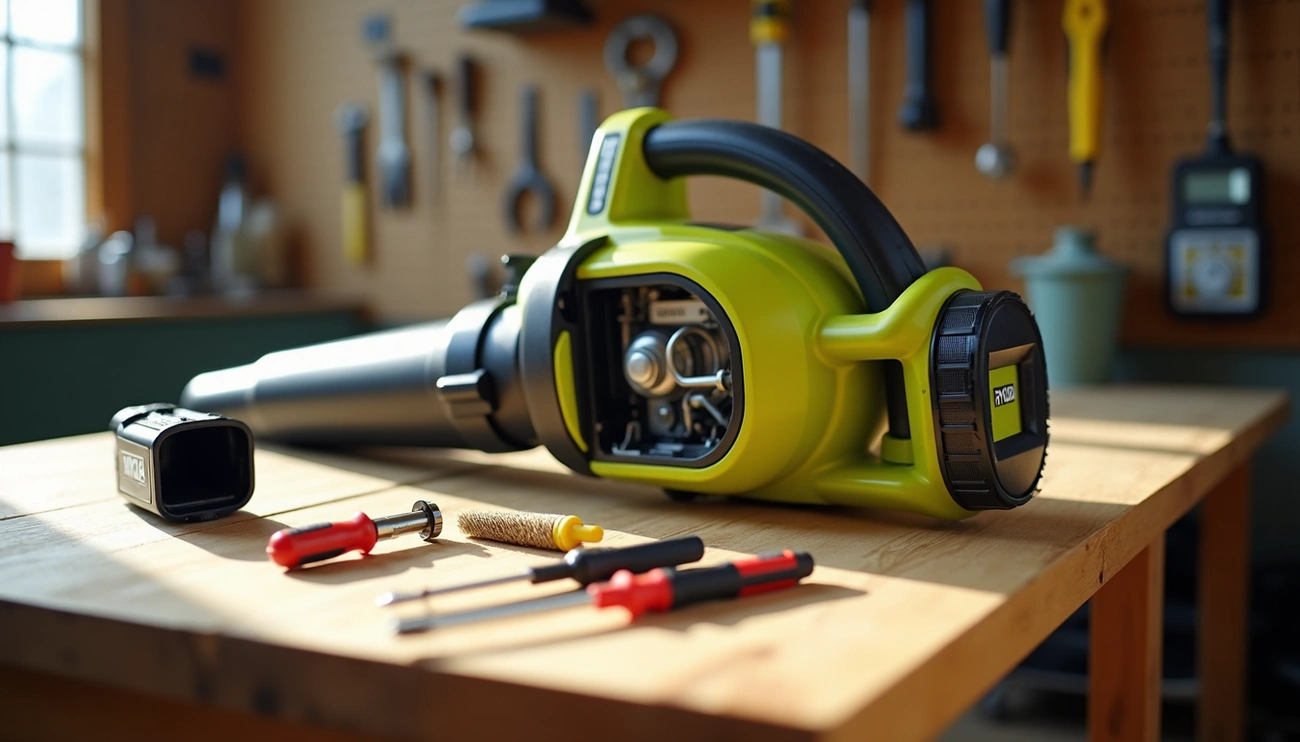
A Ryobi 40V leaf blower stops working due to a poor battery connection, a faulty trigger or safety switch, clogged air vents causing overheating, worn motor brushes, or damaged wiring. A loose main tube can disengage the safety switch. Clean battery contacts, secure the tube, clear vents, and test another battery before seeking internal repair.
Common Reasons Your Ryobi Blower Stopped Working
Troubleshooting your Ryobi 40V leaf blower often reveals some common culprits behind operational issues. These frequent problems can help you quickly diagnose and resolve them without professional help.
Battery not seated properly.
The most basic issue with any Ryobi leaf blower is improper battery connection.
First, disconnect and reinsert the battery to ensure it’s properly seated in the blower.
This simple step resolves many “no-power” situations. Furthermore, check the battery charge level by pressing the indicator button on the battery itself.
If the battery shows only a flashing single bar, it indicates full discharge and needs recharging before use.
Trigger switch malfunction
Trigger problems are remarkably common in Ryobi blowers.
Many owners report the trigger switch failing intermittently or completely.
You might notice that the blower only works with the turbo switch, while the variable-speed trigger remains unresponsive.
In some cases, the blower might provide only partial power (around 75%) even with a full pull of the trigger.
This typically indicates an internal switch failure requiring replacement, which costs approximately $46 for a variable switch or $8 for a single-speed toggle switch.
Blocked air intake or impeller
Blockages significantly impact blower performance. The brushless motor has protection systems preventing startup when the impeller is jammed.
Small, dense debris can become lodged in internal components, requiring more than just removing visible twigs.
Signs of blockage include weak airflow, difficulty starting, strange engine noises, or excessive smoke. Therefore, check and remove any debris stuck in the impeller after removing the battery for safety.
Overheating shutdown
Ryobi blowers feature thermal protection systems that automatically shut down the tool when overheating occurs.
This typically happens during extended use in hot environments or immediately after charging in warm conditions.
Moreover, electrical issues such as damaged power cords or loose connections can cause overheating.
To resolve this issue, allow both the battery and tool to rest in a cool location for at least 5 minutes before attempting to restart.
Battery Troubleshooting for Ryobi 40V Blowers
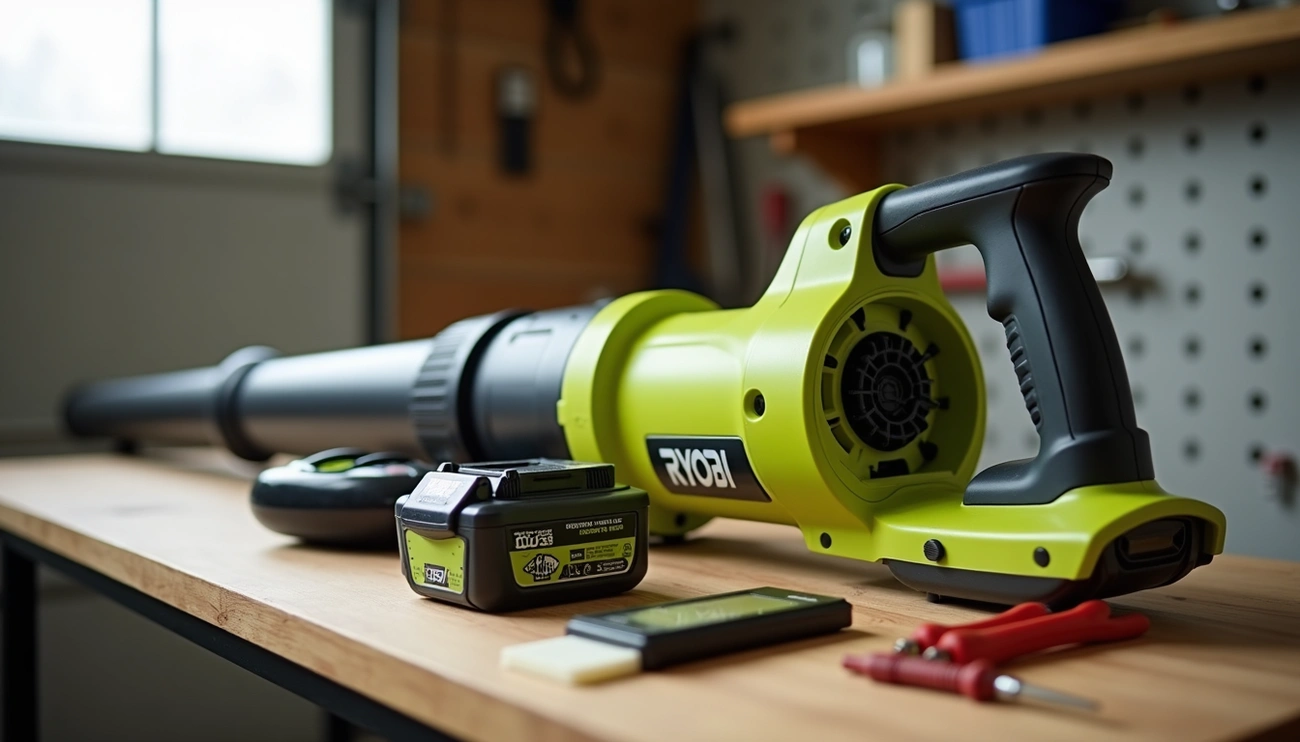
Battery issues are often the root cause of a Ryobi 40V leaf blower that isn’t functioning. Since these power packs contain sophisticated electronics, troubleshooting requires systematic approaches to identify and resolve problems.
How to check battery charge and health
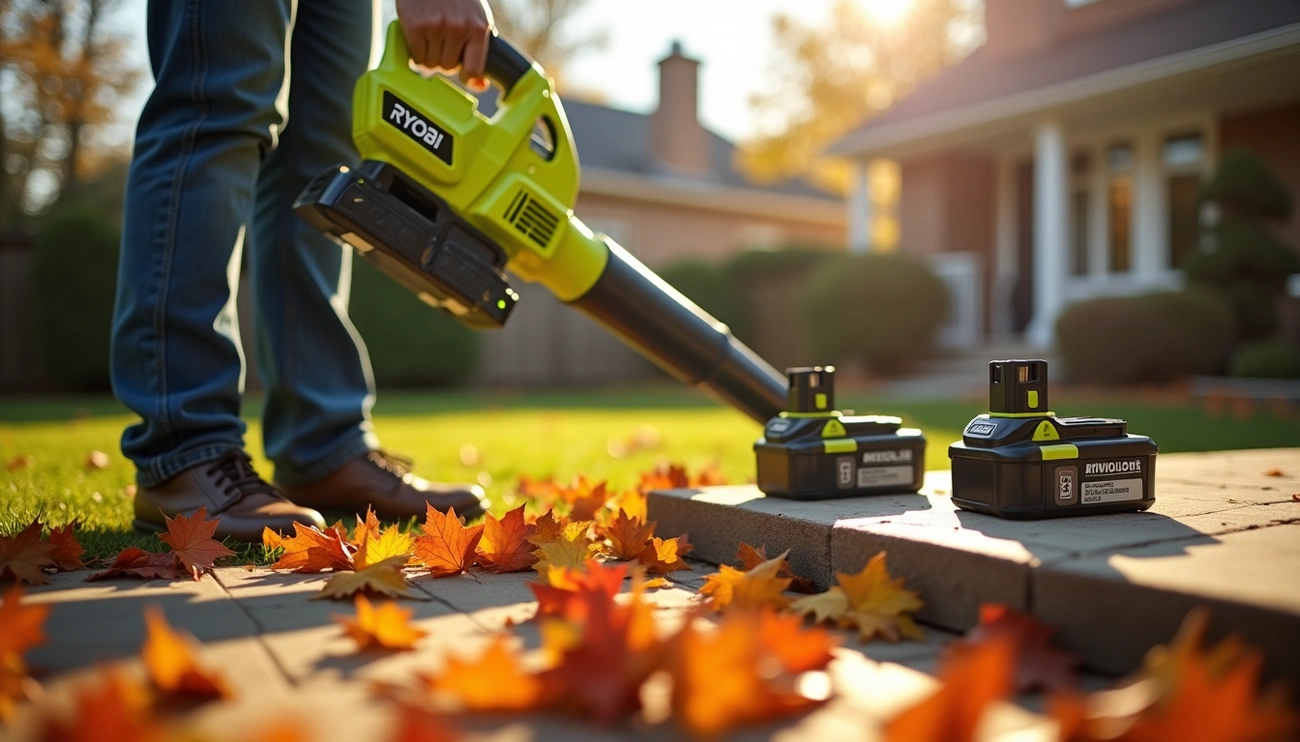
I always start by examining the battery charge indicator.
Ryobi 40V batteries display the charge level through a series of green lights when the indicator button is pressed.
Normally, 4 solid green lights indicate a full charge, whereas a blinking light on the far left shows charging in progress.
Once fully charged, all blinking lights on both the battery and charger will turn off.
For a more thorough health assessment, I check the voltage with a multimeter. A healthy 40V battery should read approximately 41-42 volts when fully charged.
Some users have found that the actual capacity may be lower than the rated capacity, even in relatively new batteries.
Signs of a dead or faulty battery
Several indicators suggest battery failure:
- Physical signs: swelling, bulging, corrosion, leakage, burns, or unusual odours
- Performance issues: rapid capacity loss, poor charge retention, or refusal to charge
- Charger behaviour: flashing red/green lights or error indicators
- Unusual overheating during charging or use
A healthy Ryobi battery typically lasts 300-500 cycles or 2-5 years, depending on usage patterns.
Battery calibration and reset steps
Sometimes batteries enter a protective “sleep mode” that requires resetting. Although no official reset button exists, many users successfully reset their batteries by:
- Opening the battery case (note: this may void warranty)
- Locating the reset pins or jumpers on the circuit board
- Creating a short between specific terminals with an insulated wire
- Reassembling the battery and attempting to charge again
Testing the battery in other Ryobi tools
Since compatibility varies across the Ryobi 40V lineup, I find testing problematic batteries in different tools helps isolate issues.
Older batteries generally fit all tools, whereas newer 6+ Ah batteries only work with newer models. This cross-compatibility test confirms whether the problem lies with the battery or the blower itself.
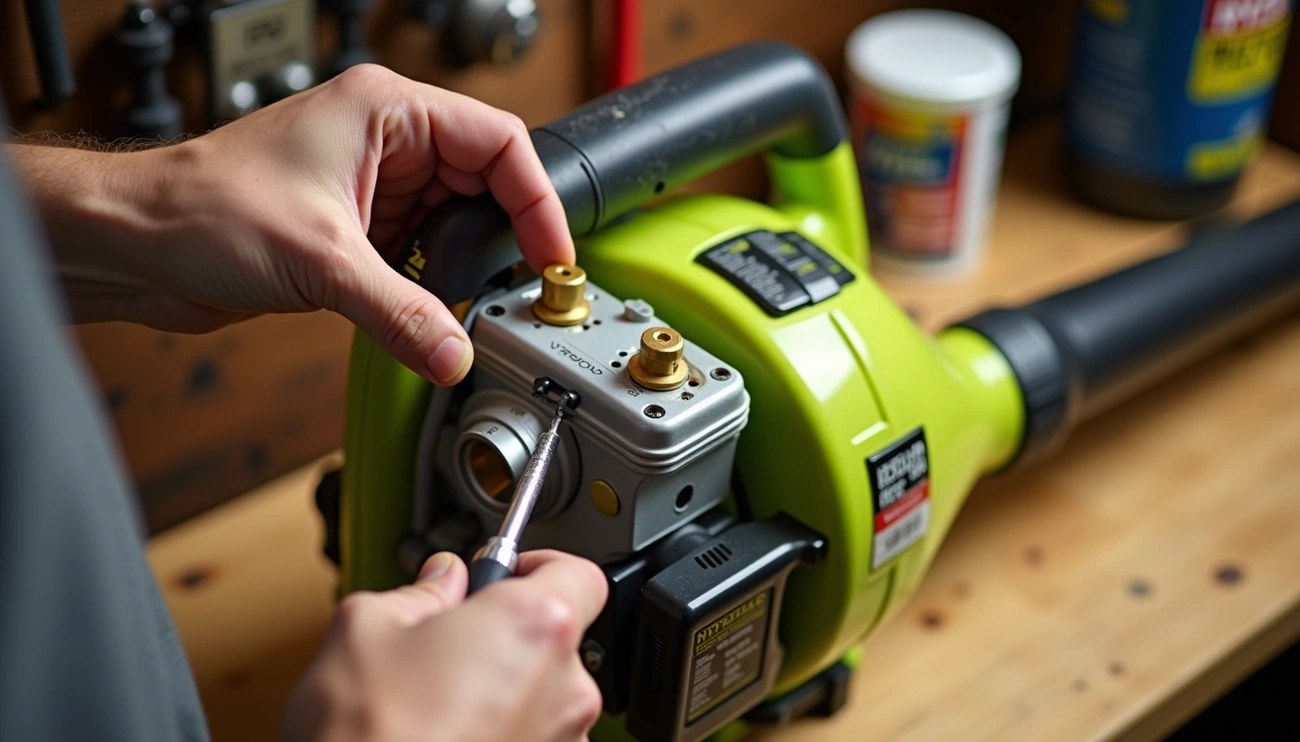
Motor and Electrical Issues to Investigate
Beyond battery issues, motor and electrical problems are often the cause of a Ryobi 40V leaf blower stopping. Investigating these components requires careful attention to specific symptoms and behaviours.
Motor overheating and thermal cut-off
When your Ryobi leaf blower suddenly shuts down after running for a few minutes, it’s likely that the thermal cut-off protection has activated.
This safety feature prevents damage by cutting power when the motor reaches unsafe temperatures.
Several factors contribute to overheating:
- Blocked air vents restricting cooling airflow
- Extended operation at maximum power
- Restricted impeller movement
- Incorrect voltage or power supply issues
To prevent thermal shutdowns, periodically clean intake and exhaust vents, take short breaks during extended use, and store the blower in shaded areas.
Most Ryobi models include thermal sensors that automatically disable the motor until it cools down. Consequently, if your blower stops mid-operation, allow it to cool for approximately 30 minutes before attempting to restart.
Worn-out motor bearings or windings
Failing motor components often produce distinct warning signs. Worn bearings typically cause grinding noises when turning the impeller by hand.
Meanwhile, damaged windings may result in inconsistent performance or complete failure. Bearing issues can specifically cause the motor to seize when power is applied, even if the impeller turns freely when manually manipulated.
Loose or corroded electrical connections
Internal electrical problems commonly manifest as intermittent operation.
Loose connections or corroded contacts can interrupt power flow, causing the blower to work inconsistently or not at all.
Inspecting the power cord, switches, and internal wiring for damage, corrosion, or loose connections may reveal fixable issues without requiring complete motor replacement.
Capacitor or circuit board failure
Circuit board and capacitor issues represent among the most complex electrical problems in Ryobi blowers.
The motor controller is particularly prone to burnt MOSFETs and damaged capacitors.
These components regulate power flow and motor speed, so their failure typically results in complete non-operation or erratic performance.
Circuit board issues often manifest as visible signs, such as charred components or leaking capacitors.
Fixes, Replacements, and Preventive Tips
After diagnosing your Ryobi 40v leaf blower stopped working, deciding on the appropriate fix becomes essential. Below are practical approaches to getting your tool back in action.
When to DIY vs. call support
Handle simple issues yourself, especially minor problems like clogged air filters or loose connections.
For complex electrical issues or motor failures, professional help is recommended. To utilize Ryobi’s support:
- Call their customer service: 1-800-268-4015 (Monday-Friday 8:30am-5pm EST)
- Visit a local Ryobi service center.
- Have your serial number and proof of purchase ready.
How to clean and maintain your blower
Regular maintenance substantially extends your blower’s lifespan. First, check and clean the air filter and blower tube routinely.
Likewise, inspect the impeller for debris buildup and remove any twigs or other materials that could cause blockages. Lastly, wipe down external surfaces with a clean, dry cloth to prevent dirt accumulation.
Understanding Ryobi warranty coverage
Ryobi offers extensive warranty protection. The 40V blower comes with a 5-year limited warranty, whereas batteries and chargers include a 3-year limited warranty.
Certainly, you’ll need proof of purchase to validate coverage. Notably, attempting to repair complex issues yourself might void this warranty.
Storing your blower and battery properly
Proper storage primarily affects longevity. Store your blower in a cool, dry place away from extreme temperatures—ideally between 50-77°F.
Maintain battery charge between 30% and 50% during storage. Regardless, never store batteries on charging cradles or near flammable substances.
Additionally, keep batteries away from metal objects that could cause a short circuit.
Conclusion
After all, troubleshooting your Ryobi 40V leaf blower doesn’t have to be a frustrating experience. Battery issues, trigger malfunctions, blockages, and electrical problems might seem overwhelming at first, but most can be resolved with simple diagnostic steps. Throughout this guide, we’ve explored the most common reasons your blower stopped working and provided practical solutions for each scenario.
Regular maintenance undoubtedly plays a crucial role in preventing these problems before they start. Therefore, I recommend cleaning air intakes, checking battery connections, and storing your equipment properly. These simple habits will significantly extend the life of your leaf blower and save you both time and money on repairs.
Ryobi’s excellent warranty coverage additionally provides peace of mind, though remember that certain DIY repair attempts might void this protection. When faced with complex electrical or motor issues, contacting Ryobi support remains your best option.