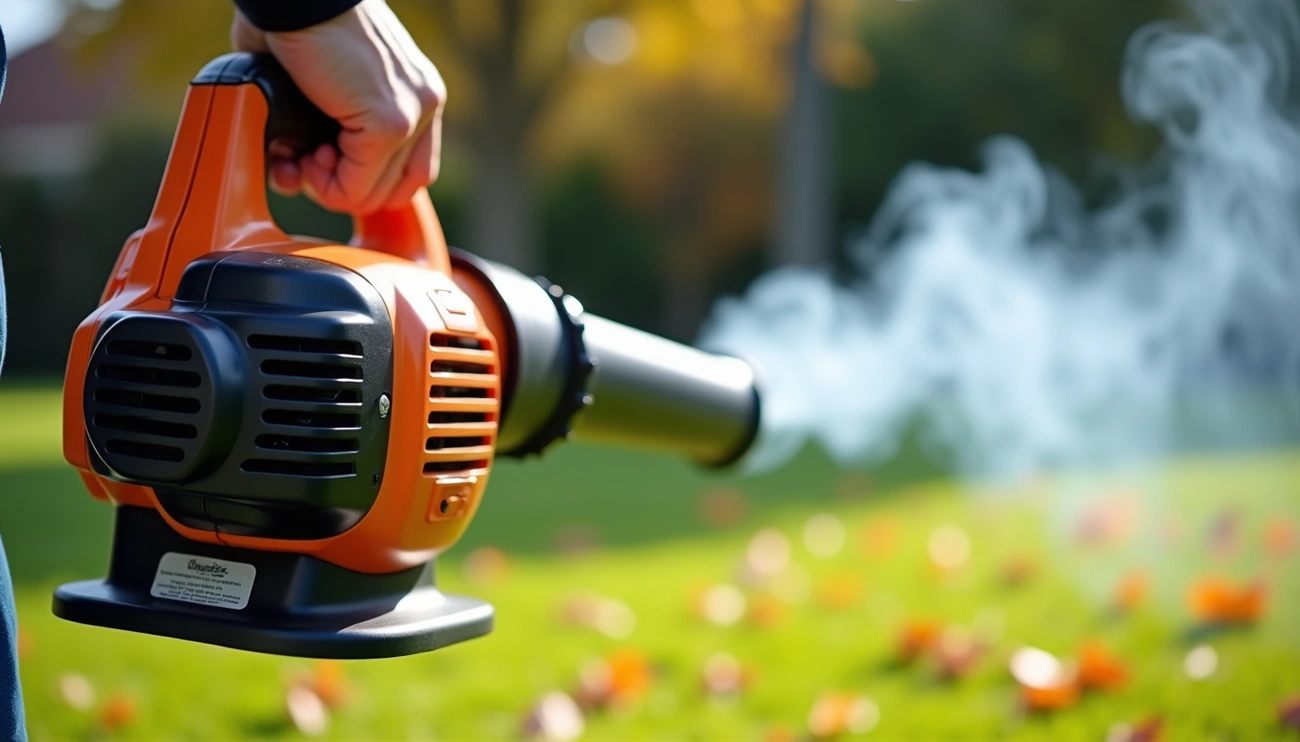
A leaf blower smokes due to an incorrect fuel mix, a dirty air filter, carburetor issues, or burning oil. Too much oil in the gas causes blue or white smoke, while a rich fuel mixture causes black smoke. Operating the blower at a steep angle or overfilling the crankcase can also burn oil and create smoke.
Common Reasons Your Leaf Blower Is Smoking
When troubleshooting a smoking leaf blower, several mechanical issues could be causing this alarming symptom. Understanding these common culprits will help you diagnose and fix the problem quickly.
Incorrect fuel mixture in gas models
Two-stroke engines require a precise gas-to-oil ratio—typically 40:1 or 50:1, depending on your model. This means adding 3.2 ounces (40:1) or 2.6 ounces (50:1) of two-stroke oil per gallon of gas. Too much oil in this mixture creates excessive smoke as the excess oil burns in the combustion chamber. Always check your owner’s manual for the exact ratio your blower needs.
Clogged air filter restricting airflow
A dirty or oil-saturated air filter prevents sufficient airflow to the carburetor, creating a fuel-rich environment that causes smoking. Additionally, if your blower isn’t stored perfectly upright, oil can seep into the air filter area. Regular inspection and cleaning of this component is essential for proper engine function.
Oil leakage into the combustion chamber
When piston rings wear out, they allow engine oil to enter the combustion chamber, where it burns alongside the fuel-air mixture. This typically produces distinctive blue smoke. You can diagnose this by checking engine compression—low compression (below 120 psi) indicates worn rings.
Overfilled oil reservoir in 4-cycle engines
Four-cycle leaf blowers have separate oil reservoirs that, when overfilled, can cause the engine to smoke. Excess oil creates foam, reducing lubrication and potentially allowing oil to enter the combustion chamber. Furthermore, overfilling might force oil past seals and gaskets, causing leaks and muffler smoke.
Blocked exhaust or spark arrestor
The spark arrestor screen in your muffler can become clogged with carbon deposits over time. This restriction causes the engine to rev less high and eventually bog down. Many users notice this issue after about a year of use, especially when running synthetic oils at incorrect ratios.
Using old or contaminated fuel
Stale or contaminated fuel leads to poor combustion and excessive smoke. Fuel that has been sitting for months can chemically break down, leaving gummy deposits throughout the fuel system. Always drain old fuel completely before refilling with fresh fuel at the correct mixture.
Gas vs Electric: What the Smoke Tells You
The smoke emanating from your leaf blower provides valuable diagnostic clues about the underlying problem. Recognizing these smoke signals can help you pinpoint the exact issue.
Gas Leaf Blower Smoking Reasons
Gas-powered leaf blowers often smoke due to fuel-related issues.
The most common culprit is an incorrect fuel-to-oil ratio in two-stroke engines. When there’s excessive oil in the mixture, the engine burns it inefficiently, producing noticeable smoke.
Another frequent cause is a clogged spark arrestor—a small screen in the muffler that becomes coated with carbon deposits over time.
This restriction prevents proper exhaust flow, leading to smoke billowing.
Also, worn piston rings allow engine oil to enter the combustion chamber, where it burns alongside fuel, resulting in persistent smoking despite other maintenance efforts.
Electric Leaf Blower Smoking Reasons
Electric leaf blowers smoke for entirely different reasons than their gas counterparts.
The primary cause is debris being sucked into air vents and coming into contact with hot motor components.
As this debris burns, it creates smoke and often a distinct burning odour.
Prolonged operation without breaks can also lead to motor overheating, particularly on warm days or during heavy-duty tasks.
Also, electrical shorts within the motor or wiring can cause components to overheat and smoke—often accompanied by a burning plastic smell and sudden shutdown.
Smoke Colour’s and What They Mean
Blue smoke indicates either wrong fuel usage or an engine flooding condition. This typically suggests oil is burning where it shouldn’t be.
Black smoke indicates incorrect fuel being used, usually due to a too-rich mixture.
White smoke is often less concerning—it’s typically steam from water that’s been heated inside the engine.
Husqvarna notes that light gray smoke from the exhaust could stem from an incorrect fuel mixture, stale fuel, or a dirty air filter.
Knowing these smoke signals helps determine which maintenance steps to take next.
How to Fix Smoking Leaf Blower Problems
Once you’ve identified why your leaf blower is smoking, fixing the problem is often straightforward with these targeted solutions.
Change The Old Fuel
Old or stale fuel is a common culprit in leaf blower smoking.
If your fuel has been sitting for more than 3-6 months, it’s time for a refresh.
Drain the tank completely and dispose of the old fuel properly in accordance with local regulations.
Mix a fresh batch using your manufacturer’s recommended ratio—typically 50:1 for most models, which translates to 2.6 ounces of oil per gallon of gas.
Always shake the container thoroughly before refilling to ensure oil is evenly distributed throughout the mixture.
Clean or replace the air filter
A dirty air filter restricts airflow to the carburetor, consequently causing smoke.
Locate the air filter housing on your blower and remove the cover.
Take out the filter and assess its condition.
For foam filters, wash with warm, soapy water, rinse thoroughly, and allow to dry completely before reinstallation.
Paper filters can be gently tapped to remove dust or replaced entirely if heavily soiled.
Clean the spark arrestor
The spark arrestor screen located inside the muffler often clogs with carbon deposits after about a year of use.
Locate the muffler and carefully remove the spark arrestor screen. Inspect for soot buildup or clogging.
Clean it using a wire brush or, for stubborn deposits, soak in carburetor cleaner for 10-15 minutes before scrubbing.
Some users find burning off carbon with a propane torch works well—heat until the screen glows red, then remove the heat immediately.
Replace the spark plug if needed
A faulty spark plug can contribute to smoking issues. Disconnect the spark plug wire and use a socket to remove the plug. Check for damage or heavy wear. If necessary, replace with the manufacturer-recommended type.
Adjust oil levels & fuel mix
For two-stroke engines, mix the fuel precisely according to the manufacturer’s specifications—typically a 50:1 ratio. Four-stroke engines require checking oil levels separately from fuel. Avoid overfilling either.
Let the blower cool down between uses
Continuous operation, primarily in hot weather, can cause overheating and smoking. Take 5-10 minute breaks every 20 minutes of use, allowing the engine to cool down properly.
Preventing Smoke and Overheating in the Future
Proper maintenance is the key to avoiding a smoking leaf blower situation altogether. By following these preventative measures, you’ll extend your tool’s lifespan while maintaining optimal performance.
Follow correct fuel-to-oil ratios
Most two-cycle leaf blowers require a specific 50:1 or 40:1 gas-to-oil mixture. This translates to exactly 2.6 fluid ounces of oil per gallon for 50:1 or 3.2 fluid ounces per gallon for 40:1.
Never guess these measurements—incorrect mixtures directly cause smoking engines. Always consult your owner’s manual for the exact ratio your model needs.
Clean cooling fins and air vents regularly
Weekly cleaning of cylinder cooling fins prevents overheating. Similarly, clearing debris from air intake vents near the starter ensures proper airflow throughout the engine. Remember that clogged vents reduce airflow, leading to engine damage and excessive heat.
Use fresh fuel and proper oil
Never use fuel older than 30 days, as it becomes stale. For storage exceeding three months, add a fuel stabilizer to prevent degradation. Above all, avoid gas containing more than 10% ethanol since it attracts moisture and causes breakdowns.
Store the blower properly during the off-season
Prior to long-term storage, drain all fuel or add stabilizer. Clean the machine thoroughly, including air filters and cooling components. Finally, store your blower in a dry, well-ventilated area away from moisture, dust, and freezing temperatures.
Final Thoughts
Dealing with a smoking leaf blower can be frustrating, though most issues are fixable with proper diagnosis and maintenance. Throughout this guide, we’ve identified several culprits behind the smoke signals – from incorrect fuel mixtures to clogged filters and worn engine components.
The colour and type of smoke actually tells a story about what’s happening inside your equipment. Blue smoke typically indicates burning oil, while black smoke indicates a fuel-mixture problem. White smoke, on the other hand, usually indicates condensation and remains less concerning.
Regular maintenance stands as your best defence against future smoking episodes. Accordingly, cleaning air filters, using fresh fuel mixed at the correct ratios, and ensuring proper storage during off-seasons will significantly extend your leaf blower’s life. Additionally, providing your machine with adequate cooling breaks during operation prevents overheating, which is a common cause of smoking.