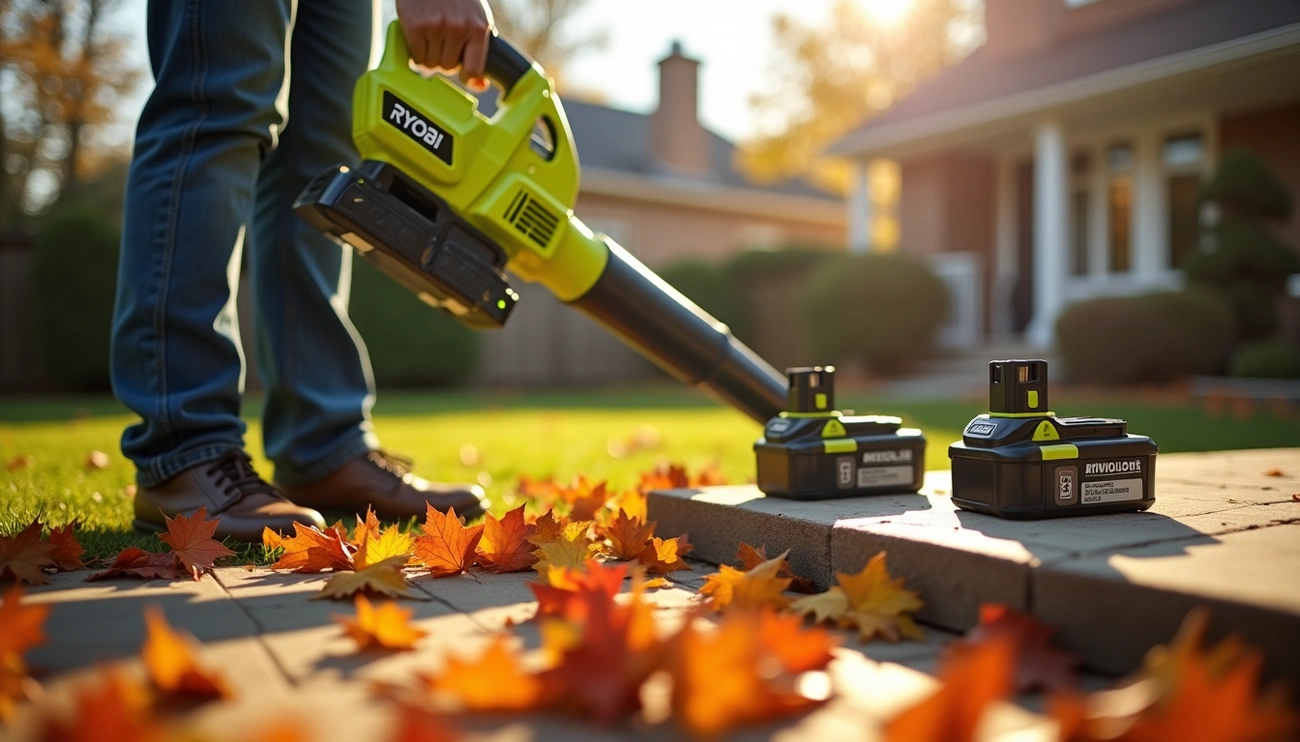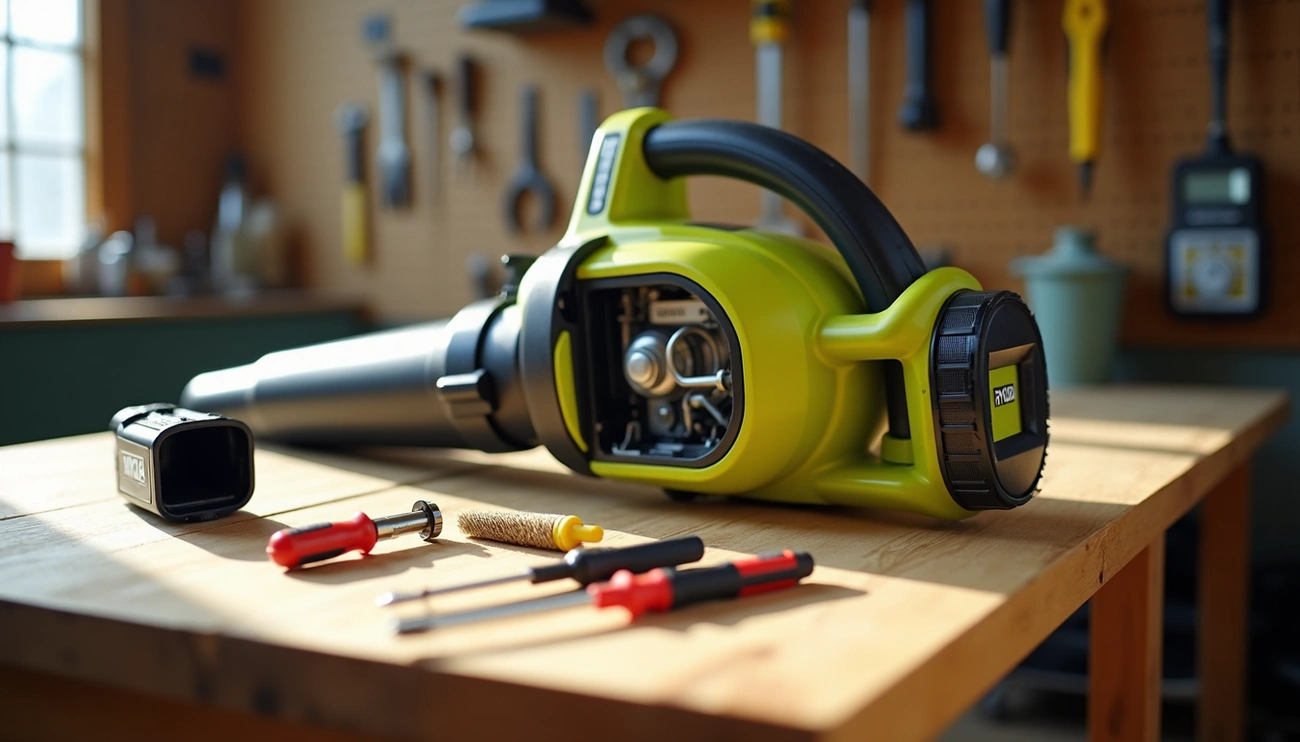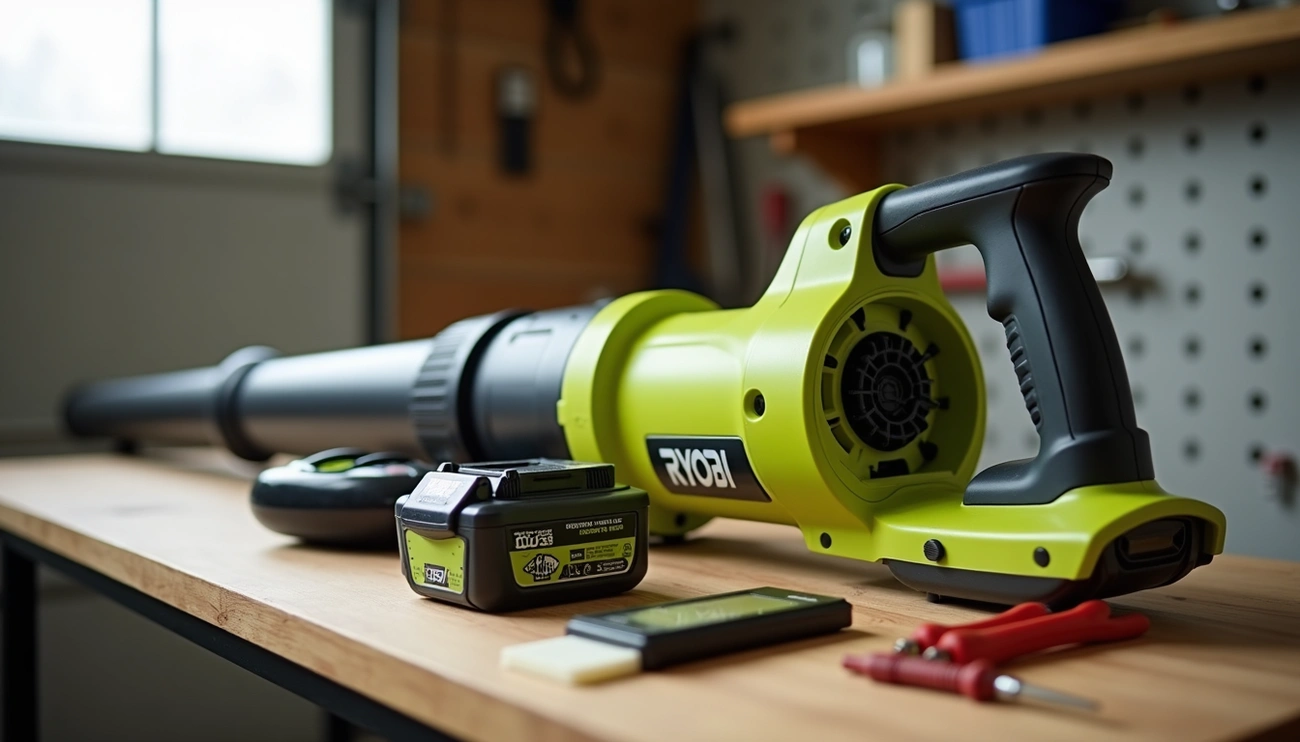
A Ryobi 40V leaf blower keeps shutting off due to overheating, a poor battery connection, blocked air vents, a faulty trigger or safety switch, worn motor brushes, or a failing electronic speed controller (ESC). Check battery contacts, clear vents, allow cooling time, and test with another battery to isolate internal faults.
Check the Basics First
Before going to the shop and buy a replacement, let’s have a try and troubleshoot the most common issues with your Ryobi 40V leaf blower.
Inspect the battery charge and age.
Check the battery first if it is fully charged or not. To determine your battery is truly failing, watch for these tell-tale signs:
- Significantly reduced run time
- Inability to hold a charge
- Rapid power depletion during use
An older battery will naturally struggle to maintain its charge due to normal wear and tear from regular use.
Test with other Ryobi 40V tools
One of the greatest advantages of the Ryobi ecosystem is battery interchangeability.
That’s why, the simplest diagnostic method is to test your battery in another Ryobi 40V tool.
If the battery powers other tools but fails in your leaf blower, the issue lies with the blower itself, not the battery.
Be cautious about using generic battery replacements.
Ryobi’s official batteries contain specialized technology, including Intellicell and Cool-Core systems that regulate power output and prevent overheating.
Generic alternatives lack these safeguards and may damage your tools.
Ensure the blower tube is properly attached.
Thirdly, check if the blower tube is correctly installed or not.
Some users reported is that the leaf blower shuts down after approximately half a second of use due to components that are not properly seated.
This happens because Ryobi blowers have built-in safety features preventing operation when parts aren’t properly connected.
To properly install the tube: slide it over the outlet with the tab facing down, then push until the tab locks into place through the notch in the housing.
The tube should be difficult to separate when correctly assembled. Also, ensure the tube-locking screw is tightened until you hear the safety system disengage.
If you didn’t found the tab to connect properly; using a small piece of thick paper in the tab hole can help establish the connection.
Common Mechanical Issues
Let’s move to inspect the Mechanical issues. Mechanical problems inside your Ryobi leaf blower can cause frustrating intermittent shutdowns. Let’s examine the common culprits that might be causing your device to keep cutting out.
Clogged spark arrestor
The spark arrestor is a small screen that prevents engine sparks from escaping.
This component becomes clogged with soot, causing your leaf blower to run roughly or shut down completely.
To fix this issue:
- Remove the spark arrestor (usually located near the muffler)
- Clean thoroughly using a wire brush to remove all soot buildup.
- Alternatively, replace the component if cleaning doesn’t resolve the issue.
Some users find that removing the flame arrester screen altogether improves performance, especially if it’s severely clogged and causing bubbles to form when tested with water.
Dirty or blocked air filter
A clogged air filter also disrupts the crucial fuel-to-air balance, causing your engine to receive too much fuel and too little air.
As a result of this imbalance, your leaf blower may run roughly or stall unexpectedly.
To clean your Ryobi air filter:
- Toggle the on/off switch to the “STOP” position.
- Open the air filter cover by pressing the tab.
- Remove the filter carefully and wash with warm, soapy water.
- Rinse thoroughly and squeeze to dry.
Fuel filter or carburetor issues (for gas models)
Fuel-related problems also cause for shutdowns. The primary culprit is typically old fuel left in the blower for extended periods.
Over time, fuel components evaporate, leaving behind a sticky substance that clogs both the fuel filter and carburetor.
Signs of carburetor problems include:
- The engine is running more efficiently on half choke.
- Stalling when given full throttle
- Rough idling or poor performance
To address these issues, drain the tank completely and replace the fuel filter.
Also clean the carburetor with a specialized cleaner or consider rebuilding/replacing it if cleaning proves ineffective.
Internal and Electrical Faults
Still your Ryobi 40V leaf blower keeps shutting off? Don’t worry, let’s check the Internal and Electrical Faults.
Overheating and thermal shutdown
Ryobi 40V leaf blower features a built-in protection system that automatically shuts down when the motor overheats. This thermal protection typically activates after 30 seconds of operation, temporarily cutting power to prevent damage.
Consequently, if your blower stops working:
- Allow it to rest in a cool location for at least 5 minutes.
- Clean all air vents to improve circulation.
- Avoid operating in extremely hot environments.
Overheating frequently occurs from extended use or when using high-powered tools directly after recharging in warm environments.
Faulty on/off switch or wiring
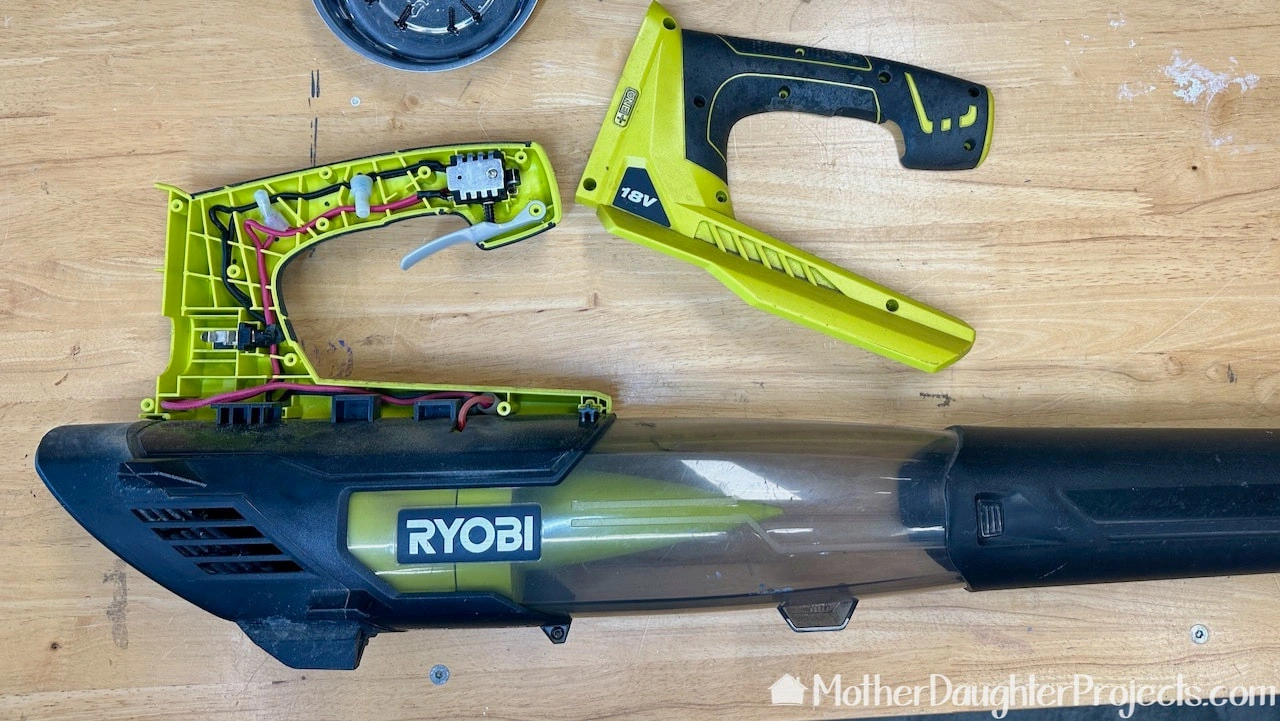
An intermittently failing trigger switch is a common culprit behind sudden shutdowns. Signs include inconsistent operation when pressing the trigger. Switches develop dirty internal contacts over time, causing an unreliable electrical connection.
Replacing the switch involves disconnecting from power, opening the housing, removing wires from the old switch, and installing the new one. Replacement switches cost approximately $25.
Motor or capacitor failure
Motor issues that cause shutdowns include:
- Worn motor bearings are causing excessive vibration.
- Damaged motor windings are preventing proper function.
- Failed capacitors are disrupting the electrical flow.
The motor might also experience imbalance from debris accumulation, particularly if previously used as a vacuum. This imbalance creates drag and causes overheating.
Quick Fixes and When to Replace
Now that we’ve identified potential issues, let’s explore quick fixes to get your Ryobi 40V leaf blower back up and running.
Clean vents and filters
Blocked air vents often cause your leaf blower to overheat and shut down. For optimal performance:
- Thoroughly clean all air vents to remove any debris or blockages.
- Regularly clean the air filter by washing it with warm, soapy water.
- Ensure the blower tube is free from obstructions.
Routine maintenance prevents buildup that restricts airflow around the motor housing. Indeed, many shutdowns stem from poor airflow rather than mechanical failure.
Reset thermal overload by cooling.
When your Ryobi 40V leaf blower keeps shutting off, the built-in protection system might be activating. To reset:
- Place the tool and battery in a cool location for at least 5 minutes.
- Avoid recharging or operating in hot environments.
- Allow complete cooling before attempting a restart.
Remember that batteries can overheat when recharged in hot environments or when used in high-powered tools immediately after recharging.
When repair costs more than replacement
Certain issues make replacement more economical than repair. Consider these factors:
The P21081 blower repair typically costs more than a new unit, which costs around $100. Likewise, repair shop bench fees start at $45 for examination alone.
For broken plastic components, repairs may not be feasible as replacement parts are limited. Rather than investing in costly repairs for older models, directing funds toward newer, more efficient units often makes more financial sense.
Nevertheless, simple DIY fixes, such as reconnecting loose wires or cleaning components, remain worthwhile before considering replacement.
Final Thought’s
Dealing with a Ryobi 40V leaf blower that keeps shutting off can certainly be frustrating. Throughout this troubleshooting guide, we’ve identified several potential culprits behind this common issue. Battery problems, improperly attached blower tubes, and clogged components are the most common causes of unexpected shutdowns.
Most importantly, start your troubleshooting with the simplest solutions first. Check your battery charge and age, test it with other Ryobi tools, and ensure all parts are properly connected before diving into more complex repairs. Additionally, regular maintenance, such as cleaning air filters, vents, and spark arrestors, will help prevent many shutdown issues from occurring in the first place.
Thermal overload protection is another common shutdown trigger; therefore, allowing your blower to cool down for at least 5 minutes often resolves the problem. Simple DIY fixes like reconnecting loose wires or cleaning clogged components usually cost nothing but time.