Blow leaves effectively by wearing safety gear, working with the wind, and starting from the perimeter inward. Use a side-to-side sweeping motion with the nozzle angled 30–45 degrees. Adjust blower speed by terrain, gather leaves into piles or a tarp, and avoid blowing directly onto piles.
Get Ready: Safety and Setup Essentials
Proper preparation is the foundation of effective leaf blowing. Taking a few minutes to set up correctly can prevent injuries and ensure your leaf blower operates at peak efficiency.
Wear protective gear before starting
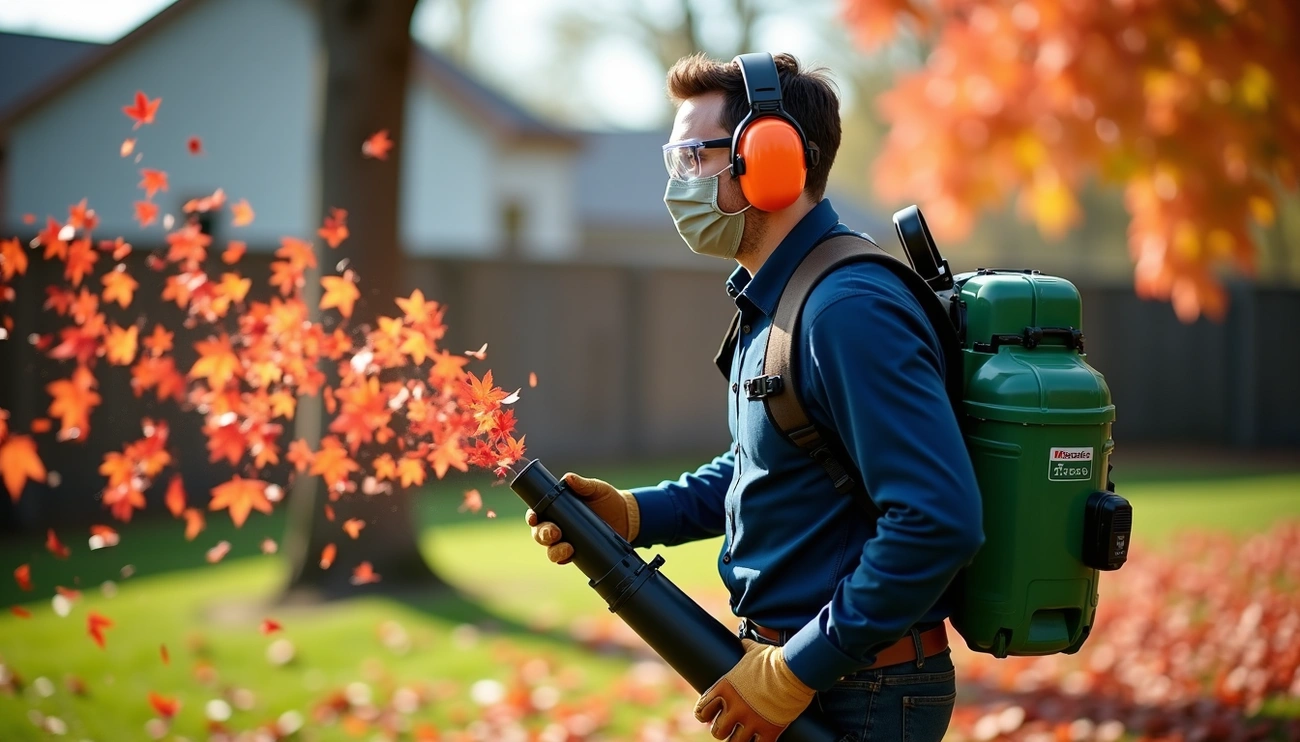
Safety should never be an afterthought when operating a leaf blower. Leaf blowers can stir up dust, dirt, and small debris that may cause eye injuries or respiratory issues. First and foremost, put on safety goggles or glasses to shield your eyes from flying debris. For even better protection, consider sealed safety goggles with adhesive rubber seals that provide complete eye coverage.
Furthermore, protect your hearing with earplugs or earmuffs since leaf blowers produce extreme noise levels that can permanently damage hearing. A quality dust mask or N95 respirator is essential to prevent inhaling harmful particles that could enter your lungs and bloodstream.
Don’t forget to wear:
- Heavy-duty gloves to reduce hand fatigue and shield from hot surfaces
- Long sleeves and pants to protect your skin from dirt and debris
- Closed-toe shoes to safeguard your feet from heavy objects
Clear the area of debris and obstacles
Before powering up your leaf blower, thoroughly inspect your yard. Remove large sticks, stones, and other debris that might obstruct or damage your blower. Moreover, move any outdoor furniture, potted plants, or lightweight decorations that could be affected by the powerful airflow.
Ensure all people, pets, and bystanders are at least 50 feet away from your working area. This safety zone prevents injuries from flying debris and protects others from noise exposure. Close all nearby windows and doors to prevent dust and particles from entering your home.
Inspect and prepare your leaf blower
Prior to starting, examine your leaf blower for signs of wear or damage. Check for loose screws and parts that might need adjustment or replacement. If you’re using a battery-powered blower, verify it’s fully charged and consider having a spare battery for larger jobs.
For gas-powered models, check fuel levels and ensure you’re working in a well-ventilated area. Clean the nozzle and air intake to prevent clogging, which can reduce effectiveness and potentially cause malfunction. For gas models, inspect the air filter and spark plugs, cleaning or replacing them if necessary.
Taking these setup steps seriously is what separates casual users from those who know how to use a leaf blower like a pro.
Master the Basics of Leaf Blowing
The technique you use when operating your leaf blower directly determines your efficiency. Mastering a few fundamental principles will transform how quickly and effectively you clear your yard.
Hold the blower at the right angle
Positioning is crucial for controlling where leaves go. Keep the blower’s nozzle angled slightly downward toward the ground at a shallow angle so leaves move forward rather than upward. This low, downward angle concentrates airflow into a smaller area, providing more precision and preventing leaves from scattering in multiple directions. Holding the nozzle too steeply can lift leaves off the ground, creating more work as they flutter back down randomly. Maintaining the blower close to the ground also prevents dust from being blown upwards while maximizing the tool’s effectiveness.
Work with the wind, not against it
Always check wind direction first, then blow leaves in the same direction as the wind. Working with the wind at your back creates a natural ally that enhances your blower’s power while minimizing effort. Consequently, this approach saves battery life or fuel while preventing frustrating scenarios where leaves blow back toward you. Remember that even a light breeze can significantly impact your work – attempting to blow against the wind is counterproductive and will lead to leaves scattering everywhere or hitting you in the face.
Use a steady side-to-side motion
For optimal results, utilize a consistent sweeping, side-to-side motion rather than randomly pointing the blower. Start from one edge of the area and work methodically across in overlapping paths to ensure you don’t miss anything. This systematic approach prevents backtracking and creates organized piles rather than scattered leaves. Consider dividing your yard into sections and blow debris toward a predetermined collection point.
Adjust speed settings for different surfaces
Different scenarios require different power levels. Use lower speed settings when working in tight spaces, flower beds, patios, or near delicate landscaping. Switch to higher speeds when clearing large piles of leaves from open areas or when handling wet, heavy debris. For gravel or mulched areas, reduce the airflow to avoid displacing the material. This thoughtful adjustment protects your landscape while still effectively removing unwanted debris.
How to Blow Leaves into a Pile Efficiently
Creating efficient leaf piles requires strategy, not just power. Learning how to blow leaves with a leaf blower systematically can cut your cleanup time in half.
Divide your yard into zones
Breaking your yard into manageable sections is a game-changer for efficient leaf removal. Obviously, attempting to blow all leaves at once creates unwieldy mounds that scatter with the slightest breeze. Accordingly, I recommend:
- Start at the farthest point from your collection area
- Work in clearly defined sections, completing one area before moving to the next
- Use natural boundaries like fences or garden borders as zone dividers
- For sloped yards, work across rather than up the hill for better control
Essentially, this methodical approach prevents you from simply moving leaves from one side of your garden to another.
Blow leaves onto a tarp for easy collection
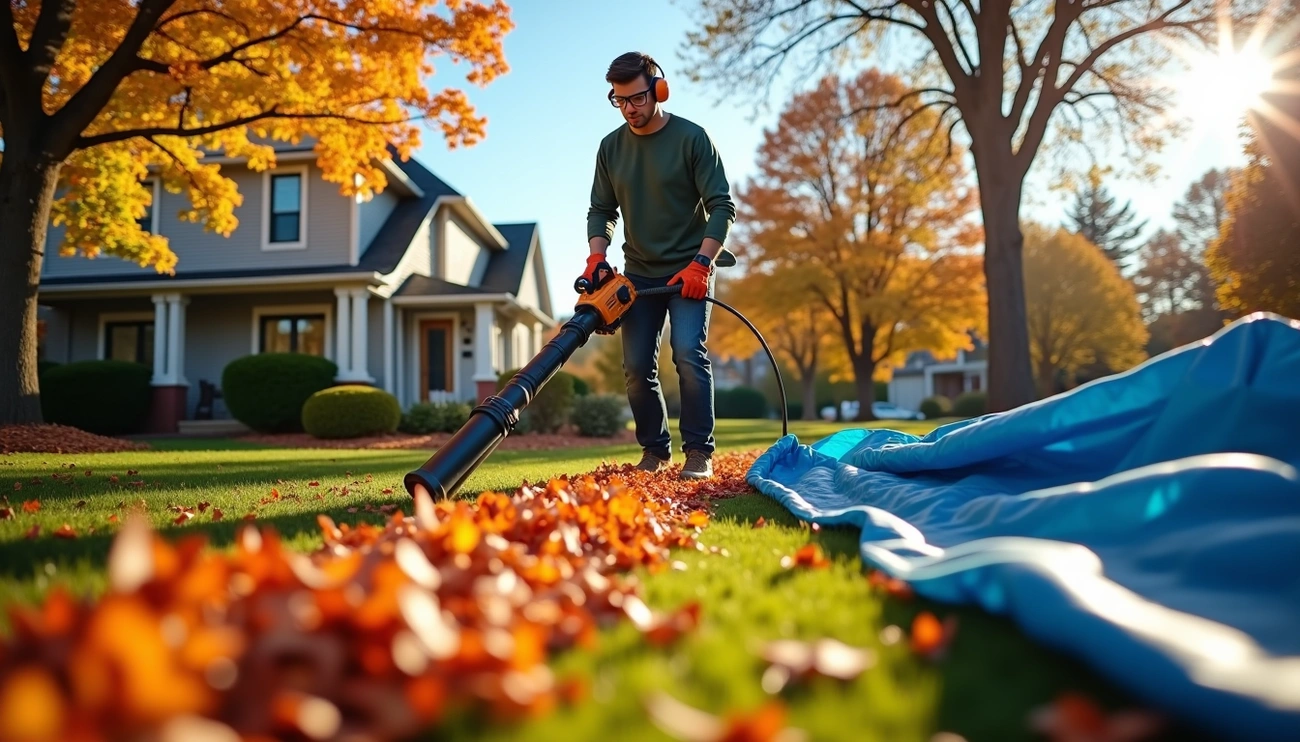
A tarp is perhaps the most underrated leaf blowing accessory. As a result, many homeowners miss this opportunity for faster cleanup. Place a large tarp strategically in your work area and blow leaves directly onto it. Once collected, fold the corners and drag the leaves to your compost pile or garden bin. For larger properties, using multiple tarps allows you to work continuously—fill one tarp while another is being emptied.
Avoid scattering by overlapping your paths
Precision in technique prevents leaves from escaping your control. Specifically:
- Create “windrows” (long, narrow rows) rather than tall mounds for easier management
- Hold the blower at a slight downward angle for better precision
- Use short bursts instead of continuous blowing to direct leaves effectively
- Overlap each pass like you would when mowing a lawn to prevent scattering
- For tightening existing piles, reduce your blower speed to prevent disturbing what you’ve already gathered
Aftercare: Clean, Store, and Maintain
Maintaining your leaf blower after use is just as important as mastering blowing techniques. Proper aftercare ensures longevity and reliable performance season after season.
Wipe down and inspect the blower after use
Following each use, thoroughly clean your leaf blower with a dry cloth, removing leaves and debris from critical areas. Pay particular attention to air intakes, exhaust ports, and cooling fins to prevent overheating. Subsequently, inspect for any loose fasteners, damaged cords, or signs of wear. Tightening loose hardware immediately helps prevent more serious issues later.
Store in a dry, safe place
Ultimately, proper storage extends your leaf blower’s lifespan. Keep your equipment in a cool, dry, well-ventilated area away from direct sunlight, moisture, and extreme temperatures. Notably, storage should be away from dangerous chemicals that might ignite gasoline in gas-powered models. For safety reasons, ensure the blower is out of children’s reach.
Charge or drain batteries depending on type
For cordless models, remove the battery after use. Store batteries at approximately 40-60% charge—not fully charged or depleted. During long-term storage, check battery levels every two months, recharging if they fall below 20%. For gas-powered blowers, either drain the fuel completely or add a fuel stabilizer before winter storage.
Check filters and spark plugs regularly
Primarily, a clean air filter ensures optimal performance. Inspect your filter after about 10 hours of use, cleaning or replacing as needed. During monthly maintenance, examine all cables and connections. For gas models, check spark plugs every 25 hours of operation—clean around them carefully and replace if cracked or fouled.
Conclusion
Mastering the art of leaf blowing transforms a tedious yard chore into a quick, satisfying task. Throughout this guide, we’ve covered essential techniques that make all the difference – from proper safety preparations to creating efficient leaf piles and maintaining your equipment afterward.
Remember, effective leaf blowing begins with proper setup. Safety gear protects your eyes, ears, and lungs while clearing obstacles ensures smooth operation. Additionally, the way you handle your blower significantly impacts results. Holding at the correct angle, working with the wind, and using systematic sweeping motions will cut your yard work time dramatically.
Breaking your yard into manageable zones and using tarps for collection are game-changing strategies many homeowners overlook. These approaches, combined with proper technique, can reduce hours of frustrating work to just 30 minutes for average-sized yards.