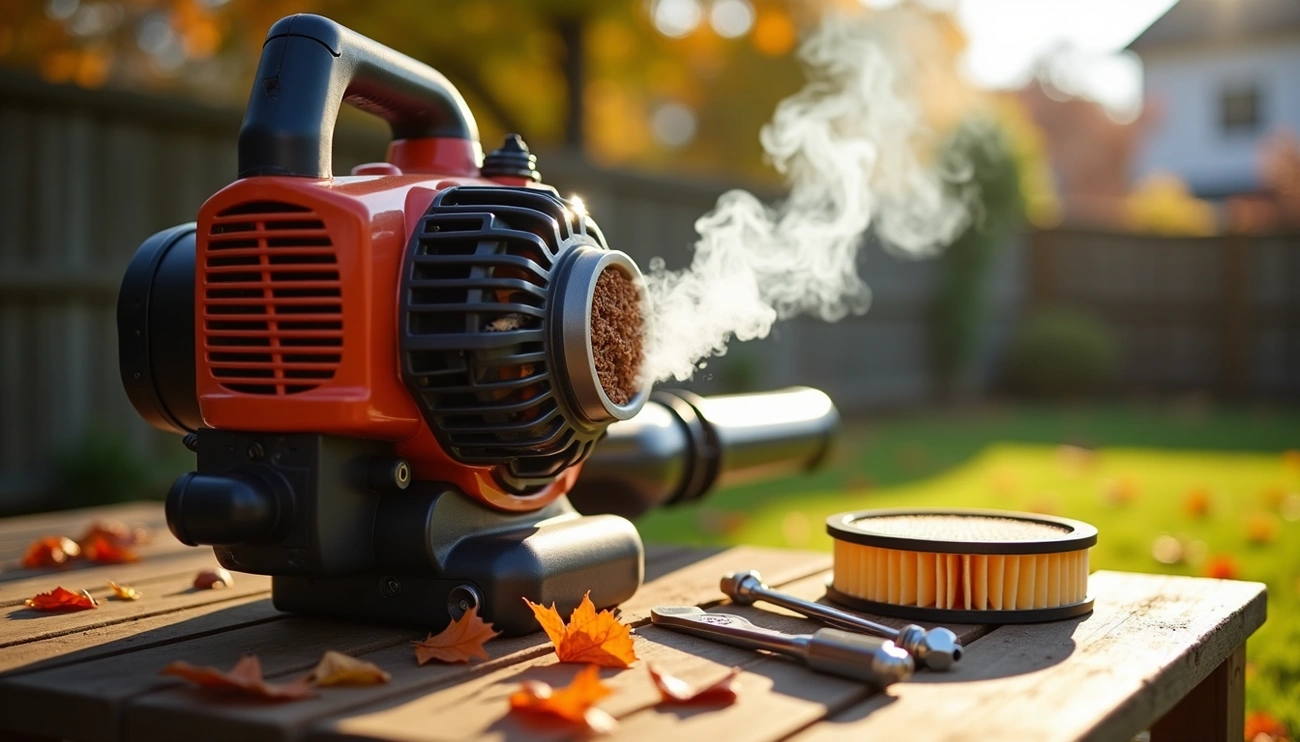
Leaf blower overheating occurs when airflow or combustion is restricted. Common causes include clogged air vents or filters, extended continuous use, and fuel or spark plug problems in gas models. Fix overheating by cleaning air intakes, letting the motor cool, checking fuel and spark plugs, and taking regular breaks.
Common Signs Your Leaf Blower Is Overheating
Recognizing the signs of an overheating leaf blower early can save you from costly repairs or complete equipment failure. Your leaf blower will typically display several warning signals before serious damage occurs.
Sudden shutdowns during use
One of the most frustrating and clear indicators of leaf blower overheating is unexpected shutdowns while you’re working. If your machine suddenly cuts out after running for a while (typically after 30+ minutes of continuous operation), overheating is likely the culprit. I’ve noticed this happens particularly during extended periods of running at full throttle. In electric models, these shutdowns often come with electrical noises right before the motor stops working. The machine essentially protects itself from further damage by shutting down, though continued overheating cycles will eventually lead to permanent failure.
Burning smell or visible smoke
Perhaps the most alarming sign of an overheating leaf blower is smoke or unusual odors. Different colored smoke indicates specific problems: blue smoke suggests incorrect fuel mixture or a flooded engine, black smoke points to wrong fuel usage, and white smoke typically means steam from condensed water heating inside the engine. Furthermore, a burning plastic smell often indicates that internal components are getting too hot. Some users report “electrical burning” smells in electric models. If you detect strong fuel odors or see thick smoke coming from your leaf blower, stop using it immediately until you identify and fix the underlying issue.
Hot engine casing or hard restarts
An excessively hot casing is another telltale sign of overheating. The housing should be warm during normal operation, but if it becomes too hot to touch comfortably, your leaf blower is running hotter than designed. Additionally, many users report difficulty restarting a hot leaf blower. If you turn off your machine and then try to restart it a minute or two later, you might find it unusually challenging. This happens because components expand from heat, creating tight clearances that make restarting more difficult until the engine cools down.
Why Gas and Electric Leaf Blowers Overheat
Behind every overheating leaf blower lies a specific mechanical or electrical issue that, once identified, can usually be fixed. Understanding these common causes helps you prevent damage and extend your tool’s lifespan.
Overuse without breaks
Continuous operation pushes leaf blowers beyond their design limits. Most homeowner-grade models aren’t built for non-stop use, especially at full throttle. Your engine or motor generates significant heat during operation, and without adequate cooling periods, this heat accumulates. Even professional-grade equipment needs occasional breaks to prevent excessive temperature buildup. I recommend giving your blower a 10-15 minute rest after every 30-45 minutes of operation.
Clogged air filters or cooling vents
The cooling system is crucial for preventing overheating. When air filters get clogged with dust and debris, they choke off airflow and disrupt the air-fuel mixture. Consequently, this causes sluggish performance and overheating. Symptoms of a clogged filter include weak airflow, difficult starting, strange engine noises, excessive smoke, and faster-than-normal overheating. Similarly, blocked cooling fins prevent proper heat dissipation, potentially causing serious engine damage.
Incorrect fuel mix in gas models
Most leaf blowers with two-stroke engines require specific gasoline-to-oil ratios—typically 40:1 (3.2 oz oil per gallon) or 50:1 (2.6 oz oil per gallon). Using the wrong mix has serious consequences. Too little oil leads to inadequate lubrication, causing engine parts to seize up. Too much oil produces excessive smoke. Moreover, running pure gasoline in a two-cycle engine can rapidly damage pistons, often resulting in total engine failure.
Blocked airflow in electric models
Electric blowers rely on proper ventilation to dissipate motor heat. Debris accumulation in intake and exhaust vents restricts airflow, forcing motors to work harder and generate more heat. Regular inspection and cleaning of these vents helps maintain optimal cooling performance.
Low voltage or faulty power supply
Electric motors suffer when voltage drops below required levels. For instance, using excessively long or undersized extension cords creates voltage drop—one test showed a 12.4% drop when using multiple extension cords. This voltage reduction causes motors to draw more current, heating the windings. Furthermore, faulty electrical connections inside the blower can cause intermittent operation and overheating.
How to Fix an Overheating Gas Leaf Blower
Getting your gas leaf blower back to proper operating temperature is often simpler than you might think. With some basic maintenance, you can resolve most overheating issues yourself.
Clean or replace the air filter
A clogged air filter is often the primary culprit behind an overheating leaf blower. First, locate and remove the air filter cover, then carefully take out the filter. For foam filters, wash with warm soapy water, rinse thoroughly, and let it dry completely before reinstalling. Paper filters should be replaced if visibly dirty or after one year of use. Regular maintenance matters—clean the air filter monthly or after every 10 hours of use. A clean filter allows proper airflow that prevents dangerous engine heat buildup.
Check and correct the fuel mixture
Improper fuel mixture commonly causes overheating in two-stroke engines. Most leaf blowers require a specific ratio—typically 50:1 (2.6 oz oil per gallon) or 40:1 (3.2 oz oil per gallon). Check your owner’s manual for the exact specification. Always use fresh gasoline—fuel older than 30 days becomes stale and damages engine components. Mix thoroughly in a clean gas container by shaking well. Incorrect mixing leads to serious problems—too little oil causes inadequate lubrication while improper ratios can permanently damage your engine.
Inspect and replace the spark plug
A faulty spark plug often contributes to overheating problems. Remove it using a spark plug wrench or 5/8-inch socket. Inspect for corrosion, black soot, or visible damage. If simply dirty, clean it with a wire brush. Otherwise, replace it completely. For optimal performance, replace your spark plug every 25 hours of use or at the beginning of each season. A well-functioning spark plug ensures easier starting and consistent engine performance.
Let the engine cool between uses
Ultimately, prevention is crucial for avoiding overheating. Take regular breaks—ideally 5-10 minutes after every 20 minutes of operation. Use lower throttle settings whenever possible to reduce heat generation. Keep your blower in shaded areas during breaks. Regularly clean cooling fins and vents with a soft brush or compressed air to maintain proper airflow around the engine.
How to Fix an Overheating Electric Leaf Blower
Electric leaf blower overheating issues often have straightforward solutions that you can implement yourself. Unlike gas models, electric blowers have unique maintenance requirements that are typically simpler to address.
Clear debris from intake and exhaust vents
Restricted airflow is the primary cause of electric blower overheating. Initially, inspect both intake and exhaust vents for accumulated dust, leaves, or debris. These blockages force the motor to work harder, generating excessive heat. To fix this, unplug your blower first, subsequently use compressed air to blow out particles from vents. For stubborn buildup, a soft brush can safely remove debris without damaging internal components. Given that proper airflow is crucial, check vents regularly—ideally before each use in dusty conditions.
Use the correct extension cord and voltage
Improper cord selection dramatically affects blower performance. Extension cords must match your blower’s amperage requirements—most electric leaf blowers need 10-12 amps. The cord gage must correspond to length: 18 gage for 25ft, 16 gage for 50ft, 14 gage for 100ft, and 12 gage for 150ft. Using too thin or long a cord creates voltage drop, forcing the motor to draw more current and overheat. Plus, always use outdoor-rated, three-prong grounded cords for outdoor blowers.
Inspect power cables and switches for damage
Damaged wiring creates resistance points that generate heat. Check for frayed cables, loose connections, or melted plugs. Many electric blowers have safety switches where tubes connect to the housing. These prevent operation if components aren’t properly assembled, yet can malfunction, causing intermittent operation and overheating. Inspect these connection points regularly for damage or debris.
Avoid overloading the circuit
Overloading happens when too many devices draw power simultaneously from one circuit. Electric blowers should ideally operate on their own circuit. To prevent overload, use no more than 80% of a circuit breaker’s capacity. High-wattage devices (like leaf blowers) should be plugged directly into wall outlets rather than power strips. Allow your blower a 20-30 minute break during extended use to prevent motor burnout.
Conclusion
Keeping your leaf blower running at optimal temperature ultimately comes down to consistent maintenance and proper usage habits. After identifying the warning signs—unexpected shutdowns, burning smells, or excessive heat—you can take specific steps to address the problem before permanent damage occurs.
Most overheating issues stem from simple, fixable causes. Clogged air filters or cooling vents restrict airflow, while incorrect fuel mixtures or voltage problems force engines to work harder than necessary. These problems affect both gas and electric models, though each requires different maintenance approaches.
Regular maintenance certainly pays off. Clean or replace air filters every 10 hours of use, check spark plugs seasonally, and ensure all vents remain debris-free. Additionally, giving your equipment proper rest periods extends its lifespan significantly—something many users overlook until problems arise.
