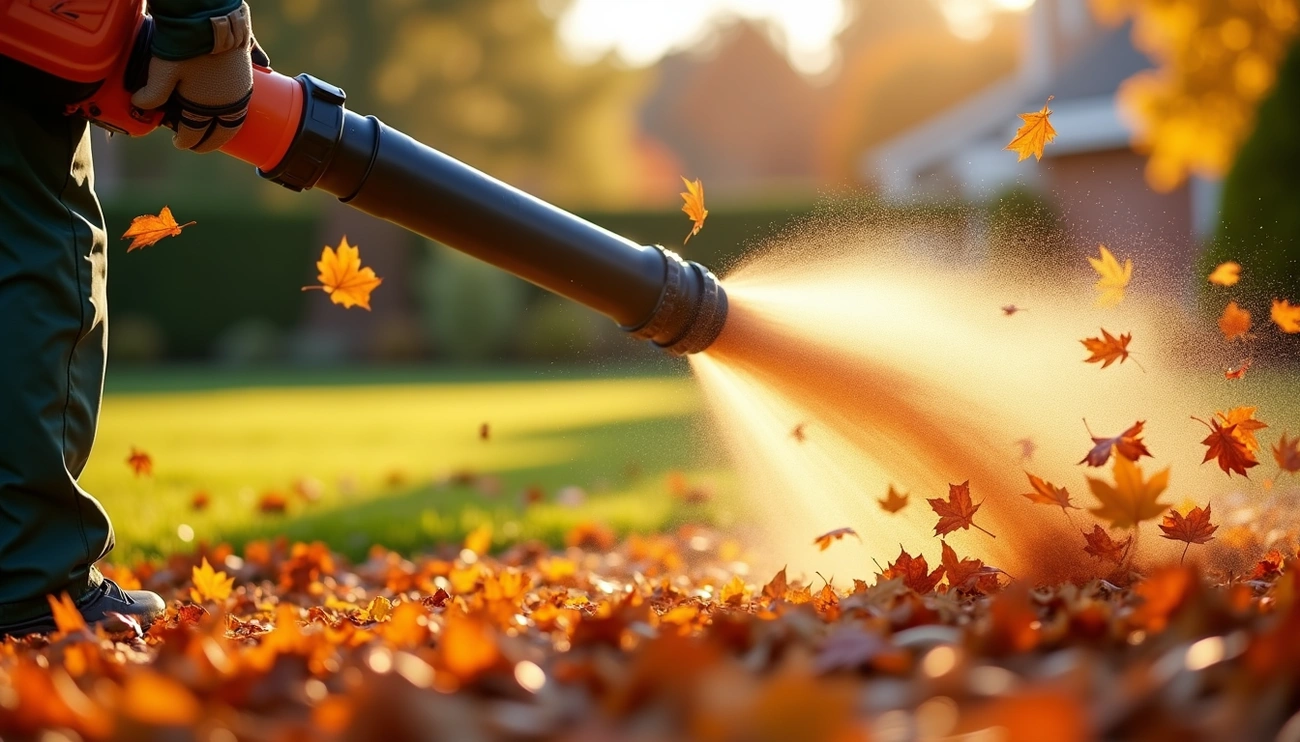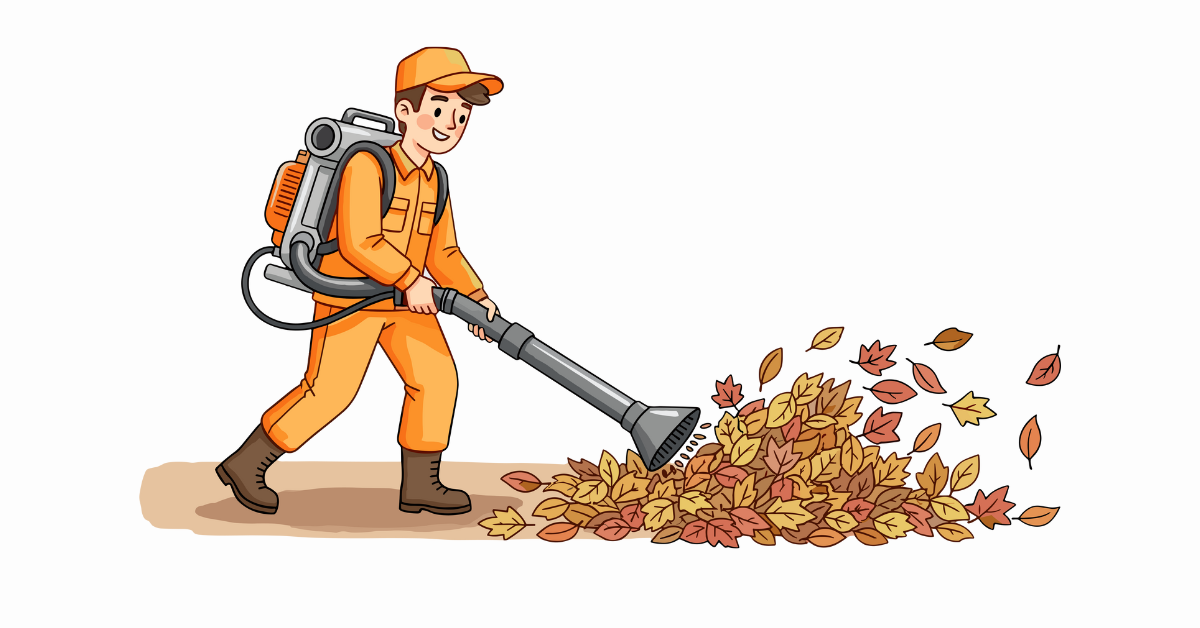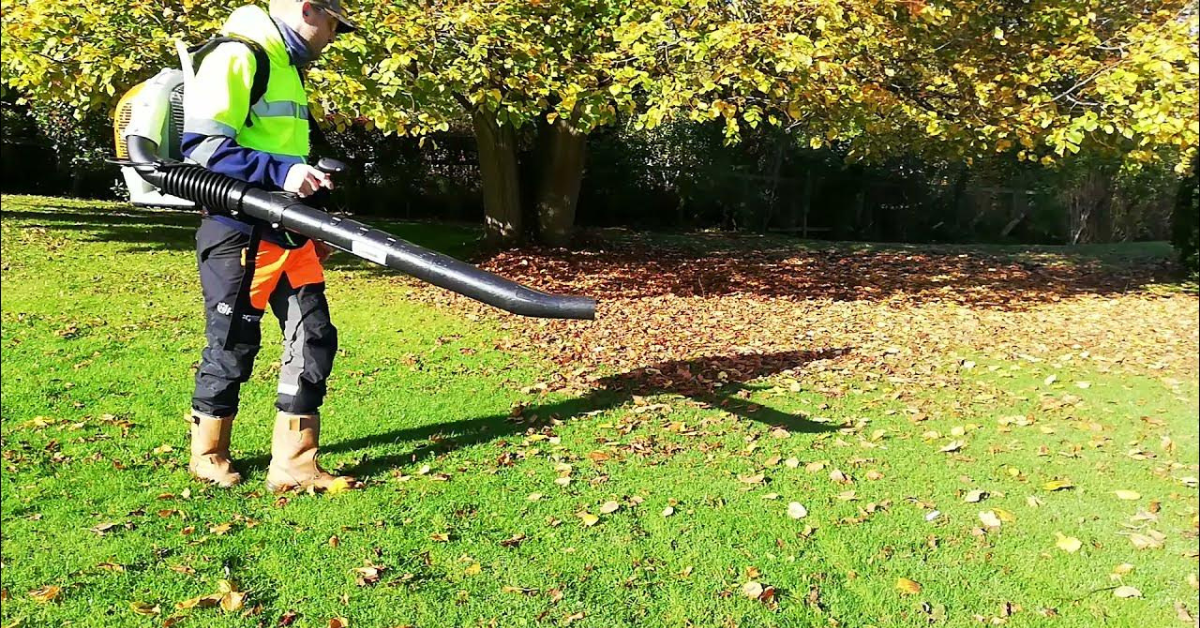
Yes, you can use a leaf blower on mulch to remove leaves by using a low power setting and careful aim. Leaf blowers separate light leaves from heavier mulch, but aggressive use can displace bark mulch, cause soil erosion, and harm beneficial insects. Blow from a distance, use a sweeping motion, or lightly wet mulch to reduce movement.
Manual Methods to Remove Leaves from Mulch
Dealing with leaf-filled mulch beds doesn’t always require fancy equipment. Some of the most effective approaches involve nothing more than your own two hands and a few simple tools. Let’s explore the manual techniques I’ve found work best for keeping mulch clean without damaging your garden beds.
Use your hands for delicate areas
For tightly planted areas with delicate plants, hand removal is often the only practical solution. I’ve found that spending just a few minutes each day picking up leaves during peak fall season prevents major buildup. This method requires:
- Gardening gloves to protect your hands from hidden critters
- A kneeling pad to prevent joint strain
- A bucket nearby for collecting the leaves
Hand removal gives you precise control, allowing you to work around fragile plants without causing damage. Furthermore, you’ll only need to focus on the beds for a few days during peak leaf drop since they’re unlikely to be completely covered by leaves from distant trees. Despite being time-consuming, this method requires no special equipment and prevents damaging delicate plants.
Try a hand rake or shrub rake
When working between plants with more space, specialized rakes can make quick work of leaf removal. A hand rake (sometimes called a hand cultivator) features a miniature design perfect for container gardens and flowerbeds. Meanwhile, a shrub rake with its narrower head (less than 10 inches wide) fits easily into tight spaces around plants.
For the best results:
- Use a spring-tine rake rather than hard-tooth tools to avoid lifting heavier mulch
- Look for an adjustable rake that narrows to fit between smaller plants
- Rake with short, gentle strokes in one direction to prevent disturbing the mulch
- Work when leaves are dry for easier removal (wet leaves tend to stick to mulch)
The primary advantage of these specialized rakes is their ability to reach between plants without causing damage, making them ideal for beds with widely spaced shrubs or perennials.
When to avoid raking altogether
Occasionally, raking does more harm than good. If your mulch is particularly light or fluffy, a rake can easily disturb it, creating additional work. Similarly, if leaves have become wet and begun decomposing into the mulch, raking might remove too much of your valuable mulch along with the leaves.
Consider avoiding raking when:
- Dealing with very small leaves that have integrated into the mulch
- Working with fresh, loose mulch that displaces easily
- Maintaining areas with extremely delicate plants
- Managing beds with decorative mulch you want to preserve intact
In these situations, hand removal or the gentle suction of a leaf vacuum might serve as better alternatives for preserving your carefully maintained garden beds.
Using Tools: Blowers and Vacuums
Power tools offer a faster solution for clearing leaves from larger mulched areas. With prices ranging from $50 to $600 for leaf blowers and $100 to $500 for leaf vacuums, these tools can significantly reduce the time spent on garden maintenance.
How to use a leaf blower without disturbing mulch
The secret to effective leaf blowing lies in your technique. To keep mulch in place:
- Angle the blower properly – Hold the nozzle at a 30-45° angle to the ground and point it so air flows across the surface of the mulch, not directly at it
- Reduce the speed setting when working around landscaped areas
- Work with the wind at your back to maximize efficiency
- Move in systematic patterns, similar to mowing your lawn
Many leaf blower models include variable speed controls specifically for this purpose, allowing you to adjust airflow depending on whether you’re clearing delicate flower beds or open lawn areas.
Tips for using a leaf vacuum safely
Leaf vacuums combine blowing, vacuuming, and mulching capabilities, compressing leaves at a 10:1 ratio. Before operating:
- Wear proper safety equipment including eye protection, ear protection, gloves, and closed-toe shoes
- Check for rocks, sticks, or other debris that could damage the machine
- Maintain proper posture to avoid strain (shoulder straps help distribute weight)
- Empty the collection bag regularly to maintain strong suction
Cordless models provide mobility for medium-sized yards, whereas corded electric models work well for smaller spaces and don’t require fuel management.
Best time to use tools for dry leaves
Timing matters tremendously with both blowers and vacuums. Operating these tools when leaves are dry offers several advantages:
- Dry leaves are lighter and easier to move
- They’re less likely to clog vacuum mechanisms
- You’ll achieve better mulching results
- Equipment batteries last longer without struggling against damp material
For optimal results, work during daylight hours on calm, dry days. This strategy prevents wind from scattering your carefully gathered piles and ensures your equipment operates at peak efficiency.
Preventing Leaves from Getting into Mulch
Prevention proves far more effective than constantly cleaning up leaves. After trying numerous approaches over the years, I’ve discovered several proactive strategies that significantly reduce leaf accumulation in mulched areas.
Install a leaf barrier or landscape fabric
Contrary to popular belief, landscape fabric isn’t always the best permanent solution. Though marketed as a “weed barrier,” it often creates maintenance problems by preventing mulch decomposition and forcing plants to develop shallow roots. Additionally, weeds frequently grow through the fabric anyway, making removal particularly difficult.
A better approach for leaf prevention involves temporary barriers. Try stretching thin landscaping material over mulched beds during peak leaf drop season. This lightweight barrier catches falling leaves without harming delicate plants underneath. Subsequently, you can remove both barrier and leaves each morning, allowing plants access to sunlight throughout the day.
Use edging to reduce leaf intrusion
Properly installed edging creates an effective boundary that helps:
- Prevent mulch migration
- Block leaves from blowing into beds
- Create a tidy appearance in your landscape
Edging serves as an important barrier against weeds, grass, and unwanted plant materials attempting to invade your carefully maintained beds.
Trim overhanging branches to reduce leaf fall
Strategically pruning branches positioned directly above mulched areas can substantially decrease the volume of leaves falling into these spaces. Moreover, regular trimming maintains healthier trees while preventing the constant battle against leaf accumulation.
Although complete leaf prevention remains challenging, combining these strategies creates a more manageable garden that requires less frequent cleaning throughout autumn months.
Safety and Maintenance Tips
Protecting yourself should always come first whenever tackling garden tasks. Let’s explore some essential practices for safer, more effective mulch maintenance.
Wear gloves and protective gear
Garden work demands proper protection to prevent injuries. Choosing the right gloves makes a tremendous difference – metal mesh or Kevlar gloves shield hands from sharp objects, whereas leather protects against splinters and debris. For chemical applications, rubber or nitrile gloves are essential.
Beyond hand protection, consider:
- Eye protection to guard against flying debris
- Dust masks if you’re sensitive to allergens
- Long pants, closed-toe shoes, and sun protection
This equipment isn’t merely optional – it prevents blisters, cuts, and potential long-term injuries from repetitive gardening tasks.
Replace old mulch if needed
Mulch doesn’t last forever – sunlight, rain, and snow eventually break it down. When refreshing mulch beds:
- Remove old mulch completely each growing season
- Leave a few inches between mulch and the base of plants or structures
- Water thoroughly after application to help nutrients penetrate
Rake your mulch every 3-4 months to maintain its appearance and effectiveness.
Compost or reuse collected leaves
Instead of discarding leaves, transform them into valuable garden resources. Pound for pound, tree leaves contain twice as many minerals as manure. The leaves from one large shade tree can be worth approximately $50 in plant food and humus.
To create leaf compost:
- Layer 6 inches of leaves with 2 inches of nitrogen-rich material like manure
- Add a thin layer of native soil between layers
- Turn the pile every three weeks
This simple process yields nutrient-rich compost perfect for spring planting.
Conclusion
Keeping leaves out of mulch might seem like a never-ending battle, especially during fall. Nevertheless, the methods outlined above make this task much more manageable. Manual removal works perfectly for delicate areas, while leaf blowers and vacuums handle larger spaces efficiently when used with proper technique.
Prevention remains the best approach overall. Strategic barriers, proper edging, and thoughtful pruning significantly reduce the amount of cleanup needed throughout the season. Additionally, safety should always come first – protective gear protects not just your hands but also your eyes and lungs from potential hazards.
Remember that leaves aren’t merely a nuisance to be discarded. Instead, they represent a valuable resource for your garden. Those fallen leaves contain twice the nutrients of manure and can transform into excellent compost for next season’s planting. This approach not only saves money but also completes the natural cycle in your garden.