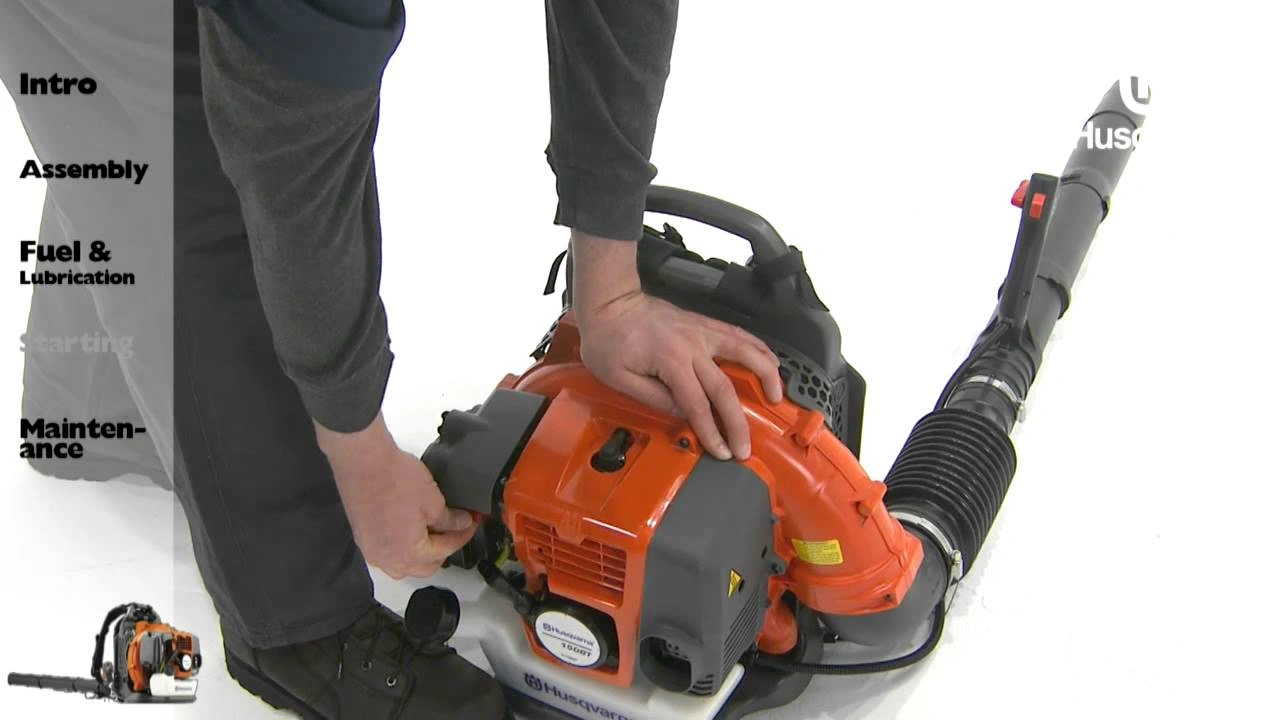
A Husqvarna backpack blower bogs down due to fuel delivery or airflow problems. Common causes include stale fuel, clogged fuel lines or carburetor jets, a dirty air filter, or a blocked spark arrestor. Fix the issue by using fresh fuel, cleaning filters, checking fuel lines and vents, and adjusting or rebuilding the carburetor.
Step 1: Identify the Symptoms
Before attempting any repairs on your Husqvarna backpack blower, first identify exactly how it’s malfunctioning. Recognizing the specific symptoms helps pinpoint the underlying cause and guides your troubleshooting approach.
Blower starts but dies when throttled.
The most common symptom of a problematic backpack blower is when it starts up normally but immediately loses power when you press the throttle. Many users report that their Husqvarna leaf blower “bogs down really badly and will die until you release the trigger.”
This behaviour indicates a fuel delivery problem in which the engine can’t deliver enough fuel when demand increases.
You might notice your blower starts quickly at first; however, as soon as you give it full throttle, it chokes down and stops. Furthermore, you can typically restart it, but it continues to stall whenever you try to increase power beyond idle.
Runs fine at idle, but bogs under load
Another telltale sign involves your blower running perfectly at idle speed while failing under load. Initially, after a cold start, your Husqvarna backpack blower operates as expected.
Nevertheless, after approximately 15-20 minutes of running at full power, it begins to lose power. If you ease off and return to idle, the blower temporarily regains full power, only to start losing it again shortly afterward.
Some users observe that if they release the throttle while the blower is faltering, it idles perfectly and could run through an entire tank of gas at idle. This pattern strongly suggests fuel starvation under higher demands.
Inconsistent performance with choke use
Specifically, unusual choke behaviour often reveals the nature of the problem. Your blower might only restart with the choke on, then die immediately when you turn the choke off.
In certain cases, at full throttle, the only way your blower will run close to normal speed is with the choke nearly closed. This symptom indicates your engine is running “lean” (getting too much air and not enough fuel).
Additionally, you might find that by manipulating the choke settings, you can get the blower to perform reasonably well at half throttle, though performance remains inconsistent and unpredictable.
Identifying these precise symptoms helps narrow down the potential causes of your Husqvarna backpack blower bogging down, setting the stage for effective troubleshooting.
Step 2: Check the Basics First
Once you’ve identified the specific symptoms of your Husqvarna backpack blower bogging down, it’s time to check some basic maintenance items. These simple fixes often solve the problem without requiring more complex repairs.
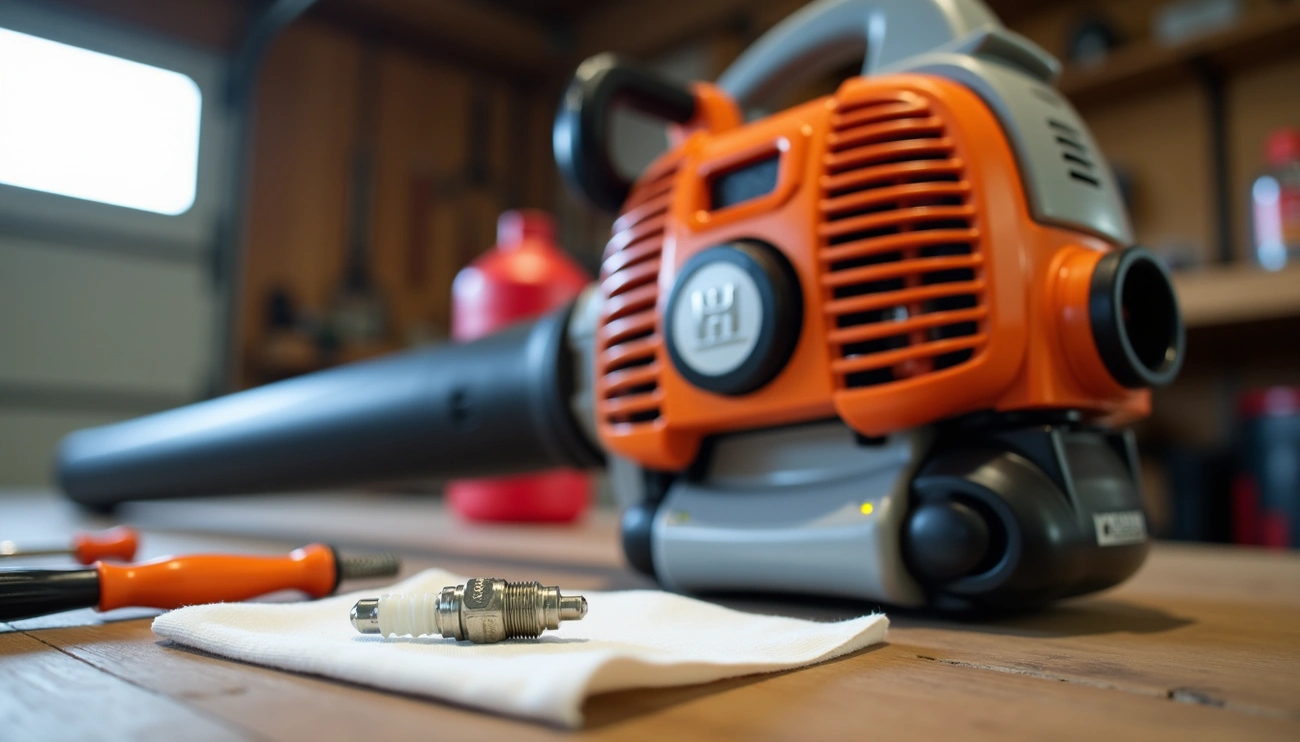
Inspect and replace the spark plug.
A faulty spark plug is often the cause of poor engine performance. I recommend examining your spark plug if your engine lacks power, struggles to start, or runs inconsistently at idle. To properly inspect the spark plug:
First, remove the cover to access the spark plug. Remove the cap and wire, then clean any corrosion from the contact with a wire brush. Use a 5/8-inch deep-well socket or spark plug wrench, turning counterclockwise to remove the plug.
Carefully check the electrode for cracks or carbon deposits. If you find carbon buildup, clean it thoroughly with a wire brush. For damaged plugs, replacement is necessary. When reinstalling, seat the plug firmly without overtightening, ensuring the cap clicks securely into place.
Clean or replace the air filter
A clogged air filter increases fuel consumption while reducing engine power, which directly contributes to your blower bogging down. Moreover, operating without a proper air filter can quickly damage your engine.
To maintain the air filter, unscrew the knobs and remove the air cleaner cover. Wash the filter element with mild detergent and warm water, then dry completely. For optimal performance, apply a small amount of two-cycle oil to the filter element.
Use fresh, ethanol-free fuel.
An incorrect fuel mixture is a primary cause of engine sputtering and starting problems in leaf blowers. Your Husqvarna requires a precise 50:1 ratio (50 parts gas to 1 part oil).
Consequently, always mix fuel in a clean container specifically intended for fuel. Start by filling with half the needed petrol, add the entire amount of oil, mix thoroughly, then add the remaining petrol. Importantly, avoid mixing more than one month’s supply at once, as fuel degrades over time.
Following these basic maintenance steps will often resolve a bogging-down problem without requiring more complex repairs.
Step 3: Diagnose Fuel and Air Issues
After addressing the basic maintenance items, I need to look deeper into fuel and air delivery issues. These are typically the main culprits when a Husqvarna backpack blower continues bogging down despite basic troubleshooting.
Check for a clogged fuel filter or lines.
A clogged fuel filter severely restricts fuel flow to your engine, especially at higher speeds. This common issue occurs primarily when old fuel sits in the tank for extended periods. To inspect:
- Drain the fuel tank and locate the filter at the end of the fuel line inside the tank.
- Remove the filter and check for discoloration or visible debris.
- Hold it up to the light – you should be able to see through it.
Replace the filter if it appears dirty, as it may be restricting proper fuel flow to the carburetor when the engine demands more fuel at full throttle.
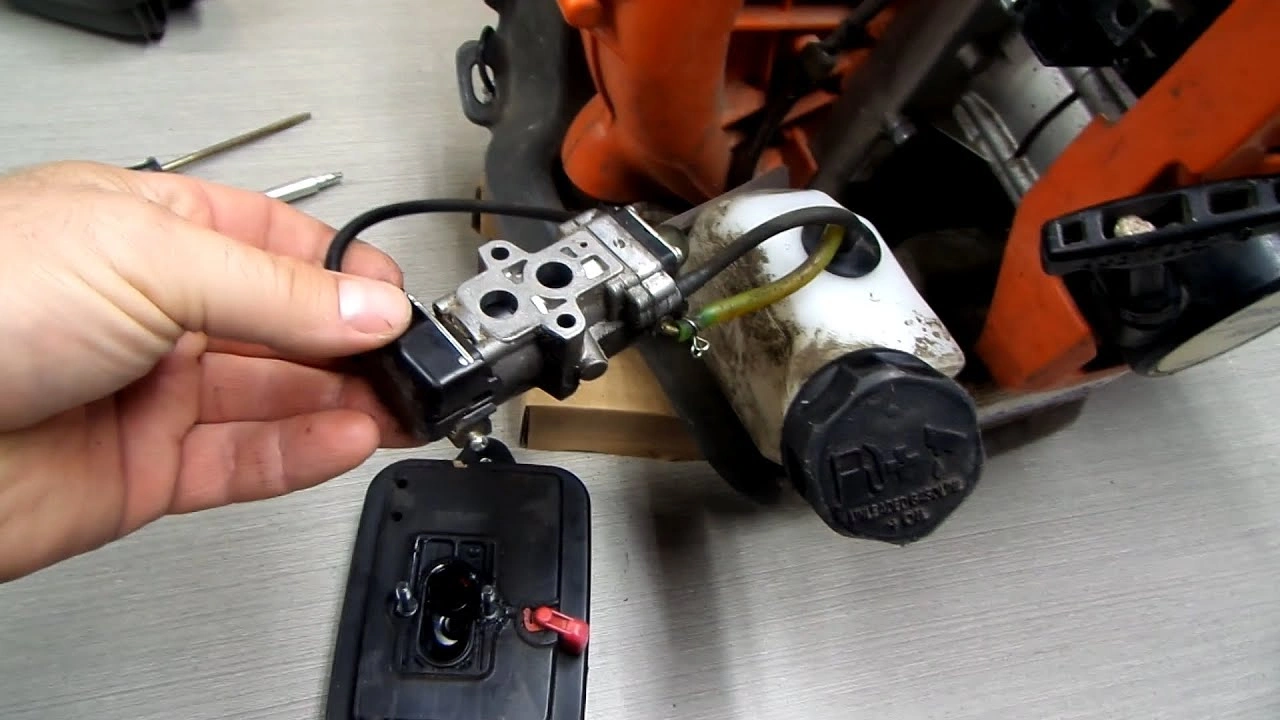
Inspect the carburetor for blockages.
Over time, carburetors become clogged from poor air filtration, dirty fuel, or fuel that has been sitting. Signs of a blocked carburetor include hard starting, poor running, and decreased performance.
To inspect and clean:
- Remove the carburetor carefully.
- Apply carburetor-specific cleaner to prevent component damage.
- Clean external surfaces first, then internal passages
- Use fishing line or specialized cleaning tools for small passages (avoiding abrasive tools on brass components)
Look for cracks in fuel lines.
Deteriorated fuel lines often cause unexpected bogging down. When inspecting:
- Check every inch of visible fuel line for cracks, hardening, or swelling.
- Pay particular attention to connections at the carburetor and tank.
- Verify that grommets where lines enter the tank are intact.
Any visible damage indicates the lines need replacement, as they may be drawing air rather than fuel under high demand.
Test with a partial choke to confirm the lean condition.
A simple diagnostic test helps confirm if your blower is running lean:
- Run the engine at full throttle until it bogs down.
- Apply a partial choke while maintaining throttle.
- If performance improves with the choke partially closed, you’ve confirmed a lean condition.
This test works because partially closing the choke enriches the fuel mixture, temporarily compensating for insufficient fuel delivery.
Step 4: Perform Deeper Fixes
With basic troubleshooting complete, it’s time to tackle deeper repairs for your Husqvarna backpack blower. These fixes address persistent bogging-down issues that simpler maintenance couldn’t resolve.
Adjust or rebuild the carburetor.
Unfortunately, many Husqvarna models lack external adjustment screws. On models that do have them, you’ll need a specialized spline tool. For internal adjustments, rebuilding involves cleaning all ports thoroughly with carburetor cleaner, then blowing them out with compressed air to ensure the passages are clear. Given the complexity, a carburetor rebuild kit typically costs around USD 10-15.
Replace damaged fuel lines or grommets.
When fuel lines become brittle or cracked from ethanol exposure, complete replacement is necessary. First, drain the fuel tank and disconnect the spark plug. Note the configuration of small and large fuel lines before removal.
During replacement, ensure the fuel filter rests properly at the tank bottom and that the grommets create proper seals where the lines enter the tank.
Clean the spark arrestor screen.
The spark arrestor screen often becomes clogged with carbon, making your blower run at lower RPM. Remove the muffler cover to access it. Clean using either a wire brush or by carefully heating with a propane torch until it glows red (avoid overheating). Husqvarna recommends cleaning every 50 hours of operation.
Use a fuel additive like Mechanic In A Bottle.
Detergent additives can sometimes solve carburetor issues without disassembly. Products like Mechanic in a Bottle or Seafoam help dissolve gum and varnish buildup in the fuel system, potentially restoring performance without major repairs.
Consider replacing the carburetor if cleaning fails.
At approximately USD 20 for aftermarket models versus USD 70 for OEM, carburetor replacement is often more cost-effective than rebuilding. Aftermarket carburetors vary in quality—Amazon and eBay options may not be dependable. For reliable performance, consider genuine OEM parts.
Conclusion
Dealing with a bogging-down Husqvarna backpack blower can be frustrating, but most issues stem from fixable fuel-delivery problems. Throughout this guide, we’ve examined a systematic approach to troubleshooting – starting with symptom identification and progressing through increasingly complex solutions.
First, remember that basic maintenance often resolves performance issues. Spark plug inspection, air filter cleaning, and using properly mixed fresh fuel should become regular habits for any blower owner. These simple steps prevent many common problems before they start.
When basic maintenance doesn’t solve the issue, fuel system components usually require attention. Clogged filters, blocked carburetor passages, and damaged fuel lines frequently cause the characteristic “runs at idle but bogs down under load” behaviour that many Husqvarna owners experience. The partial choke test is a reliable diagnostic tool for confirming these fuel delivery problems.