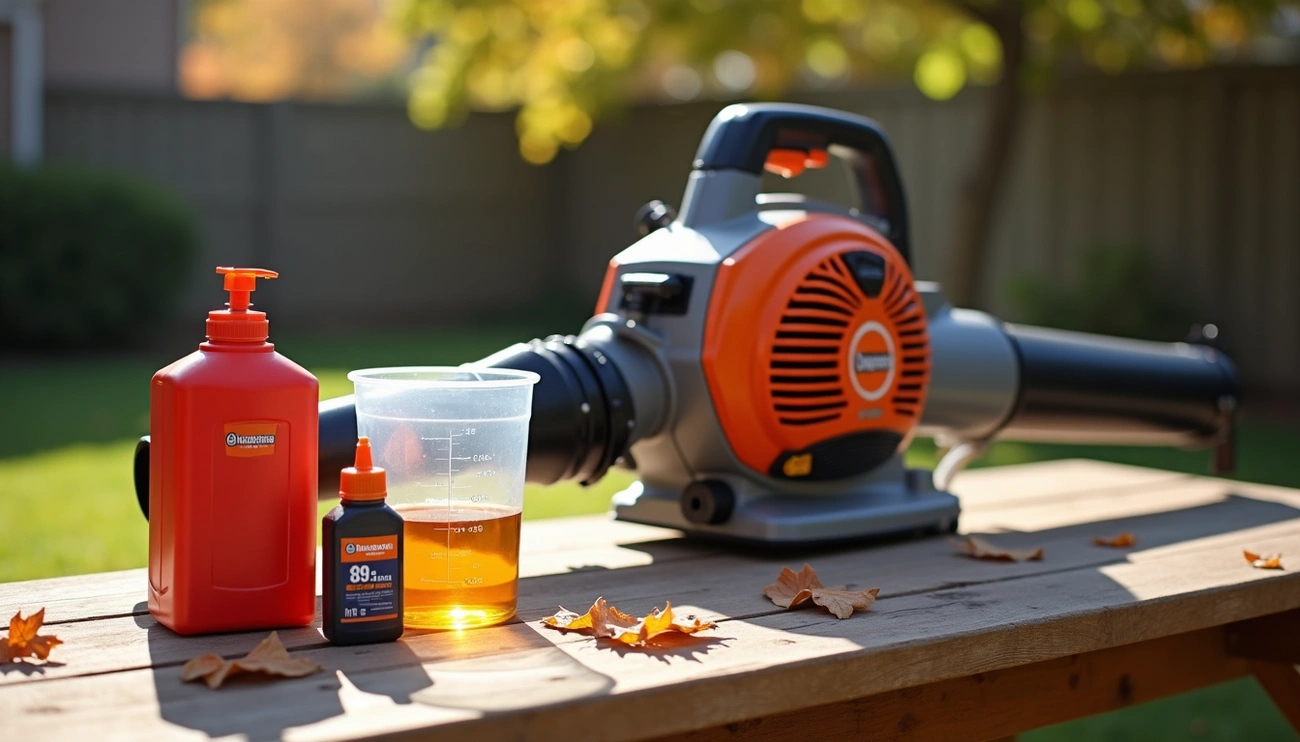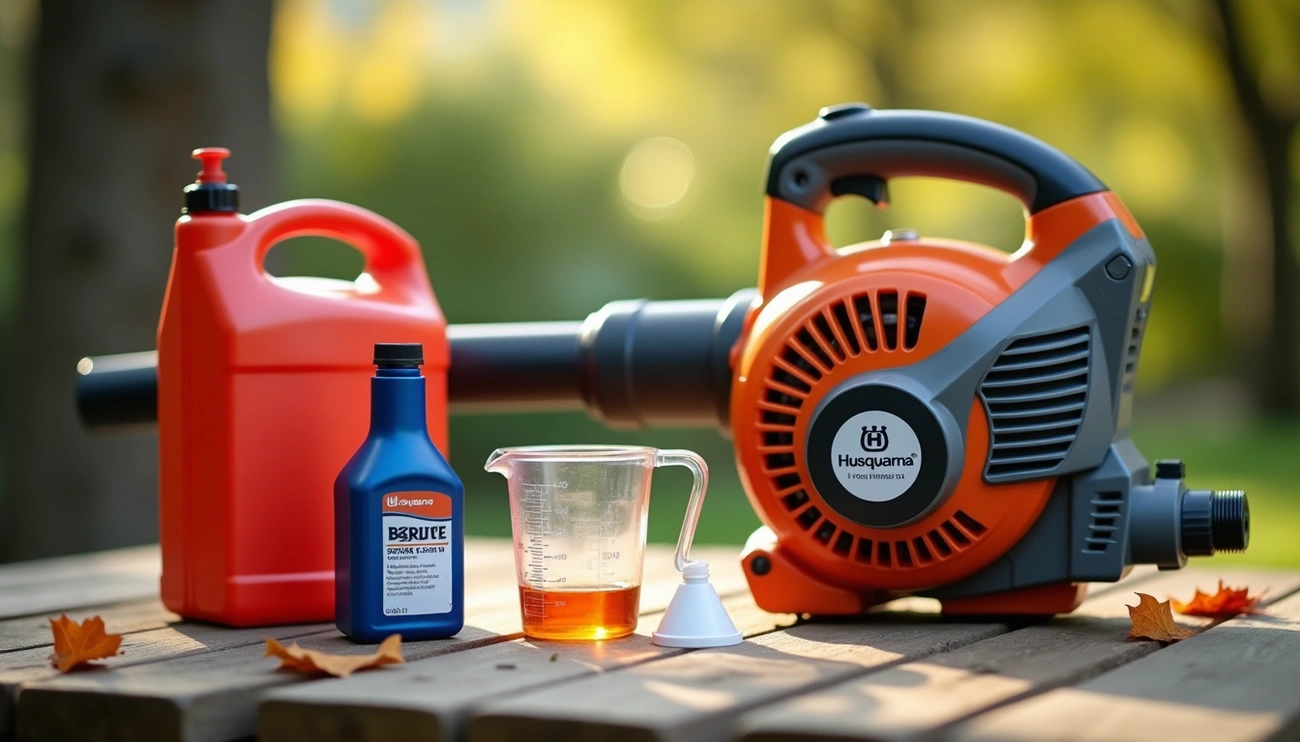
Husqvarna leaf blowers use a 50:1 fuel mix ratio. Mix 2.6 ounces of high-quality 2-stroke oil with 1 gallon of fresh, unleaded gasoline rated at 89 octane or higher. Shake the container thoroughly and use the fuel within 30 days to prevent starting and performance problems.
Understanding Two-Stroke Engines
Husqvarna leaf blowers use powerful two-stroke engines that differ significantly from those of their four-stroke counterparts. These compact powerhouses require a specialized approach to fueling and maintenance to ensure proper operation.
Why two-stroke engines need fuel mixing
Unlike four-stroke engines, two-stroke engines lack a separate oil reservoir system. This fundamental design difference means they rely entirely on oil mixed directly with gasoline for lubrication. As the fuel-oil mixture moves through the engine, it creates a thin protective film across vital components—the crankshaft, connecting rod, piston skirts, and cylinder walls.
The unique internal design of two-stroke engines necessitates this mixing. Since the crankcase participates in the intake process, a traditional oil sump would be impractical. The moving piston essentially covers and uncovers ports that control gas flow, rather than using valves. Without proper lubrication through the fuel mix, these engines would quickly suffer from excessive wear, overheating, and potentially seizure.
For Husqvarna leaf blowers, this mixing process directly impacts performance and longevity. The Husqvarna leaf blower fuel mix ratio must be precise—too little oil results in insufficient lubrication, while too much produces excess smoke and carbon buildup.
Difference between two-stroke and four-stroke engines
This operational difference creates several notable characteristics:
Two-stroke engines produce more power for their size because they generate power every two strokes instead of every four. Additionally, they maintain a simpler design with no valves, making them lighter and less expensive to manufacture. These qualities make them ideal for handheld equipment like Husqvarna leaf blowers.
On the other hand, four-stroke engines offer better fuel efficiency and durability. They create more torque at lower RPM, while two-strokes generate higher torque at higher RPM. Moreover, four-stroke engines typically last longer because they don’t run at consistently high RPMs, which causes faster wear in two-stroke engines.
Choosing the Right Fuel and Oil
Selecting quality fuel and oil components forms the foundation of proper Husqvarna leaf blower fuel mix ratio maintenance. Proper selection not only ensures optimal performance but also extends your equipment’s lifespan considerably.
Recommended gasoline type for Husqvarna blowers
For optimal performance, always use 89 octane unleaded gasoline in your Husqvarna leaf blower. Although the manual may indicate 87 octane is acceptable, higher octane prevents knocking—a condition caused by high engine temperatures that can result in serious engine damage.
Notably, all Husqvarna leaf blowers with catalytic converters must use unleaded fuel exclusively. Using leaded gasoline will destroy the catalytic converter, rendering it non-functional.
Types of two-stroke oils: mineral, semi-synthetic, synthetic
Three main types of two-stroke oils exist, each with distinct advantages:
- Mineral oils: The most conventional type is derived directly from crude oil. These are economical but offer less protection and require more frequent changes.
- Semi-synthetic oils: These blends combine mineral and synthetic oils (at least 20% synthetic) to balance cost and performance. They work well at high temperatures and reduce oxidation.
- Synthetic oils: Engineered for maximum performance with better flow at low temperatures and stable viscosity at high temperatures. They provide superior protection against wear and oxidation.
Avoiding ethanol and water-cooled oils
Ethanol-containing fuels should generally be avoided. Although E10 fuels are technically approved for small engines, they’re not recommended because:
- Ethanol separates from gasoline during storage, leaving parts of the mixture without proper lubrication.
- E10 gas absorbs up to 50 times more water than standard gasoline
- Ethanol acts as a solvent that can dissolve plastic, rubber, and fibreglass components.
Likewise, never use two-stroke oils labelled as TCW3 (water-cooled oils) or “outboard oil” in your leaf blower.
Using Husqvarna-certified oil products
Husqvarna offers specially formulated two-stroke oils with their VEF (Verified Engine Formula) certification. Their XP+ oil provides several benefits:
- Lower operating temperatures for easier starts and longer engine life
- Excellent detergency properties that reduce deposits and prevent ring sticking
- JASO-FD certification as a premium synthetic oil blend
- Contains fuel stabilizers to prevent spoilage
For professional users, Husqvarna XP is recommended, though Husqvarna HP is suitable for non-professional applications.
Correct Husqvarna Leaf Blower Fuel Mix Ratio
The proper mixture is the foundation for your leaf blower’s performance. Let’s dive into exactly what makes the perfect Husqvarna leaf blower fuel mix ratio.
Standard 50:1 gas-to-oil ratio explained
The standard Husqvarna blower mix ratio is 50:1 (50 parts gasoline to 1 part oil), which equals 2% oil content. This precise balance provides optimal lubrication without excessive carbon buildup. Primarily designed for Husqvarna products up to 75cc, this ratio maintains internal components while maximizing power output.
How to use the Husqvarna leaf blower fuel mix ratio chart
Husqvarna provides straightforward charts for accurate mixing. According to standard charts, for one litre of fuel, you need 20ml of oil; for five litres, you need 100ml. Most importantly, always check your owner’s manual for model-specific recommendations.
How much oil to add per gallon of gas
For the standard 50:1 ratio, add 2.5-2.6 fluid ounces of two-stroke oil per gallon of gasoline. Husqvarna offers pre-measured oil bottles for one-gallon mixing, so no measuring is required.
What happens if the ratio is wrong
Getting the mixture wrong can be costly. Too much oil causes poor starting, excessive smoke, carbon buildup and rough running. Conversely, too little oil results in overheating, internal damage, and premature engine failure. Even small deviations from recommended ratios can drastically shorten your engine’s lifespan.
How to Mix and Store Two-Stroke Fuel
Properly mixing and storing your two-stroke fuel ensures optimal performance and longevity for your Husqvarna leaf blower. Following the correct procedures prevents engine damage and maintains efficiency.
Step-by-step mixing instructions
First, pour half the amount of gasoline into a clean fuel container. Then add the entire amount of oil. After adding oil, gently shake the container to blend the oil and fuel. Finally, add the remaining gasoline. For the standard 50:1 ratio, add 2.6 ounces of oil to 1 gallon of gas.
Using clean containers and proper tools
Always use a clean, airtight container specifically designed for fuel. This prevents contamination and prolongs shelf life. Consider owning a dedicated gas container exclusively for your two-stroke mix. Furthermore, this prevents confusion with regular fuel used in four-stroke engines.
How to shake and store the mixture
Shake the fuel mixture thoroughly for 10-15 seconds before and after adding the remaining gasoline. Prior to refuelling your leaf blower, shake the container again. Throughout storage, keep the container tightly sealed.
Tips for extending fuel shelf life
Ideally, avoid storing mixed two-stroke fuel for more than 30 days, as it can become stale. If needed, add fuel stabilizer to extend shelf life up to 12 months. Empty the gas tank completely before storing your leaf blower for extended periods.
Safety precautions during mixing and fueling
Never refuel while the engine is running or hot. Ensure adequate ventilation in your fueling area. Move the blower at least 10 feet from the fueling area before starting. Immediately wipe up any spills and avoid skin contact with fuel.
Conclusion
Proper fuel mixing stands as the cornerstone of maintaining your Husqvarna leaf blower. Throughout this guide, we’ve established that the correct Husqvarna leaf blower fuel mix ratio is 50:1, which equals 2.5-2.6 ounces of oil per gallon of gas. This precise ratio ensures optimal lubrication without excessive carbon buildup that could damage your equipment.
Additionally, using the right components matters just as much as the ratio itself. High-quality 89-octane unleaded gasoline, paired with Husqvarna-certified two-stroke oil, provides the best protection for your investment. Therefore, avoid ethanol-containing fuels and water-cooled oils that can harm your leaf blower’s engine components.
Remember that even small deviations from the recommended 50:1 ratio can significantly impact your blower’s performance and lifespan. Too much oil leads to oil smoke and carbon deposits, while too little oil results in insufficient lubrication and the potential for engine seizure. Consequently, taking time to measure carefully pays off in extended equipment life.