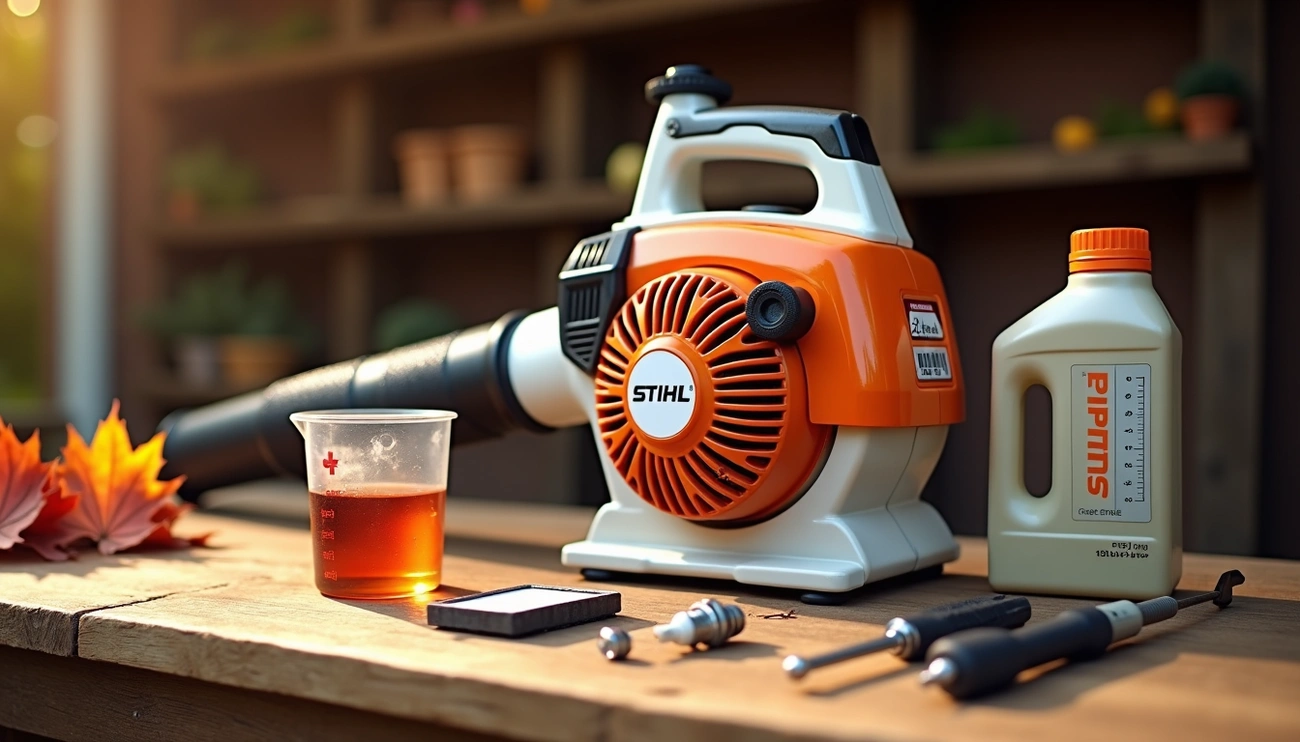
Yes, Stihl makes 4-stroke leaf blowers using its 4-MIX® engine. The 4-MIX® design combines 4-stroke efficiency with 2-stroke simplicity by using mixed fuel. These engines deliver high torque, low emissions, and strong fuel economy. Popular examples include the Stihl BR 600 and BR 800 X models.
What is a Stihl 4-Mix engine?
The Stihl 4-Mix engine represents a clever hybrid approach that combines elements of both 2-stroke and 4-stroke technologies. Unlike traditional engines in the outdoor power equipment market, this innovative system doesn’t fit neatly into either category.
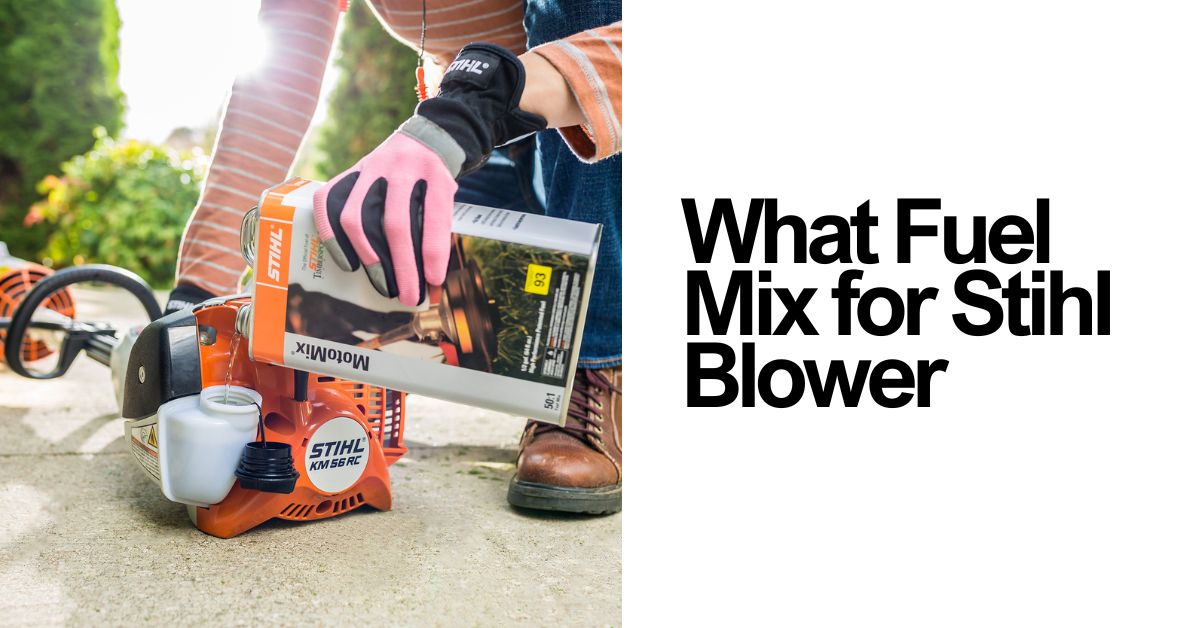
At its core, the 4-Mix follows the classic four actions of a 4-stroke engine—intake, compression, ignition, and exhaust. However, it maintains a unique characteristic of 2-stroke engines by using a mixed fuel-oil solution for lubrication. This means you’ll still need to mix oil and gas at a 50:1 ratio or use a pre-mixed product like STIHL MotoMix.
How it differs from 2-stroke and 4-stroke
The 4-Mix engine differs from traditional designs in several fundamental ways. Unlike conventional 4-stroke engines that require a separate oil reservoir, oil pump, and filter system, the 4-Mix engine is lubricated through the fuel mixture. This allows for a more compact construction without the additional components found in typical 4-stroke motors.
One major distinction is that the 4-Mix can operate in any position—even upside down—just like a 2-stroke engine. This makes it particularly suitable for handheld equipment where orientation changes constantly.
Performance-wise, 4-Mix engines deliver different characteristics than their counterparts:
- Lower RPM but higher torque compared to 2-stroke engines
- Quieter operation even under load
- Reduced emissions that meet strict Euro V standards
- Excellent fuel efficiency with lower consumption
The engine features a unique bypass channel connecting the valve train, crankcase, and intake, allowing the fuel-air mixture to continuously lubricate all key components.
Why Stihl developed the 4-Mix motor
Stihl developed the 4-Mix engine primarily to address increasing environmental regulations without sacrificing performance. The system achieves high torque with comparatively low fuel consumption, making it an excellent low-emissions option.
Additionally, the 4-Mix engine delivers several practical advantages for users:
- Elimination of oil services typically required for 4-stroke engines
- Lighter weight due to fewer components (no oil pumps, filters or sumps)
- Significantly reduced noise levels compared to traditional engines
- Exceptional power-to-weight ratio for portable equipment
The design also includes an automatic decompression system that makes starting easier, addressing a common frustration with outdoor power tools.
For many applications, especially those requiring sustained power under load, the high-torque characteristics of the 4-Mix make it particularly effective. This explains why Stihl incorporated this technology into many of their leaf blowers, particularly models where the additional torque provides real operational benefits.
Which Stihl leaf blowers use 4-Mix engines?
Stihl offers multiple leaf blower models featuring their innovative 4-Mix engine technology across both handheld and backpack configurations. These units combine powerful performance with the unique advantages of Stihl’s hybrid engine design.
Handheld models with 4-Mix
Although the factual information doesn’t specifically list handheld models with 4-Mix technology, Stihl’s product lineup includes select handheld blowers utilizing this engine type. Generally, their professional-grade handheld models may incorporate 4-Mix technology to provide improved fuel efficiency and reduced emissions while maintaining excellent power-to-weight ratios.
Backpack models with 4-Mix
Stihl’s backpack blower lineup features several prominent models powered by 4-Mix engines:
The BR 600 series incorporates the 4-Mix engine, delivering excellent blowing power alongside greater fuel efficiency. These units run on the standard fuel-oil mix while producing lower emissions and a more pleasant sound profile.
The BR 700 series continues with 4-Mix technology, offering enhanced performance over the 600 models.
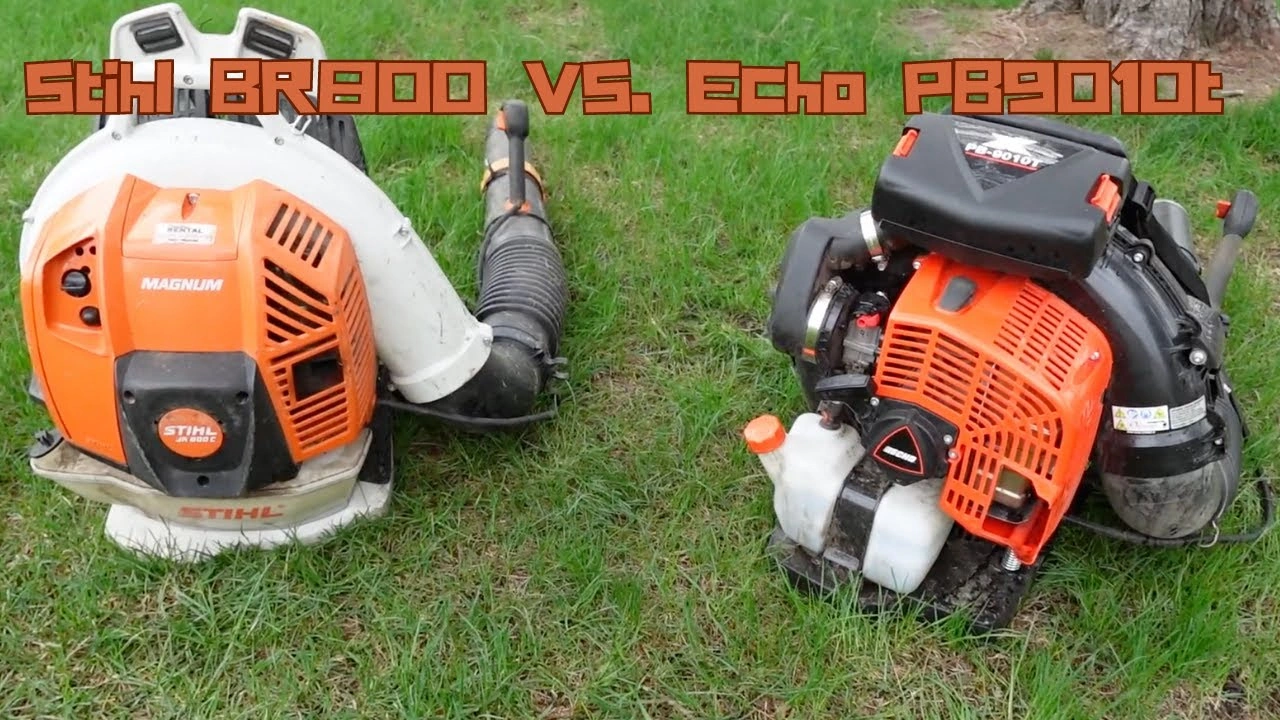
Most notably, the BR 800 series represents Stihl’s pinnacle of backpack blower technology, featuring the 4-Mix engine throughout the lineup. These units deliver exceptional performance metrics, including 912 CFM airflow through the tube and 199 MPH air speed. The BR 800’s 4-Mix engine contributes to its impressive 41 N blowing force, representing a significant 95% increase compared to some competing models that produce only 21 N force.
Is the BR 800 a 4-stroke or 4-Mix?
For those wondering “are Stihl leaf blower 4 stroke?” – the BR 800 is specifically equipped with Stihl’s proprietary 4-Mix engine. Despite some confusion, it is not a traditional 4-stroke. Instead, the BR 800 utilizes Stihl’s hybrid approach that runs on a fuel-oil mix like a 2-stroke engine while operating with 4-stroke principles.
The BR 800 exemplifies the benefits of the 4-Mix design – it delivers fast acceleration, more power, added torque, reduced noise, lower emissions, and increased fuel efficiency. Furthermore, this 79.9cc powerhouse weighs just 25.8 pounds, demonstrating the excellent power-to-weight ratio made possible through the 4-Mix design.
One important note for owners: earlier 4-Mix engines were specifically designed for Stihl’s premium “Ultra” oil formulation, though newer models have been revised to work properly with their standard “orange bottle” oil as well.
Why Stihl doesn’t use 4-Mix in chainsaws
Despite the success of 4-Mix engines in Stihl’s leaf blower lineup, you won’t find this technology in their chainsaws. This design choice stems from several engineering realities that make traditional 2-stroke engines more suitable for chainsaw applications.
Power-to-weight ratio limitations
Even though 4-Mix engines excel in many applications, chainsaws demand an exceptional power-to-weight ratio that 2-stroke designs deliver more efficiently. The additional valvetrain components in a 4-Mix engine would add unnecessary weight to a tool that operators must maneuver precisely through wood, sometimes for extended periods. Moreover, the 2-stroke’s simplicity provides maximum power output with minimal weight penalties—a critical factor for professional forestry work.
RPM and torque differences
Chainsaw cutting effectiveness depends on maintaining high chain speeds under load. The 2-stroke engine’s ability to operate at higher RPMs makes it naturally suited for this task. Conversely, 4-Mix engines deliver their power differently—with lower RPMs yet higher torque. This torque-focused power delivery works wonderfully for pushing air through a blower tube but proves less ideal for maintaining optimal chain speeds during cutting operations.
Design constraints with sprockets
The orientation requirements of chainsaws present another challenge. The unique positioning of the drive sprocket and bar in relation to the engine creates packaging constraints that 2-stroke engines address more efficiently. Additionally, the increased vibration encountered during cutting operations might affect the more complex valve systems in 4-Mix engines, potentially reducing reliability in the demanding conditions chainsaws routinely face.
Fuel and maintenance for 4-Mix blowers
Many users wonder about the proper fuel and maintenance procedures for Stihl’s innovative 4-Mix blower models. Understanding these requirements helps maximize performance and lifespan.
What fuel does a Stihl leaf blower use?
For optimal performance, Stihl 4-Mix engines require high-quality fuel with a minimum octane rating of 90 RON. I recommend using branded petrol, which is widely available at 95/98 RON.
The most convenient option is STIHL MotoMix® premixed fuel, which contains no ethanol and offers an impressive storage life of up to two years. This pre-mixed solution eliminates mixing errors and can safely remain in the machine during seasonal storage.
Do you still mix oil and gas?
Absolutely! Even though 4-Mix engines operate with 4-stroke principles, they still require a fuel-oil mixture. Unlike other 4-stroke engines, the 4-Mix is lubricated by the gasoline-oil mixture.
The standard mixture ratio is 50:1 (50 parts petrol to 1 part oil, or 20ml of oil per liter of petrol). I strongly suggest using STIHL HP Ultra Oil whenever possible, as it’s specially formulated for these engines and is over 80% biodegradable.
Maintenance tips for 4-Mix engines
Regular maintenance ensures your 4-Mix blower performs reliably. First, follow Stihl’s “Tech Check” procedure for diagnosing any engine problems.
Consequently, routine “Tune Up” maintenance should include replacing:
- Fuel filter
- Air filter
- Spark plug
Most importantly, 4-Mix engines require valve adjustment after approximately 100 hours of operation. This one-time adjustment ensures continued smooth performance after the initial break-in period.
Conclusion
Understanding Stihl’s 4-Mix engine technology certainly clarifies the common question about whether these leaf blowers are 4-stroke. Although the 4-Mix system incorporates four-stroke operating principles, it actually represents something altogether different—a brilliant hybrid design combining advantages from both engine types.
Undoubtedly, this innovative approach delivers remarkable benefits for leaf blower applications, particularly in the powerful BR 600, BR 700, and BR 800 backpack series. The higher torque, reduced noise, and exceptional fuel efficiency make these blowers stand out in the market. Meanwhile, the ability to operate in any position without a separate oil reservoir gives users tremendous flexibility during operation.
Still, the 4-Mix isn’t universally applied across Stihl’s product line. Chainsaws, for instance, continue using traditional 2-stroke engines because their specific performance demands align better with that technology’s characteristics.