Yes, a drill can be used as a leaf blower, but only with the right setup. A drill requires a dedicated blower attachment or a DIY conversion to move air. Standard drills do not generate airflow on their own and are not substitutes for real leaf blowers.
Can a drill really work as a leaf blower?
Many DIY enthusiasts have experimented with turning their power drills into makeshift leaf blowers. This creative repurposing trend raises an important question about functionality and effectiveness.
What people are trying to achieve
Homeowners and tool enthusiasts primarily attempt to convert drills into blowers for:
- Cleaning electronics and workbenches
- Blowing dust from hard-to-reach areas
- Maintaining air conditioning units and fins
- Creating a compact alternative to full-sized leaf blowers
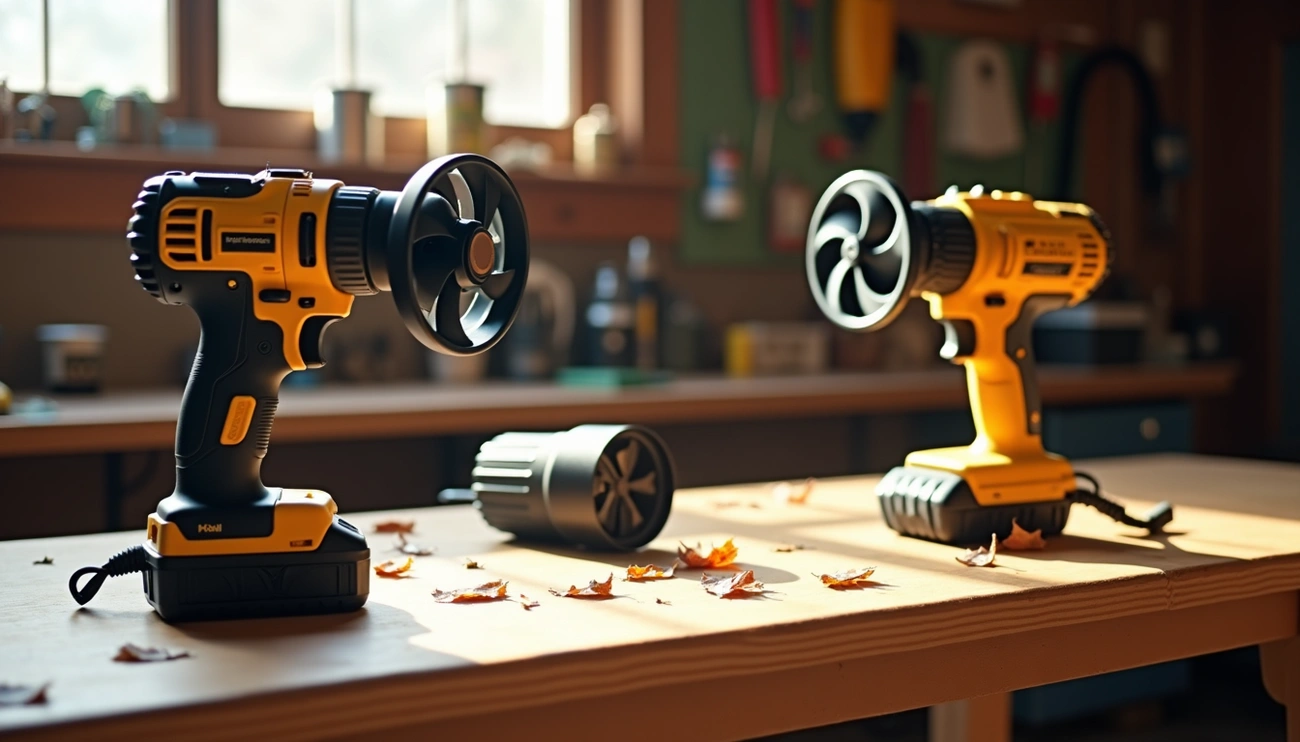
Some DIYers have successfully transformed old 16.8V cordless drill shells into compact and powerful air blowers that work surprisingly well for small cleaning tasks. These conversions typically utilize the drill’s existing motor and battery system but replace the chuck mechanism with a fan attachment.
Why this idea is gaining popularity
The concept of drill-powered blowers has gained traction for several practical reasons. First, many people already own cordless drills, making this a cost-effective solution without purchasing additional specialized equipment. Additionally, the compact size offers maneuverability in tight spaces where traditional leaf blowers cannot reach.
Furthermore, the rise of mini duct fans designed to work with 16V systems that can achieve impressive speeds of up to 80,000 RPM has fueled interest in these conversions. These high-speed fans, paired with a drill’s motor, can generate meaningful airflow for certain applications.
Common misconceptions
Nevertheless, misconceptions about drill-powered blowers abound. The most significant misunderstanding involves power expectations. Even modified drills cannot match the airflow or force of a dedicated leaf blower for yard work. Many users quickly discover that drill blowers lack sufficient power for moving wet leaves or debris across large areas.
Another common misconception relates to battery life. Continuous blowing places extraordinary demands on a drill battery, leading to rapid drainage and potential overheating. Standard drill batteries aren’t designed for the sustained operation needed for typical blowing tasks.
Lastly, some believe any drill can be easily converted with simple attachments. In reality, successful conversions often require specific drill types, technical modifications, and appropriate attachments to function properly even for small-scale applications.
Drill blower attachments: what’s available
For DIY enthusiasts looking to convert their drills into makeshift blowers, several attachment options exist on the market. These accessories transform standard power drills into multipurpose tools for light cleaning tasks, though with limitations.
Types of blower attachments for drills
Drill blower attachments generally fall into three main categories:
- Simple fan attachments: These basic plastic attachments feature fan blades that connect directly to the drill chuck. They’re affordable (typically $10-$20) and ideal for small indoor cleaning tasks like keyboard dusting or workbench clearing.
- Ducted fan attachments: More advanced than simple fans, these attachments incorporate a housing around the fan blades to direct airflow more efficiently. They usually cost $20-$40 and generate stronger airflow for workshop cleanup or light outdoor tasks.
- Hybrid blower/vacuum attachments: These versatile attachments allow switching between blowing and suction functions. Most contain collection bags for gathering dust or small debris while operating in vacuum mode.
How drill fan attachments work
Drill fan attachments operate on a straightforward principle. Once securely fastened into the chuck of a cordless drill, the rotational energy from the drill motor transfers directly to the fan blades. Most attachments require a minimum 12V drill to function effectively.
The design of these attachments varies in complexity. Entry-level models consist of basic fan blades, whereas premium options feature aerodynamically optimized blades within ducted housings to maximize air displacement. Higher-end models sometimes incorporate gear systems to increase rotational speed beyond what the drill itself provides.
Speed control remains an important consideration – the faster your drill operates, the more air the attachment moves. Consequently, drills with variable speed settings offer more versatility when used with these attachments.
Where to find these attachments
These specialized accessories are readily available through multiple channels:
- Online marketplaces like Amazon, eBay, and AliExpress offer the widest selection
- Home improvement retailers such as Home Depot and Lowe’s sometimes stock basic models
- Specialty tool shops often carry premium versions with enhanced features
- Direct purchase from manufacturers’ websites provides access to the latest models
Before purchasing, check compatibility with your specific drill model, particularly voltage requirements and chuck size. Moreover, reading user reviews can help identify which attachments deliver the best performance for specific applications.
Risks and limitations of using a drill as a blower
Turning your cordless drill into an improvised leaf blower might seem clever, yet this modification comes with significant drawbacks that deserve careful consideration.
Potential damage to your drill
Using a standard drill as a blower puts excessive strain on components never designed for continuous operation. Unlike dedicated blowers, drills lack proper cooling systems to handle extended runtime. This prolonged stress can lead to premature motor burnout, damaged bearings, and even melted internal components. If you notice a loose or damaged head on your drill, avoid using it for any purpose as this may cause further damage.
Safety concerns and kickback
According to Forbes data, approximately 5,800 injuries requiring emergency room treatment were attributed to power drills in 2007. When attaching blower accessories, these risks multiply due to:
- Unexpected kickback when the attachment encounters resistance
- Poor attachment fit leading to dangerous projectiles
- Reduced control compared to purpose-built blowers
Safety experts caution against “manhandling” power drills—applying excessive force increases accident risk. Pushing your entire body weight against the drill during operation may cause you to slip toward the bit, potentially resulting in serious injury.
Battery life and overheating issues
Drill batteries simply aren’t designed for the continuous high-drain demands of blowing operations. Users report dramatically shortened runtime when tools are pushed to maximum output. As one experienced user noted, “Cutting back to 80% instead of wide open can greatly increase how long the battery will stay charged”.
Even with conservative use, battery-powered blowers struggle with sustained operation—they’re “awesome, but have limited run times when doing hard work. Fine for a suburban home. Not fine for acreage”. The same limitation applies to drill conversions, often delivering just a fraction of the runtime needed for typical yard tasks.
Better alternatives and DIY options
First and foremost, while drill-to-blower conversions intrigue DIYers, purpose-built options often make more sense.
Using a cordless leaf blower instead
Electric leaf blowers start at just $20, making them more economical than most DIY conversions. Even budget blowers typically outperform drill adaptations in airflow and usability. For light cleaning tasks, affordable corded options deliver superior performance without sacrificing your drill’s primary function.
DIY drill-powered blower with duct fan
Determined DIYers can create functional blowers using high-speed duct fans. Some makers have built powerful air blowers using 16.8v drill batteries paired with 80,000 RPM mini duct fans. Others report success with 100W brushless blowers using high-speed duct fans connected to 12V drill systems. These projects require basic electrical knowledge and proper housing units—typically PVC pipes.
When it makes sense to convert
Converting makes sense primarily for:
- Repurposing damaged drills with functioning motors
- Creating ultra-portable blowers for electronics cleaning
- Workshop spaces where cordless versatility matters more than power
Remember that DIY blowers should be “considered an idea for a weekend project, rather than a rational money-saving endeavor”.
How to start a leaf blower with a drill
Interestingly, drills can effectively start stubborn gas-powered leaf blowers. Simply attach a socket adapter to your drill, place it on the flywheel nut, and apply power. This method has revived engines that haven’t started in years, sometimes requiring about 10 minutes of cranking before ignition.
Conclusion
After exploring this creative tool hack thoroughly, we can confidently answer the original question: while a drill can technically function as a makeshift blower for small tasks, it falls significantly short as a leaf blower replacement. Though DIY enthusiasts might find drill attachments useful for dusting keyboards or clearing workbenches, these setups simply lack the necessary power for yard work.
Undoubtedly, the market offers various attachments – from simple fan additions to ducted models – that connect to standard drills. However, the risks generally outweigh the benefits. Your valuable drill faces potential motor burnout, bearing damage, and overheating issues when pushed beyond its design limitations. Safety concerns likewise present serious considerations, especially regarding kickback and reduced control.
Battery life serves as another major limitation. Most drill batteries drain rapidly during continuous high-output operation, making them impractical for anything beyond quick cleaning tasks. Therefore, purchasing an affordable dedicated leaf blower almost always makes more sense than compromising your drill’s functionality and lifespan.