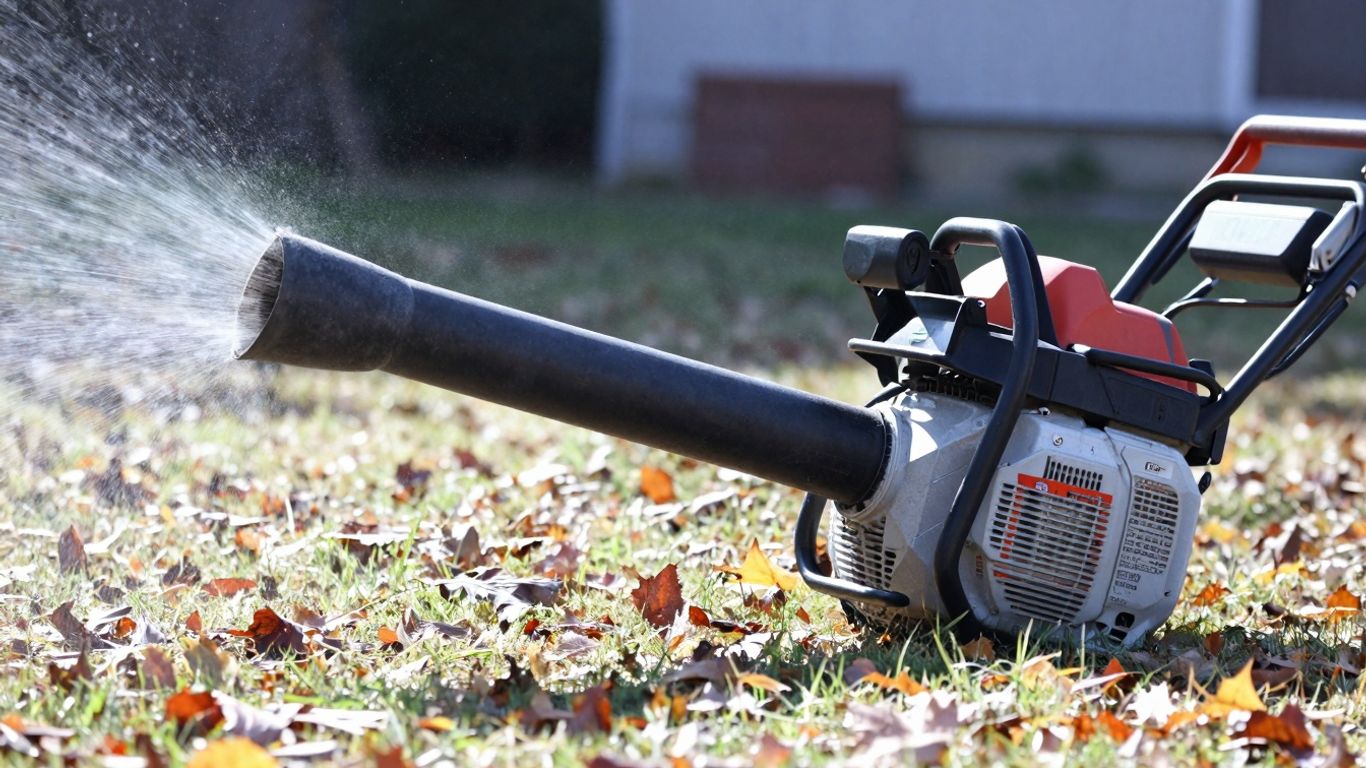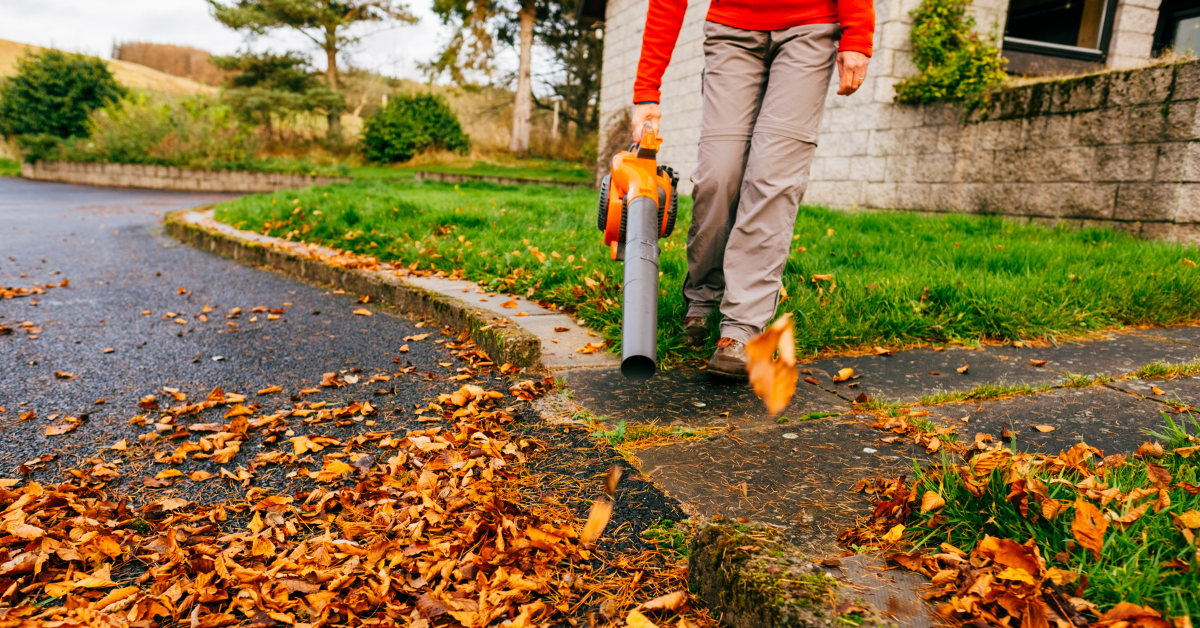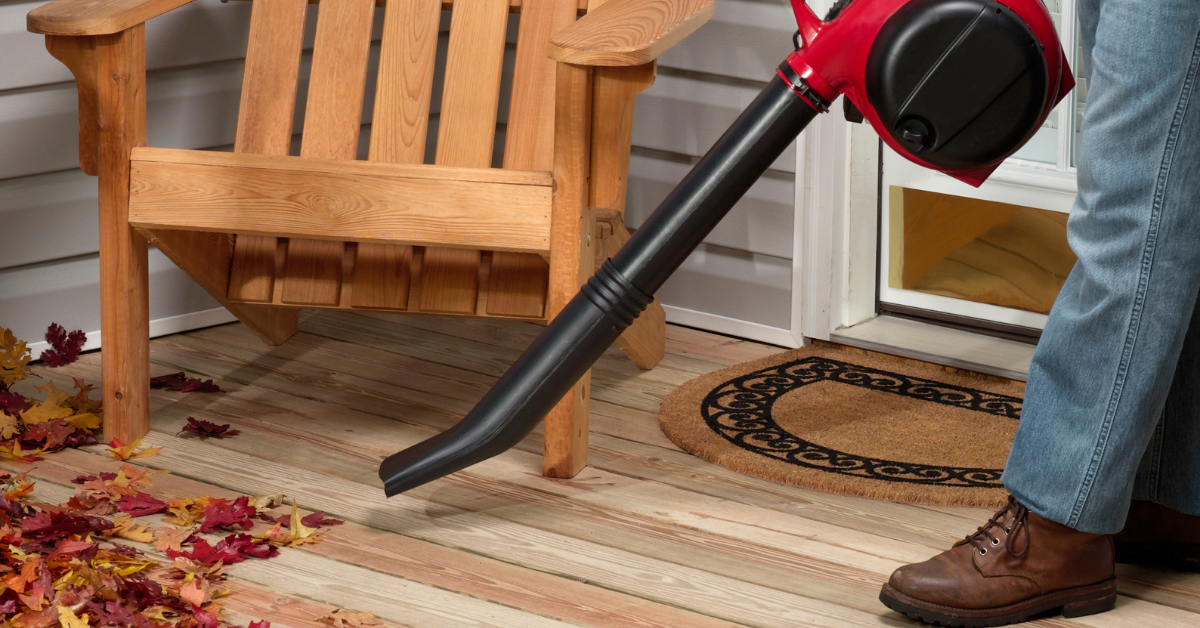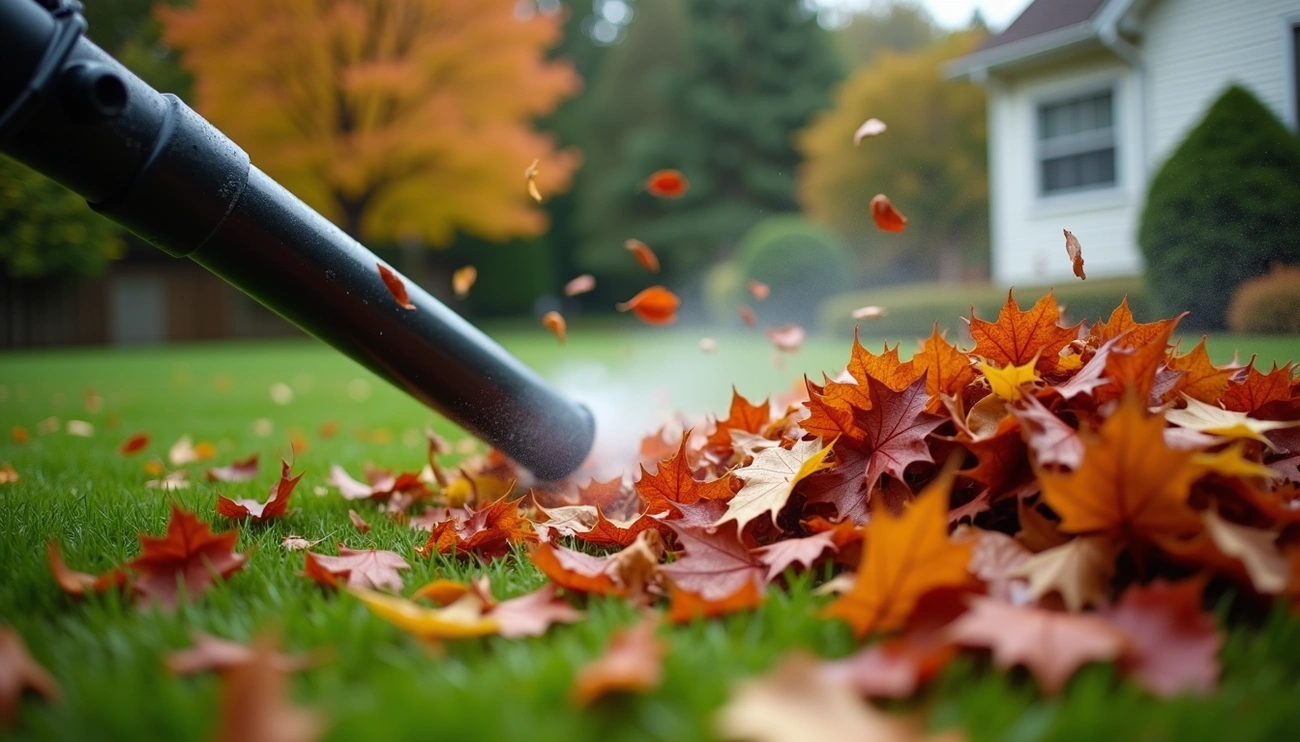
Yes, you can use a leaf blower on wet leaves, but it is harder because wet leaves are heavier and clump together. Use a high-power blower with strong CFM and MPH, blow in short bursts at a downward angle, and rake first if needed. Avoid vacuuming wet leaves and use caution with electric blowers near water.
The Challenges of Blowing Wet Leaves
Dealing with a yard full of soggy foliage presents unique challenges that dry leaves don’t. From their physical properties to how they interact with your equipment, understanding these challenges is essential before you attempt cleanup.
Why are wet leaves harder to move
Wet leaves weigh approximately 2-5 times as much as their dry counterparts, creating an immediate increase in workload. Also, moisture creates an invisible adhesive between the leaves and the ground.
This increased weight and stickiness mean wet leaves require significantly more force to dislodge. Consequently, what might be a quick 30-minute job in dry conditions can transform into hours of frustrating work.
Moisture increases friction between leaves and the ground, essentially fixing them in place like natural glue. As wet leaves accumulate, they form thick, matted layers that become increasingly difficult to separate or move.
How moisture affects leaf blower performance
Moisture dramatically impacts performance. Most leaf blowers, especially electric models, lack sufficient power to effectively lift and move water-laden leaves.
Gas-powered blowers deliver better results because they generate more force, though even these powerful machines struggle with completely soaked foliage.
The narrow nozzles on some models can help by concentrating airflow and applying more focused pressure against stubborn wet leaves.
Vacuum modes are particularly vulnerable—attempting to vacuum wet leaves can clog tubes and damage your equipment. Moisture can also pose electrical hazards with corded models, including the risk of short circuits or shocks.
When to wait and when to act
Timing becomes critical when dealing with wet leaves. After rainfall, waiting a few hours allows some moisture to evaporate, making the job considerably easier. Nevertheless, don’t wait too long—wet leaves that sit for weeks form an even more challenging soggy mat.
Multiple smaller cleanups throughout the fall season prove more effective than waiting for all leaves to drop. This approach prevents thick accumulation and reduces the likelihood of saturated leaves.
In addition, slightly damp leaves might actually be easier to manage when using a mulching method, as they’re less likely to scatter from the air turbulence created by mower blades. However, if you’re using a riding mower, allow the lawn to dry for a day to prevent creating ruts in soft ground.
Best Tools for Blowing Wet Leaves
Selecting the right tool with adequate power specifications makes all the difference between frustration and efficiency.
High-powered leaf blowers: What to look for
Tackling wet leaves requires substantial power. Look for these key specifications:
- CFM (Cubic Feet per Minute): Aim for at least 500 CFM at 30 inches from the nozzle
- Air Speed: Models delivering 200+ MPH provide enough force for wet leaves
- Nozzle Design: Scraper tips effectively loosen damp, matted leaves
The Husqvarna 350iB exemplifies these requirements with its impressive 800 CFM maximum air volume. Specialized nozzle attachments, such as scraper tips, are invaluable for manually loosening stubborn wet leaf mats.
Gas vs electric blowers: which works better?
For wet leaf removal, gas-powered models traditionally hold an advantage. In sweeping tests, gas blowers score slightly higher (4.6 vs 4.4 on a 5.5 scale). Nonetheless, the best electric models now match or even exceed gas performance in specific tests.
Gas blowers excel with extended run times and consistent power output, making them ideal for larger properties. Conversely, recent advancements in electric models have narrowed this gap considerably, as noted by Consumer Reports engineer Misha Kollontai: “Every year, there are fewer and fewer reasons to tell people to choose gas models”.
Can you blow wet leaves with cordless models?
Yes, provided you select models with sufficient power. The Ego Power+ line demonstrates this capability with its 765 CFM output, effectively handling wet debris.
Meanwhile, Husqvarna’s cordless offerings provide exceptional run times of up to 37 minutes at high power, addressing a common limitation of battery-operated tools.
Remember that operating at maximum power significantly reduces battery life—sometimes to just 11-15 minutes.
Using blower-vac combos for better results
Blower-vacuum combinations offer versatility through multiple operating modes. Nevertheless, most manufacturers explicitly warn against vacuuming wet leaves due to the risk of clogging.
As Worx stated regarding their Trivac system: “Wet leaves can stick to things and cause clogging, which could make it even more difficult for the Trivac to vacuum.”
For this reason, when dealing with wet leaves, utilize only the blower function of combo units, saving the vacuum feature for dry conditions.
Alternative Methods to Remove Wet Leaves
When leaf blowers fall short with wet foliage, several effective alternatives can come to your rescue.
Using a rake: when and how
For small yards, a sturdy metal rake with rigid tines works best on wet leaves, unlike plastic rakes that may bend under the weight. I find working in small sections most effective, as wet leaves are substantially heavier than dry ones.
First, place a tarp nearby and rake directly onto it rather than creating multiple piles. Once half-full, drag the tarp to your disposal area—this saves countless trips carrying armfuls of heavy, soggy leaves.
Vacuuming wet leaves: pros and cons
According to some sources, vacuums handle wet leaves better, especially models with shredding capabilities.
Undoubtedly, they collect leaves directly and prepare them for composting. Yet others claim leaf vacuums don’t work on wet leaves and are “especially poor” in these conditions. The truth lies somewhere in between—vacuums work well for small loads but often clog with heavy ones.
Mowing and mulching: is it effective?
Surprisingly, mowing wet leaves can be beneficial. Research shows mulched leaves increase soil organic matter without affecting turf quality. To properly mulch:
- Set your mower to maximum height.
- Make 2-3 passes until leaf pieces disappear into the grass.
- Leave as mulch or collect with a bag attachment.
Dethatching for matted leaves
Occasionally, wet leaves form thick, soggy mats that resist conventional removal. In these situations, a dethatcher breaks up compacted layers with rotating tines. Set the height to 0 or +¼ inches so tines barely penetrate the soil surface, then walk the machine over the lawn in straight lines.
Tips for Safe and Effective Leaf Blowing in Wet Conditions
Despite their challenges, wet leaves can be managed effectively if you approach the task safely and methodically. Let me share practical advice that will make the job easier and safer.
How to use a leaf blower safely in damp weather
Safety comes first whenever you’re handling wet leaves. Always check the weather forecast—avoid using your leaf blower during active rain or snow, as this can create electrical hazards. Properly equip yourself with:
- Face mask or respirator to prevent inhaling mould spores
- Sturdy closed-toe shoes with non-slip soles
- Hearing protection (earmuffs or earplugs)
- Eye protection against flying debris
Proper technique: Angle, Distance, and Direction
For optimal results, keep your blower nozzle angled slightly downward toward the ground. This technique helps lift and push leaves forward instead of scattering them upward.
Try working with the wind direction rather than against it. Additionally, use a sweeping, arc-like motion and go over stubborn areas multiple times.
Avoiding damage to your lawn and equipment
Electric blowers require extra precautions in wet conditions—keep all electrical components covered and away from puddles.
Yet gas models work better in damp conditions, though they still need protection from excess moisture. For delicate areas like flower beds, use lower power settings.
What to do with wet leaves after collection
Afterward, you have several options for the collected leaves. Consider blowing wet leaves to areas you plan to mow later for mulching.
Importantly, don’t leave piles sitting too long, as wet leaves can produce ammonia-like smells that attract pests.
Final Thoughts
Throughout this guide, we’ve seen that leaf blowers can indeed tackle damp foliage, though your success largely depends on choosing equipment with sufficient power—specifically, those with an airspeed above 190 MPH and an air volume exceeding 500 CFM.
Gas-powered models generally outperform electric models for this task, though high-end cordless models have narrowed the performance gap considerably.
When leaf blowers prove insufficient, several effective alternatives exist. Raking with a sturdy metal implement, properly mulching with your lawnmower, or using a dethatcher for severely matted areas all offer practical solutions.
Additionally, working with smaller batches rather than waiting for all leaves to fall prevents the formation of thick, soggy mats that form after extended periods.