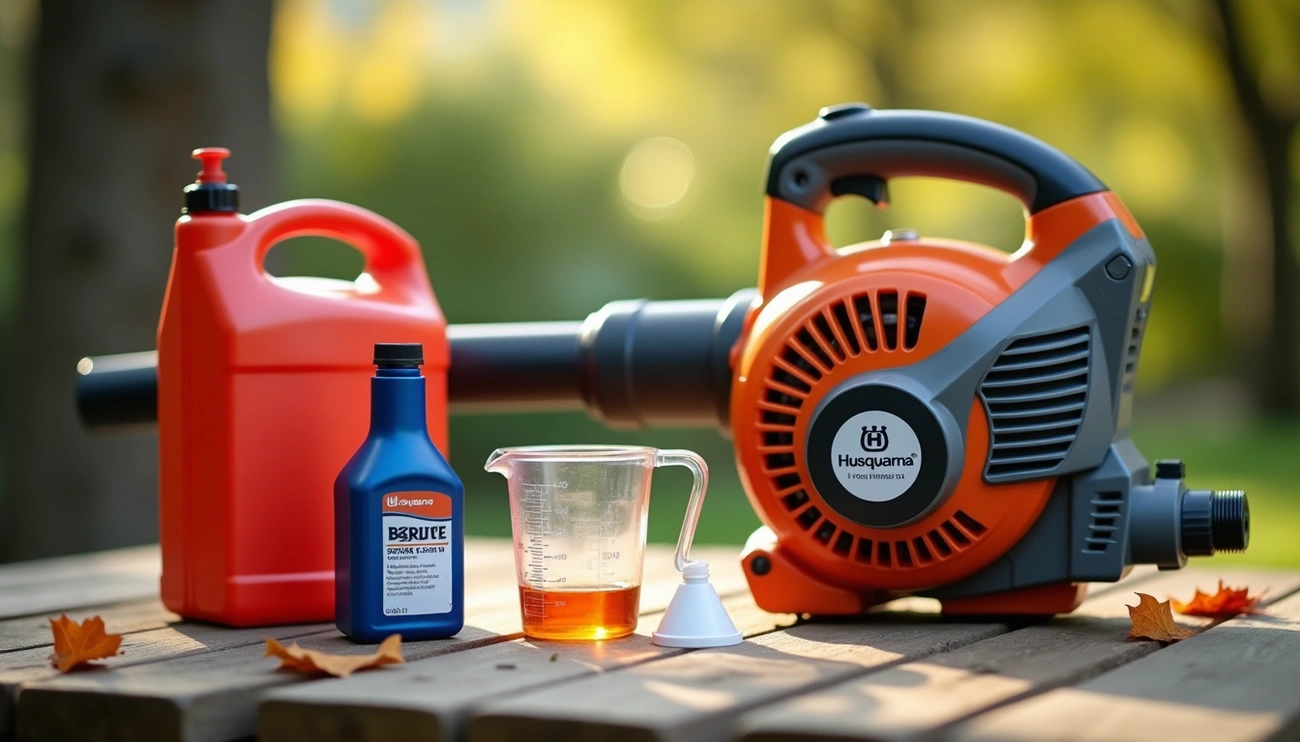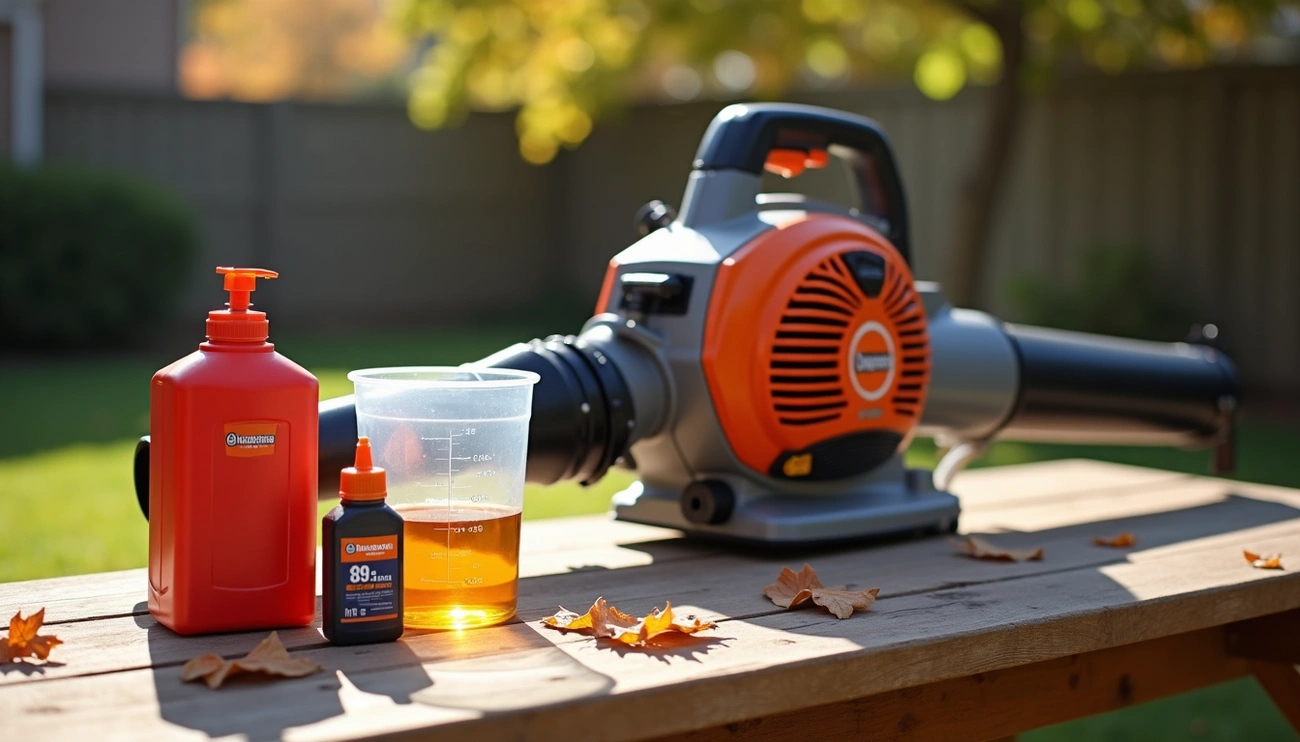
Yes, most Husqvarna leaf blowers take mixed gas because they use two-stroke engines. These engines require a pre-mixed fuel of gasoline and two-stroke oil at a 50:1 ratio, which equals 2.6 oz of oil per 1 gallon of gas. Use at least 89-octane fuel and high-quality oil, or a pre-mixed option like Husqvarna XP+, to prevent engine damage and ensure reliable performance.
Understanding Husqvarna Leaf Blower Engines
We know that most Husqvarna leaf blowers uses two-stroke engine, that’s why it required mixed gas to operate. In this section, I’ll explain the value for this special fuel mixture.
Why two-stroke engines need mixed gas
First of all two-stroke engines fundamentally differ from other engine types because they use the crankcase as part of the induction tract.
Unlike engines with separate lubrication systems, two-stroke engines require oil mixed directly with gasoline to lubricate the engine.
This mixture, often called “premix” or “petroil,” ensures all moving parts receive proper lubrication.
Without this oil-gas mixture, two-stroke engines would quickly fail. Essentially, as the fuel travels through the engine, the oil component coats and protects metal surfaces from friction damage.
When the piston moves up, it creates a vacuum that draws the fuel-oil mixture into the crankcase.
Subsequently, this mixture is pressurized and forced through the transfer port into the cylinder as the piston moves down.
One important fact to remember: the oil in this mixture is ultimately burned along with the fuel in a “total-loss oiling system”.
That’s why proper ratios matter so much for your Husqvarna leaf blower gas mix.
How two-stroke engines differ from four-stroke engines
Two-stroke and four-stroke engines have a lot of differences that affect how your Husqvarna leaf blower operates:
- Lubrication method: Two-stroke engines use a mix of oil and fuel, while four-stroke engines have separate compartments for fuel and oil.
- Power delivery: Two-strokes produce two power strokes per revolution versus one in four-strokes, offering more power for their size.
- Weight and complexity: Two-stroke engines have fewer moving parts, making them lighter and mechanically simpler [54]. This is primarily why they’re preferred for handheld equipment like leaf blowers.
- Maintenance needs: With two-strokes, you’re effectively “changing the oil” every time you refuel, whereas four-strokes require periodic oil changes.
For Husqvarna leaf blower fuel mix, this engine design choice offers significant advantages.
The higher power-to-weight ratio makes the equipment easier to handle during extended use.
Furthermore, two-stroke engines start more easily in cold temperatures, which can be particularly valuable depending on when you’re doing yard work.
Although two-stroke engines produce more emissions, their simplicity, power, and lighter weight make them ideal for leaf blower applications where portability matters.
What Kind of Gas and Oil Does a Husqvarna Leaf Blower Use?
Proper fuel selection is difficult to keeping your Husqvarna leaf blower running optimally. Let’s examine exactly what should go into your tank.
Recommended gas type (89 octane unleaded)
For Husqvarna leaf blowers, a minimum of 89 octane unleaded gasoline is generally recommended.
This higher octane rating helps prevent engine knocking and ensures smooth operation.
Some owners report that using lower-grade 87 octane fuel has led to engine failures, hence the importance of following manufacturer specifications.
For maximum performance, consider using Husqvarna’s ethanol-free, high-octane fuel with a premium 95-octane rating.
This specially formulated fuel resists degradation and oxidation, staying fresh longer than standard pump gas.
It also provides easier, more dependable starts and better protection for your leaf blower’s fuel system.
Approved two-stroke oils for Husqvarna
Husqvarna offers several specialized two-stroke oil options designed specifically for their equipment:
- Husqvarna XP Oil: Recommended for professional users who demand top performance
- Husqvarna HP Oil: Suitable for non-professional applications while still offering adequate protection
- Husqvarna XP+ Oil: A premium synthetic blend engineered to deliver exceptional lubrication with reduced exhaust smoke
These oils are specially formulated for high-performance, air-cooled two-stroke engines and contain additives that enhance combustion and improve engine cleanliness.
Avoiding the wrong oil types
As a result of improper oil usage, serious engine damage can occur. Never use:
- Two-stroke oil designed for water-cooled outboard engines (TCW rated)
- Any oil intended for four-stroke engines, such as automotive motor oil
- Regular 20W-50 or any automotive multigrade oil, as these contain detergents and friction modifiers that create harmful deposits when burned
Please remember that the correct Husqvarna leaf blower fuel mix ratio is 50:1 (2% oil) when using genuine Husqvarna oils.
If using other brands’ two-stroke oils, a richer 33:1 ratio (3% oil) is required for proper protection.
Even small measurement errors can significantly affect this mixture, potentially leading to engine problems.
How to Mix Gas and Oil for a Husqvarna Leaf Blower
Mixing fuel correctly for your Husqvarna leaf blower is essential once you understand the process. Indeed, proper mixing ensures optimal performance and longevity of your equipment.
(Step-1) Use a clean fuel container
Always begin with a clean, airtight container specifically designed for fuel. This prevents contamination and prolongs the shelf life of your mixture. Dirty containers are the leading cause of contaminated fuel. Altogether, never attempt to mix fuel directly in the leaf blower’s tank.
(Step-2) Add half the gas first
Pour half the amount of gasoline you plan to use into your container. This initial step creates space for thorough mixing without spillage.
(Step-3) Add the full amount of oil
Next, add the entire amount of two-stroke oil according to the 50:1 ratio (2% oil to gas). This equals approximately 2.5 fluid ounces of oil per gallon of gasoline.
(Step-4) Shake and add the remaining gas
Gently shake the container for 10-15 seconds to properly blend the oil and gas. Afterward, add the remaining gasoline to complete the mixture.
(Step-5) Shake again before use
Before filling your leaf blower, shake the container again for 10-15 seconds. This ensures the fuel mixture remains thoroughly blended. Before opening the tank, clean the cap area to prevent debris from falling into the tank.
Tips for Safe Fueling and Storage
Here are some tips for you to proper fuel handling practices that are vital for maintaining your Husqvarna leaf blower’s performance and extending its lifespan. Let’s explore some essential safety guidelines.
Never mix fuel in the blower tank.
Always prepare your Husqvarna leaf blower fuel mix in a separate, clean container designed specifically for fuel. In fact, attempting to mix oil and gas directly in the equipment’s tank can cause improper ratios and potential engine damage.
Store fuel for no more than 30 days
Mixed fuel deteriorates over time. Ultimately, you should only prepare what you’ll use within a month. Old fuel can cause starting problems and potentially damage internal components due to separation and oxidation.
Use fuel stabilizers if needed.
For occasional users, adding a quality fuel stabilizer helps preserve the gas mix in your Husqvarna leaf blower during periods of inactivity. Husqvarna offers specialized fuel treatments that prevent degradation when equipment sits unused.
Clean the fuel cap area before refuelling.
Likewise, wipe the area around the fuel cap before opening to prevent debris from entering the tank. Similarly, clean any spills from the equipment immediately before starting.
Drain fuel before long-term storage.
For seasonal storage, completely empty the fuel tank. Push the primer bulb after draining to remove any remaining fuel from the system. This prevents gum deposits from forming in the carburetor during extended storage periods.
Final Thoughts
Proper fueling undoubtedly makes all the difference when operating your Husqvarna leaf blower. Throughout this guide, we’ve established that Husqvarna leaf blowers indeed require mixed gas with a specific 50:1 ratio (2% oil to gas). This translates to approximately 2.5 fluid ounces of oil per gallon of gas.
Your equipment deserves the best care possible; therefore, using the right 89 octane unleaded gasoline mixed with Husqvarna-approved two-stroke oil will significantly extend its lifespan. Many users discover this fact only after experiencing engine problems. Consequently, following the correct mixing procedure becomes essential: use clean containers, add oil to half the gas first, shake thoroughly, and then add the remaining gas.
Safety matters just as much as performance. For this reason, never mix fuel directly in your blower tank; always prepare fresh fuel mixtures within 30 days of use, and clean the area around the fuel cap before refuelling. During long-term storage, draining the fuel completely prevents harmful deposits from forming.
That’s it for today, If you have any questions related to this blogpost please leave the comment below. I’ll definitely answers your questions. Cheers, mate.