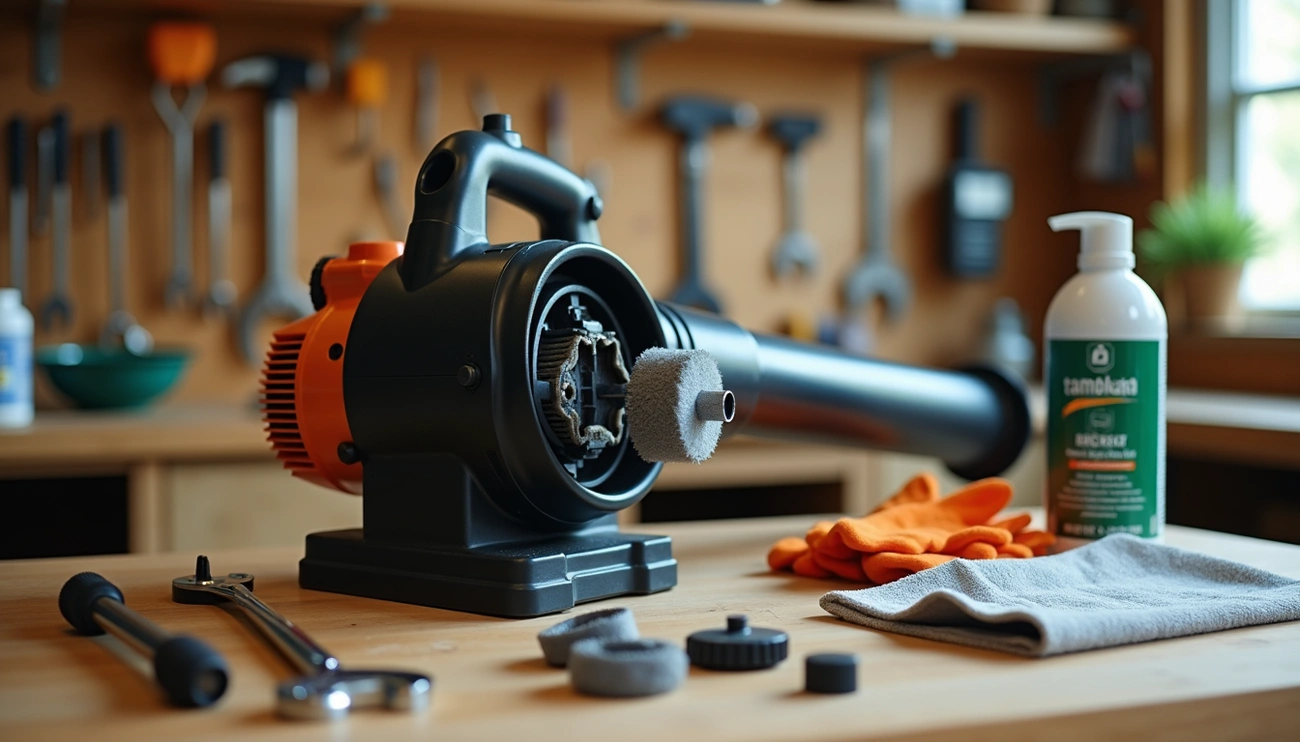
Clean a leaf blower by disconnecting the spark plug for safety, brushing off external debris, and cleaning the air filter by washing foam filters or replacing paper filters. Clear cooling fins and the fan grille, then wipe the housing with mild soap and water. Avoid harsh solvents and engine moisture.
Getting Started: Safety and Setup
Before beginning any leaf blower maintenance task, proper safety precautions are essential. Following these setup steps will protect you from potential hazards while ensuring effective cleaning of your equipment.
Choose a well-ventilated workspace
Safety begins with selecting an appropriate location. Always clean your leaf blower in an open, well-ventilated area, especially if you’re working with a gas-powered model. This prevents the buildup of harmful exhaust fumes that could cause respiratory issues. Additionally, sufficient ventilation helps disperse any dust or debris that becomes airborne during the cleaning process.
A spacious work area with a drop cloth underneath will make cleanup easier after your maintenance session. Furthermore, ensure the area is free from open flames or potential ignition sources if you’re handling fuel during your leaf blower maintenance.
Unplug or disconnect power source
Prior to starting any cleaning procedure, completely disconnect your leaf blower’s power source. For gas-powered blowers, remove the spark plug wire from the spark plug to prevent accidental startup. If you’re working with an electric model, unplug it from the outlet, or for cordless versions, remove the battery pack.
If you’ve been using the blower recently, allow sufficient time for the engine or motor to cool down completely before beginning any maintenance work. This simple precaution prevents potential burns from hot components.
Wear gloves and eye protection
Personal protective equipment is non-negotiable for safe leaf blower maintenance. Heavy-duty gloves shield your hands from sharp edges, chemicals, and hot surfaces. Safety glasses or goggles that meet eye protection standards are crucial to protect your vision from flying debris or dust particles.
For comprehensive protection, consider these additional safety items:
- Hearing protection (earplugs or earmuffs)
- Dust mask or N95 respirator for respiratory protection
- Long sleeves and pants to shield your skin
Following these safety preparations creates the foundation for effective leaf blower cleaning and maintenance while protecting your health and well-being.
Cleaning Key Components
Regular cleaning of key components is crucial for optimal leaf blower performance. After setting up your workspace safely, focus on these critical maintenance areas.
How to clean a leaf blower air filter
A clean air filter ensures proper airflow and prevents engine damage. Manufacturers recommend cleaning the filter after approximately every 10 hours of use. To clean it properly:
- Remove the air filter cover and locate the filter
- Take out the filter from its frame
- Wash it using mild detergent (regular dish soap and water)
- Rinse thoroughly and squeeze out excess water
- Allow it to dry completely before reinstallation
- For foam filters, lightly coat with clean SAE 30 oil before replacing
For paper filters, gently tap against a hard surface to loosen dirt instead of washing. Replace paper filters annually or when visibly dirty.
Wipe down the exterior and vents
Dust and debris accumulation on the exterior affects cooling efficiency. Regularly inspect and clean:
- The exterior casing with a damp cloth (avoid ammonia or harsh solvents)
- Air vents to prevent blockage and overheating
- Cooling fins that help dissipate heat
- Fan areas where leaves might collect
Pay particular attention to air intake areas as blockages can significantly reduce performance.
Inspect and clean the spark plug
The spark plug is essential for engine ignition. Check it after approximately 25 hours of use or once per season. To maintain it:
- Allow engine to cool completely before removing the spark plug
- Use a 5/8-inch socket to remove it
- Clean the area around the spark plug first
- Inspect for cracks, carbon deposits, or corrosion
- Clean the electrode with a wire brush if dirty
- Set the air gap at 0.025 inches using a feeler gage
- Reinstall firmly without overtightening
Remove debris from fan blades
Clearing fan blades ensures optimal airflow. Carefully inspect blower’s interior components:
- Check fan blades for accumulated dirt or obstructions
- Use a soft brush to gently clean fan areas
- Ensure cooling components remain unobstructed
- For tough debris, compressed air can be effective
Maintaining these components regularly helps prevent overheating and extends your leaf blower’s operational life.
Deep Cleaning the Carburetor
A clogged carburetor often causes hard starting, poor running, and decreased performance in your leaf blower. Over time, the carburetor accumulates deposits from fuel, especially when the machine sits unused for extended periods.
How to clean a leaf blower carburetor
When your blower struggles to start, lacks power, or leaks fuel, the carburetor likely needs cleaning. Begin by ensuring you have a well-ventilated workspace and protective equipment. Verify your air filter is clean and properly installed first, as this is often the underlying cause of carburetor issues.
Disassemble the carburetor safely
Initially, disconnect the spark plug wire and secure it away from the spark plug. Remove the air filter cover to access the carburetor. Carefully disconnect fuel lines, noting their positions for reassembly—one supplies fuel to the carburetor while the other connects to the primer bulb.
Next, remove the metal cap covering the diaphragm by loosening the four small Phillips screws. Subsequently, remove the pivot holding the needle in place, then take off the primer bulb held by two small screws. Finally, remove the high and low-speed jets, which may require a special spline tool.
Use carburetor cleaner and tools
Choose a carburetor-specific cleaner to avoid damaging components. Work over a container to catch spray and wear safety glasses since the cleaner can splash back through various passages. Apply the cleaner to exterior surfaces first, then move to interior passages.
For thorough cleaning, use thin wire, fishing line, or a torch tip cleaning set to clear clogged passageways—however, be extremely careful with abrasive tools that could damage precision holes in brass components. Allow all parts to dry completely after cleaning.
Reassemble and test functionality
Reassemble in reverse order of disassembly. For initial engine starting, set the idle screw at approximately 3/4 turn and the main jet at 1.5 turns out. Replace any worn seals or gaskets between the carburetor and engine block.
After reassembly, add fresh fuel, possibly with a fuel system cleaner like Sea Foam (about 2 oz per gallon of fuel) to help dissolve remaining gum and varnish in the fuel system. Start the engine and adjust the carburetor settings as needed for smooth operation.
Storage and Preventative Maintenance
Proper storage techniques are essential for extending the life of your leaf blower. Consequently, a few simple steps between seasons can prevent costly repairs later.
Drain or stabilize fuel before storage
For gas-powered blowers, either run the engine until it’s completely dry or add fuel stabilizer to prevent corrosion and gum formation. If using stabilizer, fill the tank completely to prevent condensation, then run the engine for a few minutes to distribute the treated fuel throughout the system. Stabilized fuel can keep for up to 3 years.
Charge and store batteries properly
Battery-powered blowers require different care. Store batteries at 40-60% charge rather than full capacity. Keep them in a cool, dry place away from direct sunlight, ideally at temperatures between 50-68°F. Never store batteries on chargers unless specifically recommended by manufacturers.
Check for loose or damaged parts
Thoroughly inspect your blower before storage. Tighten any loose fasteners and look for worn-out components, damaged cords, or signs of wear. Pay particular attention to areas that vibrate heavily during operation.
Create a seasonal blower maintenance checklist
Establish a routine that includes:
- Clean air intake, exhaust, and cooling fins
- Store in dry, well-ventilated area
- Keep accessories together
- Inspect fuel lines and connections
- Oil moving parts like hinges and springs
These preventative measures ensure your leaf blower starts reliably whenever needed.
Conclusion
Regular maintenance of your leaf blower certainly pays dividends in the long run. Throughout this guide, we’ve covered essential cleaning techniques that help extend the life of your equipment while ensuring peak performance. After all, a well-maintained leaf blower can serve you reliably for a decade or more.
First and foremost, safety should remain your priority during any maintenance procedure. Before starting work, always disconnect the power source and wear appropriate protective gear. Additionally, choosing a well-ventilated workspace protects you from harmful fumes and makes cleanup easier.
The key components we’ve discussed—air filters, exterior vents, spark plugs, and fan blades—require consistent attention. Because these parts directly affect your machine’s performance, cleaning them regularly prevents common issues before they develop into costly problems. Likewise, deep cleaning the carburetor, though more involved, resolves many performance issues and keeps your blower running smoothly.