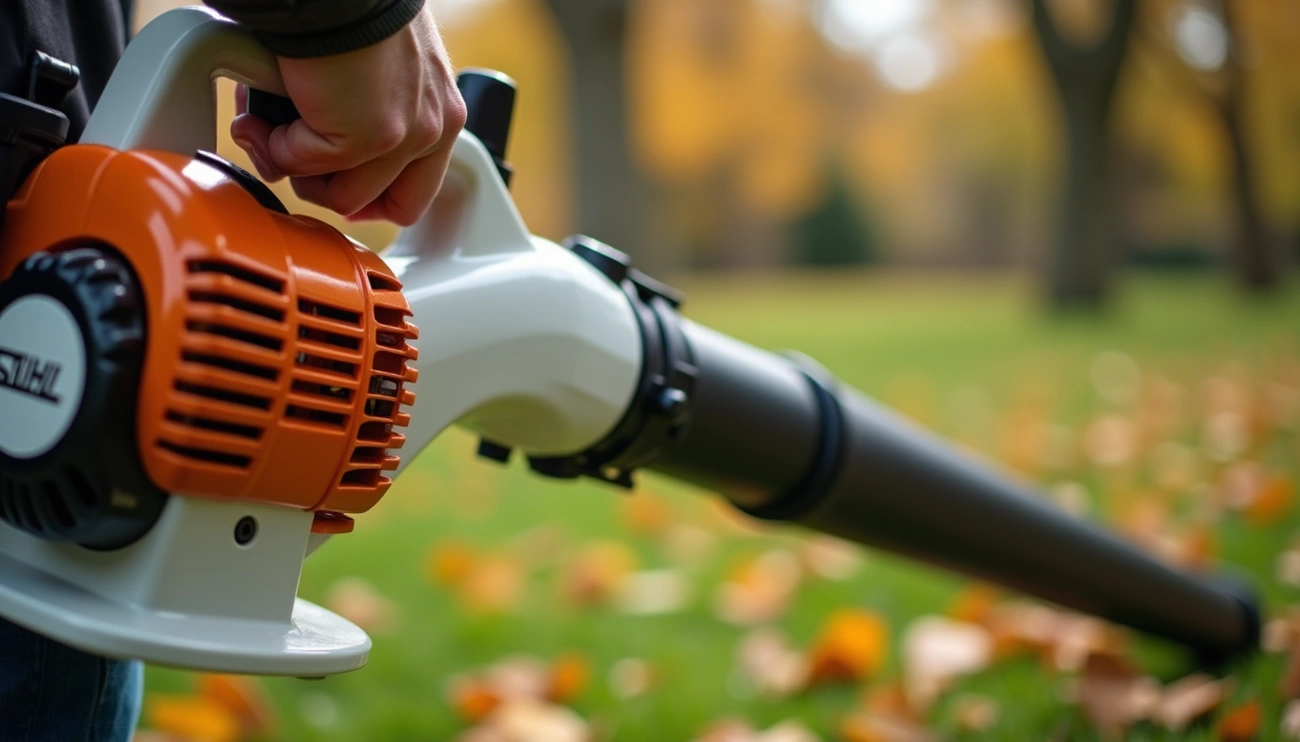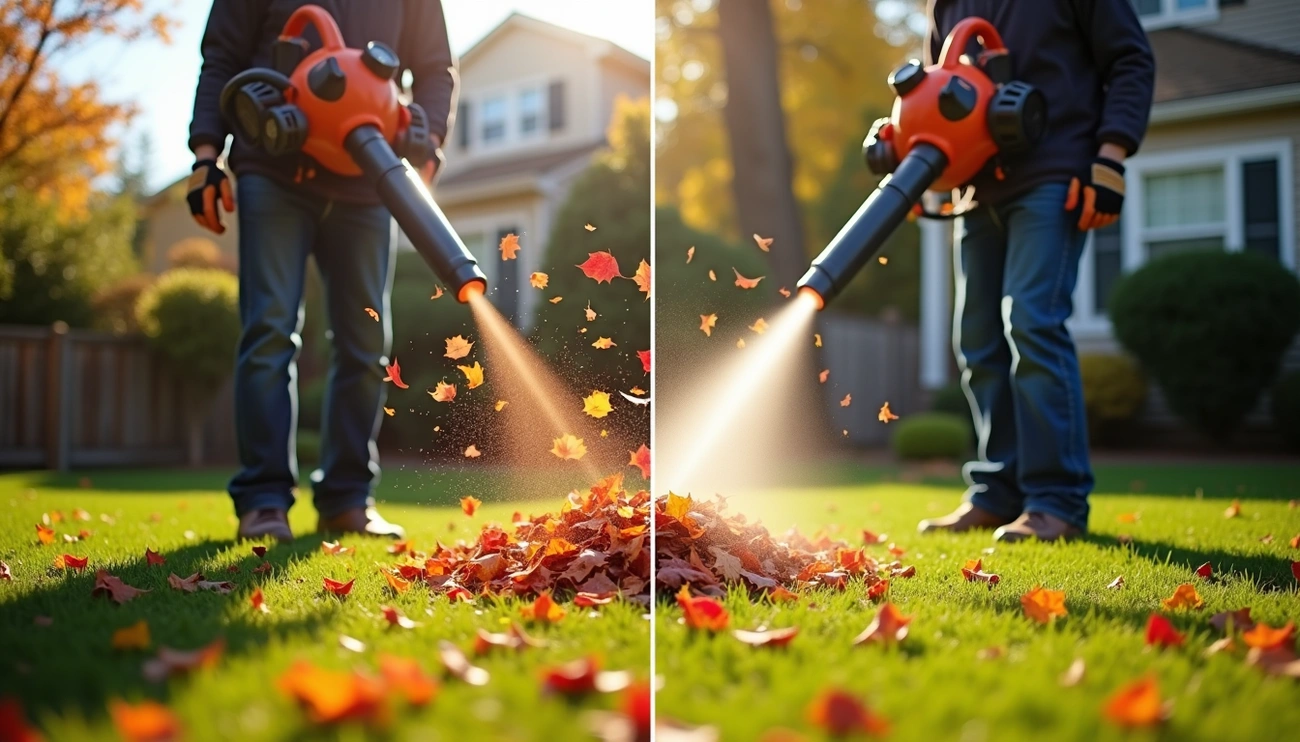
Yes, 450 CFM is good for a leaf blower and ideal for most homeowners. A 450 CFM blower provides enough air volume to clear dry or lightly damp leaves and debris in medium-sized yards. It fits within the 400–700 CFM range considered best for residential use, while 600+ CFM suits large properties or heavy, wet leaf piles.
What does 450 CFM mean in a leaf blower?
CFM stands for Cubic Feet per Minute, a crucial measurement that indicates how effectively your leaf blower handles yard cleanup tasks. Before purchasing a new blower, understanding what 450 CFM actually means can help you make an informed decision about whether this power level meets your specific needs.
Understanding CFM as a volume metric
Cubic Feet per Minute measures the volume of air a leaf blower can move in one minute. Essentially, CFM tells you how much air flows through the nozzle of your blower. This metric is fundamentally different from MPH (miles per hour), which measures air speed rather than volume.
Think of it this way: CFM indicates how wide an area your leaf blower can cover at once. The higher the CFM value, the more leaves and debris you can move simultaneously. This makes CFM particularly important when tackling larger piles of leaves or clearing wider spaces in your yard.
A leaf blower with substantial CFM can push more air, consequently moving greater amounts of debris with each pass. This volumetric capacity is what allows you to corral leaves efficiently rather than just blowing them around at high speed.
How 450 CFM compares to other ratings
To put 450 CFM in perspective, consider how leaf blower ratings are typically categorized:
- Low CFM (100-300): Ideal for light-duty tasks like cleaning small patios, driveways, or gardens
- Medium CFM (300-500): Suitable for moderate jobs, such as clearing dry leaves from average-sized yards
- High CFM (500+): Best for professional use, large properties, or handling wet leaves and stubborn debris
At 450 CFM, a leaf blower sits at the upper end of the medium range, making it versatile enough for most residential tasks while remaining manageable in terms of weight and noise. This rating is comparable to what you might expect from a 20cc gas engine, offering substantial power without the need for gas.
For context, professional-grade blowers often exceed 500 CFM, whereas entry-level models might offer only 200-250 CFM. The 450 CFM specification places your blower in a sweet spot between everyday practicality and professional-grade performance.
Is 450 CFM enough for most homeowners?
For the average homeowner, 450 CFM provides more than adequate power. This level falls comfortably within the 400-700 CFM range recommended for most yards. Additionally, it aligns with experts’ recommendations for effectively handling residential leaf-clearing tasks.
A 450 CFM blower excels at:
- Post-mowing cleanup on sidewalks and driveways
- Corralling dry broadleaves during fall
- Blowing off lawn equipment after use
- Cleaning out garages and workshops
Although 450 CFM is on the lower end compared to premium high-powered models, it’s perfectly adequate for typical home maintenance. For smaller yards (under half an acre), a blower with 450 CFM and 150-190 MPH will generally provide sufficient power.
How MPH complements CFM in performance
While understanding CFM provides insight into a leaf blower’s volume capacity, Miles Per Hour (MPH) is an equally important performance metric.
Together, these measurements create a more complete picture of what makes a leaf blower effective at clearing your yard. Let’s explore how MPH works alongside CFM and why both matter when determining if a 450 CFM leaf blower meets your needs.
What MPH measures and why it matters
MPH measures the speed of the air exiting your leaf blower’s nozzle. Unlike CFM, which indicates volume, MPH indicates how quickly the air is moving. This velocity creates the force needed to dislodge stubborn debris.
Air speed becomes especially important when dealing with:
- Wet leaves that stick to surfaces
- Heavy or compacted debris
- Stubborn materials that won’t budge easily
- Precise cleaning tasks in tight spaces
The faster the airspeed (higher MPH), the better equipped your blower is to handle challenging cleanup scenarios. A leaf blower with higher MPH can blast debris away with greater power, making it particularly valuable for those post-rain cleanups when everything seems glued to your walkway.
Why speed alone isn’t enough
Despite the impressive force high-MPH blowers provide, relying solely on speed creates limitations. A blower with high MPH but low CFM produces a fast stream of air, but covers only a small area. Picture trying to clear a large yard with a powerful but narrow stream of air – it would take significantly longer than using a blower that moves more air at once.
For example, a blower with 250 CFM and 200 MPH might excel at removing wet leaves stuck in corners but struggle to move large piles quickly. This is why professionals often recommend considering both metrics together rather than focusing exclusively on either one.
How nozzle design affects MPH
Interestingly, the shape of your leaf blower’s nozzle significantly impacts both MPH and CFM readings. Manufacturers design different nozzle types to optimize either speed or volume based on specific tasks.
Flat nozzles boost air speed (MPH) but reduce overall air volume. These nozzles concentrate the airstream, creating a higher velocity that’s perfect for sticky, compacted material. When you need to blast mud off your driveway or separate wet leaves from concrete, a flat nozzle attachment increases your effective MPH.
In contrast, round nozzles increase air volume (CFM) but lower speed. These standard nozzles, which typically come with most blowers, excel at covering a larger area and moving loose debris that isn’t stuck to surfaces.
Furthermore, the relationship between nozzle design and performance creates important tradeoffs. A skinnier nozzle increases air speed, making it better for loosening heavy or soggy debris. Nevertheless, if the nozzle becomes too tight, it may create excessive backpressure, reducing overall airflow (CFM).
CFM vs MPH: Which matters more for your yard?
Choosing between CFM and MPH often confuses many homeowners, who wonder, “Is 450 CFM good for a leaf blower?” The answer depends entirely on your specific yard conditions and cleanup needs. Let’s examine when each measurement deserves priority and why finding the right balance ultimately matters most.
When to prioritize CFM
High CFM becomes your primary consideration in several key scenarios:
- Large open spaces: When clearing expansive lawns or wide driveways, a blower with higher CFM (400-700 range) moves more debris at once, making the job significantly faster.
- Dry leaf piles: For moving large volumes of lightweight, dry leaves across open areas, air volume matters more than speed. A blower with 600 CFM and moderate MPH efficiently sweeps leaves across large spaces.
- Heavy seasonal cleanups: During peak leaf-fall seasons, higher CFM (400-700) helps you clear large areas faster, saving time and effort.
Primarily, what makes a good CFM for a leaf blower depends on your property size. For most yards, 400-700 CFM provides efficient clearing power, whereas smaller yards may only require 150-400 CFM.
When MPH becomes more important
Air speed takes precedence under these conditions:
- Wet or stuck debris: When leaves are damp and sticking to surfaces, a blower with higher MPH (150-230) provides the force needed to dislodge them effectively.
- Precision tasks: For cleaning around flower beds, gutters, or tight corners, higher MPH offers better control and focused airflow.
- Stubborn materials: Pine needles, mud, or compacted debris require the concentrated force of high-velocity air to break loose.
Consider a 450 CFM blower with high MPH if you frequently deal with wet conditions or need to clean hard surfaces like patios and driveways.
Why balance is key
In reality, most homeowners need both metrics working together:
- Varied seasonal conditions: Throughout the year, you’ll encounter both dry leaves and wet debris, requiring different air characteristics.
- Diverse yard features: Most properties include both open spaces and tight corners that benefit from different airflow patterns.
- Practical performance: A balanced blower with moderate CFM (around 450) and adequate MPH (110-200) handles most residential tasks effectively.
The ideal combination depends on your specific situation. A blower with 400-700 CFM and 110-180 MPH is sufficient for typical residential needs. This explains why 450 CFM represents a practical choice for average homeowners – offering enough volume while still maintaining manageable weight and noise levels.
Remember that either metric alone tells only half the story – a powerful leaf blower needs both sufficient air volume and appropriate speed to effectively tackle your yard’s unique challenges.
Blowing force: The real measure of power
Beyond the basic metrics of CFM and MPH lies a more comprehensive measure of leaf blower power: blowing force. This unified measurement tells us how effectively a leaf blower moves debris, thereby answering the question “Is 450 CFM good for a leaf blower?” with greater precision.
How to calculate the blowing force
Blowing force results from the combination of both CFM and MPH working together. Simply put, a leaf blower with decent CFM but exceptional MPH (or vice versa) might still underperform compared to a model with balanced specifications.
To estimate blowing force, some manufacturers multiply CFM by MPH. For instance:
- 320 CFM × 107 MPH ≈ 4.45 Newtons for an 18V blower
- 600 CFM × 150 MPH ≈ 11.7 Newtons for higher-voltage units
At the same time, this calculation provides only an approximation, as true Newton measurements also account for air pressure, temperature, humidity, and nozzle design.
What is a good CFM for a leaf blower?
For most residential yards, 400-700 CFM delivers sufficient power. Admittedly, smaller yards can function well with just 150-400 CFM. This places our 450 CFM blower comfortably within the recommended range for average homeowners.
Yet when measured in Newtons, the guidelines become even clearer:
- Homeowners: ≥ 4-8 Newtons for light to medium tasks
- Professional users: 10-15 Newtons for frequent landscaping
- Commercial users: 15-25 Newtons for maximum performance
First and foremost, understanding these ranges helps determine if a 450 CFM blower meets your specific needs.
Why does Newton’s offer a better comparison
Newton (N) represents the actual thrust force of a blower, making it the most reliable way to compare models across brands. Primarily, this metric provides a true representation of real-world pushing power rather than just air movement.
This approach solves a longstanding industry problem: “MPH, CFM, HP, etc = Confusion”. As a matter of fact, more manufacturers now include Newton measurements in their specifications, allowing for straightforward comparisons.
What makes Newton’s superior is their ability to account for nozzle design and air pressure alongside the basic volume and speed measurements. Unlike focusing solely on CFM or MPH, Newtons give you the complete picture of performance, helping confirm whether a 450 CFM blower truly delivers the power you need.
Choosing the right blower for your needs
Selecting an appropriate leaf blower depends on several practical factors beyond just CFM and MPH ratings. Let’s examine what matters most for different scenarios.
Small yards vs large properties
For compact spaces under ¼ acre, a lightweight handheld blower with 150-400 CFM works perfectly. Medium-sized yards (¼-½ acre) benefit from backpack models with 400-700 CFM. Larger properties exceeding ½ acre typically require gas-powered blowers or high-capacity cordless units with ratings above 700 CFM.
Wet leaves vs dry leaves
Wet leaves present unique challenges due to their heavier weight. For damp debris, prioritize blowers with higher MPH ratings and stronger force.
Consider that some leaves may be too soaked for effective blowing—in these cases, raking might be necessary. Specifically, powerful backpack models often perform better with wet material.
Cordless vs gas-powered options
Cordless electric blowers offer quieter operation (65-78 decibels vs. 90-102 for gas), zero emissions, and minimal maintenance. Battery runtime now reaches approximately 94 minutes between charges.
Meanwhile, gas-powered options deliver unmatched power for demanding jobs but require fuel mixing and regular maintenance. For flexibility without noise concerns, some homeowners supplement with both types.
Budget considerations
Price ranges vary significantly: corded electrics ($50-$100), cordless ($90-$650), handheld gas ($140-$350), and wheeled blowers ($350-$975). Factor in long-term expenses—gas blowers cost less initially but incur ongoing fuel and maintenance costs. Look for warranties ranging from 1 to 5 years, depending on the model.
Conclusion
Choosing the perfect leaf blower ultimately depends on your specific yard conditions and cleanup needs. With a 450 CFM rating, you’ve found a sweet spot that works effectively for most residential properties. This middle-range power provides enough volume to handle seasonal cleanups without the extra weight, noise, and expense of commercial equipment.
Additionally, remember that CFM tells only part of the story. The ideal leaf blower balances both air volume and speed, creating sufficient blowing force to tackle various debris challenges. For wet leaves and stubborn materials, MPH becomes equally important, while larger open areas benefit more from higher CFM.
Before making your final decision, consider your yard size, typical debris conditions, and practical factors like weight and noise. Most homeowners find 450 CFM perfectly adequate for regular maintenance tasks. Though higher-powered options exist, they often exceed what’s necessary for typical residential use.