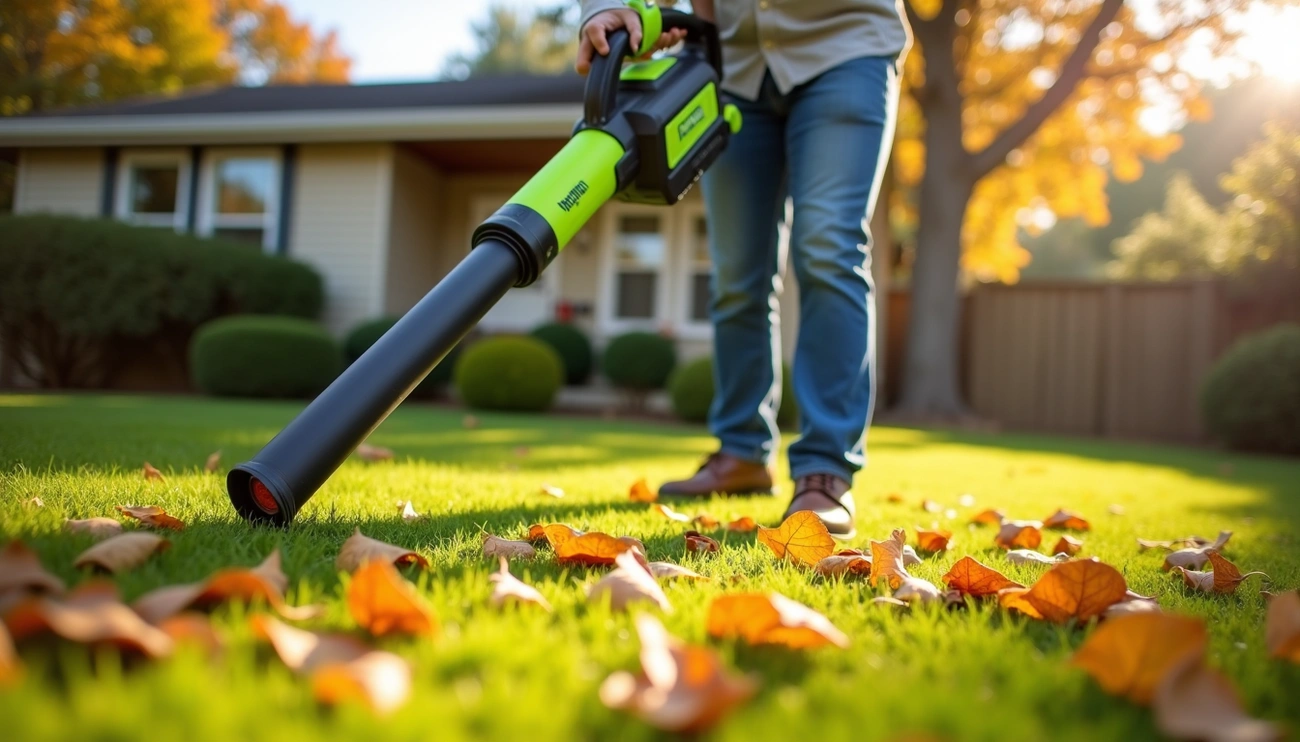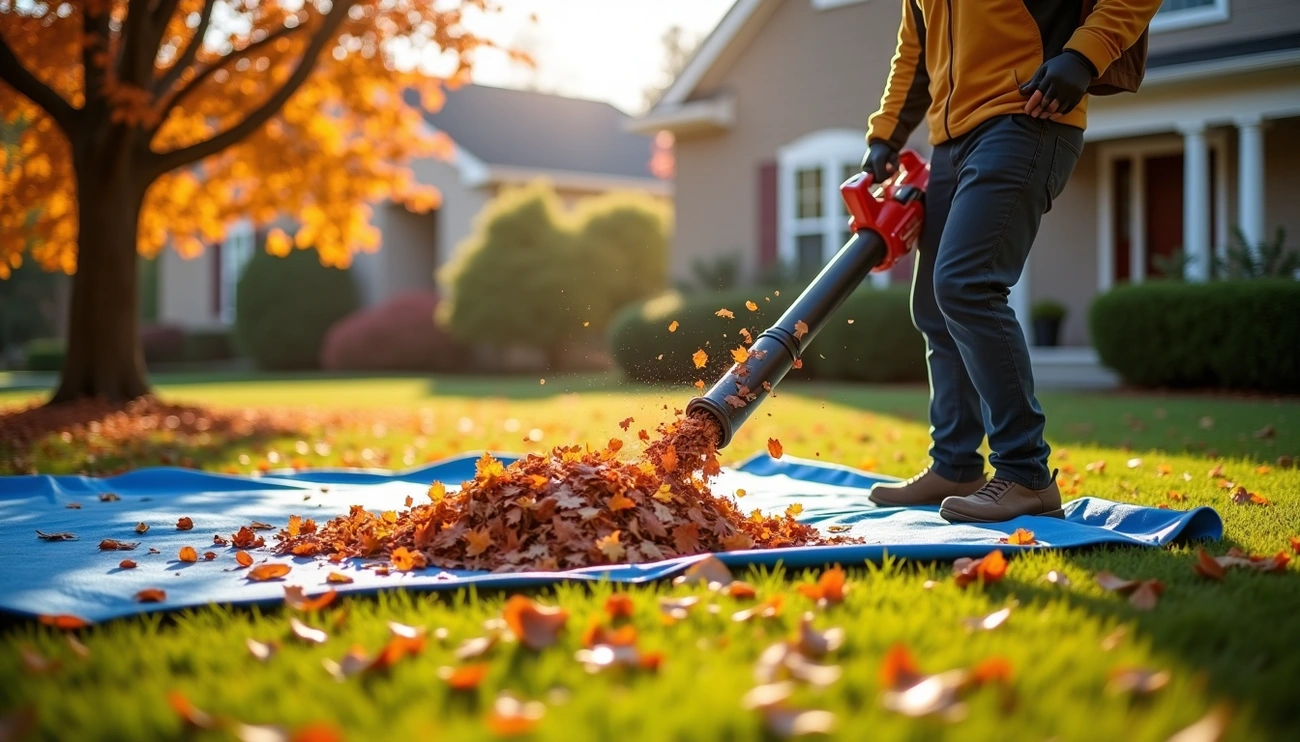
A leaf blower picks up leaves by spinning an internal fan called an impeller to create fast-moving air. This airflow pushes lightweight leaves into piles. Vacuum leaf blowers also create suction that pulls leaves into a bag and often shreds them before collection.
Get Ready: Safety and Setup
Before operating any leaf blower, proper preparation is essential for both safety and effectiveness. Taking a few minutes to get ready can prevent injuries and ensure your equipment works optimally.
Wear protective gear before starting
Safety comes first when handling a leaf blower. The high-powered air stream can send debris flying at dangerous speeds. Always wear safety goggles or glasses to protect your eyes from swirling dust and debris. For maximum protection, consider sealed safety goggles with adhesive rubber seals.
Hearing protection is equally important, since most leaf blowers produce noise exceeding the 90 dB workplace safety limit. Use earplugs or earmuffs to prevent permanent hearing damage during operation.
Furthermore, thick padded gloves protect your hands from vibration, which can cause trembling for hours after use. For comprehensive protection, also wear:
- A dust mask or respirator to prevent inhaling harmful particles
- Long sleeves and pants to shield your skin
- Closed-toe shoes to protect your feet from debris
Check your blower type: gas, electric, or battery
Different blower types require specific preparation steps:
For gas-powered blowers, check fuel levels before starting and refill if necessary. Let the engine cool completely before refueling, and always loosen the cap slowly to release tank pressure. Move at least 10 feet from the fueling area before starting.
With battery-powered models, ensure the battery is fully charged. Consider having an extra battery ready for larger jobs.
For corded electric blowers, check that the cord is intact and properly positioned to avoid becoming a tripping hazard.
Inspect the blower for damage or clogs
Proper inspection prevents malfunctions and extends equipment life. First, examine the entire blower for signs of wear, damage, or loose fasteners. Tighten any loose screws, nuts, or bolts to maintain structural integrity.
Next, check and clean the nozzle, removing any debris or clogs that might impact performance. For gas models, inspect the air filter, cooling systems, choke shutter, and fuel system.
For electric models, ensure all connections are secure and free from dirt. Though electric blowers require less maintenance than gas ones, they still need regular inspection.
By following these preparation steps, you’ll be ready to use your leaf blower safely and efficiently to pick up leaves.
Clear the Area Before You Blow
Properly preparing your work area is crucial for effective leaf blowing. Taking a few minutes to clear the space first saves time, protects your equipment, and ensures everyone’s safety.
Remove toys, tools, and large debris
Scanning your yard for obstacles is the first step toward efficient leaf collection. Remove any toys, garden tools, and lawn decorations from the area. These items can obstruct your work and significantly slow down the leaf collection process. Moreover, clearing large sticks and branches prevents potential damage to your leaf blower.
Picking up sizeable debris serves two important purposes: it protects your equipment from damage and allows you to work without constant interruptions. Consequently, you’ll gather leaves more efficiently when nothing blocks your path.
Check for rocks, gravel, and wet spots
Small objects can cause big problems when using a leaf blower to pick up leaves. Carefully inspect the area for rocks, sticks, and other small debris that could become dangerous projectiles when caught in the powerful airstream. These items not only pose injury risks but can also damage your equipment.
Pay particular attention to:
- Rocks and stones that might damage blower blades
- Gravel areas that could scatter dangerously
- Wet spots where leaves clump and become difficult to move
This inspection step helps prevent potential injury while also protecting your leaf blower from unnecessary wear and tear.
Move pets and people away from the area
Safety demands creating adequate space around your work zone. Other operators, bystanders, and animals should maintain a distance of at least 50 feet from the blower during operation. This buffer zone provides protection from flying debris and excessive noise.
Stop blowing immediately if someone steps inside this 50-foot safety boundary. Never point the nozzle or blow debris toward people, pets, vehicles, or open windows and doors. Remember that leaf blowers are powerful tools capable of propelling objects at high speeds.
Moving household pets indoors during operation protects them from both noise and potential flying debris. This simple precaution prevents accidents and allows you to focus completely on the task at hand.
How to Use a Leaf Blower to Pick Up Leaves
Mastering proper leaf blower technique transforms yard cleanup from a tedious chore into a quick, efficient process. Once your area is clear and safe, it’s time to start blowing.
Start the blower based on its type
First, power up your machine properly. For gas blowers, check fuel levels, set the choke, pull the cord, and allow 30-60 seconds of warm-up time. With battery models, ensure the battery is fully charged and clicks securely into place. For corded electric blowers, verify your extension cord is long enough and keep it behind you to avoid tripping.
Use a sweeping motion for better control
Instead of random blowing, use smooth, semicircular motions from the edges inward to form manageable piles. Keep your stance steady and move the nozzle in controlled arcs, maintaining a consistent pattern. This systematic approach prevents leaves from scattering unpredictably.
Work with the wind, not against it
Notably, blowing against the wind creates frustration and wastes energy. Feel the wind direction and work with it to move leaves more efficiently. This simple strategy markedly reduces effort while maximizing the blower’s effectiveness.
Adjust speed for different surfaces
Different areas require specific power settings:
- Lawns: Medium speed
- Patios or hard surfaces: Lower speed to prevent dust clouds
- Heavy debris or wet leaves: Maximum power
Adjusting as you go conserves battery life and provides better control over where leaves land.
Use a leaf blower with vacuum for tight spots
For confined areas or final cleanup, a leaf blower with vacuum functionality proves invaluable. These dual-function models collect and shred material through the nozzle, simplifying disposal. Specialized attachments like collection systems with hoses, funnels, and bags make leaf gathering even more efficient in hard-to-reach spaces.
Time-Saving Tips for Leaf Collection
Working smarter, not harder is the key to efficient leaf collection. These time-saving strategies will cut your yard work time in half.
Blow leaves into small piles by section
Dividing your yard into manageable sections creates a strategic approach to leaf removal. Rather than attempting to blow all leaves at once, create smaller piles at the corners of each section. This methodical technique prevents leaves from being scattered by sudden breezes and gives you better control over the entire process.
Use a tarp to move large piles quickly
The tarp method dramatically speeds up leaf disposal. Place a large tarp (8’x10′ or larger) in your yard, then blow or rake leaves directly onto it. When full, either carry the corners together like a large bag or drag the tarp to your disposal area. This simple trick eliminates multiple trips with traditional bags.
Switch to a leaf vacuum mulcher for final cleanup
Leaf vacuum mulchers transform cleanup by reducing leaves into beneficial mulch at impressive ratios. A quality vacuum mulcher can process up to 53 gallons of leaves per minute, turning yard waste into valuable garden material. Plus, these machines work nearly as quickly as mowing your lawn.
Empty the leaf blower bag regularly
Maintaining consistent suction requires emptying collection bags before they’re completely full. Overfilled bags restrict airflow and reduce performance.
Avoid overworking the blower—take breaks
Preventing overheating extends equipment life and maintains optimal performance. Give your machine occasional breaks during extended use, particularly with high-powered models.
Conclusion
Leaf blowers stand as one of the most efficient tools for yard maintenance, significantly reducing the time and effort spent on seasonal cleanup. Throughout this guide, we’ve seen how proper preparation, technique, and strategy work together for optimal results.
Safety precautions must be taken seriously before starting any leaf blowing job. Protective gear, equipment checks, and clearing the area prevent injuries and equipment damage while ensuring smooth operation.
The right technique makes all the difference when using a leaf blower. Sweeping motions, working with the wind, and adjusting speeds based on surface types will help you clear leaves quickly and efficiently. Additionally, sectioning your yard into manageable areas prevents feeling overwhelmed by large spaces.
Time-saving strategies such as using tarps for collection and employing vacuum mulchers for final cleanup can cut your yard work time dramatically. These approaches not only speed up the process but also make disposal easier.