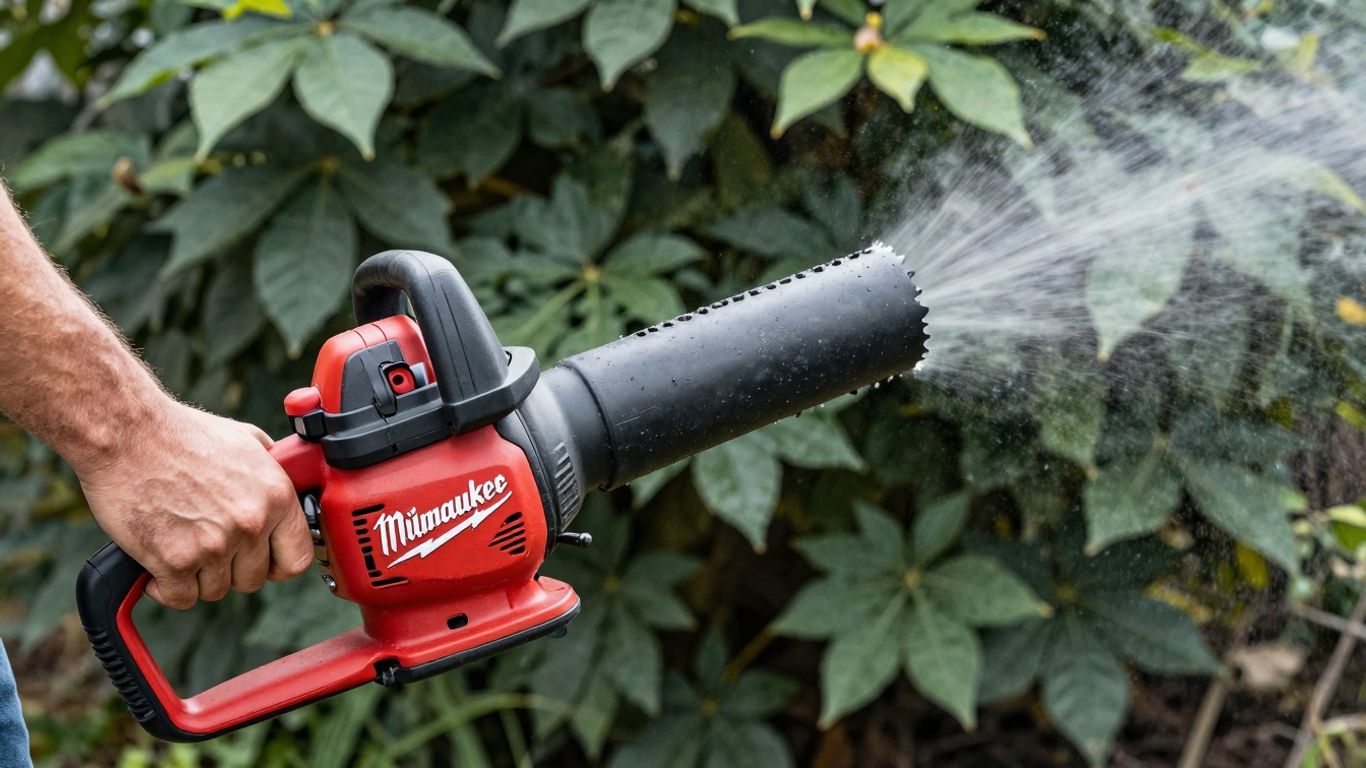
Thinking about ditching that old gas-guzzler for a leaf blower? You’re not alone. So many people are looking for something easier to handle and less of a headache. This Milwaukee M18 leaf blower review will look at what Milwaukee is offering in the battery-powered space. We’ll cover how it stacks up against gas models, what it’s like to actually use, and which batteries will keep you going the longest. Let’s see if this thing is the real deal for keeping your yard tidy.
Key Takeaways
- The Milwaukee M18 FUEL leaf blower offers power comparable to many gas models, with up to 600 CFM and 145 MPH, but is significantly quieter and produces zero direct emissions.
- User experience is improved with reduced noise levels, easier starting, and better ergonomics compared to traditional gas blowers.
- The M18 FUEL Dual Battery Blower (2824-20) is highlighted for its professional-grade performance and is suitable for large properties and demanding tasks.
- Milwaukee’s REDLITHIUM battery technology, especially the High Output variants, delivers the power and runtime needed for effective leaf blowing, with options that balance capacity, weight, and durability.
- Proper battery selection and care, including understanding High Output vs. standard batteries and following storage and charging best practices, are important for maximizing performance and lifespan.
Milwaukee M18 Leaf Blower: Power and Performance
When you’re out there wrestling with fallen leaves and yard debris, the last thing you want is a tool that quits before you do. That’s where the Milwaukee M18 leaf blower really starts to shine. For a long time, if you wanted serious blowing power, you were pretty much stuck with gas engines. They’re loud, they smell, and you’ve got to mix fuel and do all sorts of maintenance. But Milwaukee’s M18 line is changing that game.
Comparing Power to Gas-Powered Models
It’s easy to think that battery-powered tools just can’t keep up with their gas counterparts, right? Well, the M18 FUEL blowers are here to make you rethink that. They’re designed to go head-to-head with many gas models, and in some cases, they even pull ahead. You get that instant on, no pull-cord hassle, and a lot less noise. Plus, no more trips to the gas station or worrying about stale fuel.
Air Speed and Volume Metrics
So, how much air are we actually talking about? The numbers are pretty impressive. You’ll often see figures like 145 MPH for air speed and up to 600 CFM (cubic feet per minute) for air volume on some of the higher-end M18 models. This means they can move a significant amount of leaves and debris, even when things get a bit wet or heavy. It’s not just about a quick puff of air; it’s sustained power to get the job done.
Here’s a quick look at how some specs stack up:
| Feature | Milwaukee M18 FUEL (Example) | Typical Gas Blower |
|---|---|---|
| Max Air Speed | 145 MPH | 150-200 MPH |
| Max Air Volume | 600 CFM | 400-700 CFM |
| Noise Level | ~57 dB | 90+ dB |
| Emissions | None | High |
The Role of Brushless Motor Technology
Under the hood, so to speak, is Milwaukee’s POWERSTATE™ brushless motor. This isn’t just some fancy marketing term. Brushless motors are more efficient, meaning they use less battery power to do the same amount of work. They also run cooler and last longer because there are fewer parts to wear out. This technology is a big reason why these battery blowers can deliver such strong performance without needing a gas engine. It’s all about smart design and efficient power delivery.
User Experience and Practicality
When you’re out there wrestling with leaves, the last thing you want is a tool that makes the job harder. Milwaukee seems to get this. They’ve put some thought into making their M18 leaf blowers actually pleasant to use, which is a big deal when you’re spending hours in the yard.
Reduced Noise Levels
One of the first things you’ll notice is how much quieter these blowers are compared to their gas-guzzling cousins. Forget that ear-splitting roar that makes you feel like you’re standing next to a jet engine. The M18 models run at a much more manageable sound level, often around 57 decibels. This means you can actually hear yourself think, and maybe even have a conversation with a neighbour without shouting. Plus, it’s a lot friendlier for everyone else around, especially if you’ve got early morning cleanup duties.
Ease of Use and Ergonomics
Starting up a gas blower can be a whole production – pull cords, choke settings, the works. With the M18, it’s just a button push. Instant on, every time. They’ve also focused on making them feel good in your hands. The weight distribution is usually pretty balanced, and the grips are designed to reduce vibration. This makes a huge difference when you’re swinging the blower around for an extended period. Less fatigue means you can get the job done without feeling completely wiped out.
Environmental and User Benefits
Beyond being quieter and easier to start, these battery-powered blowers offer other nice perks. For starters, there are zero direct emissions. That’s better for the air we breathe, and you don’t have to worry about fumes while you’re working. Plus, the maintenance is way simpler. No more mixing gas and oil, no spark plugs to worry about, just keep your batteries charged and you’re good to go. It really streamlines the whole yard work process.
The shift from gas to battery power in tools like leaf blowers isn’t just about convenience; it’s a practical move towards cleaner, quieter, and more user-friendly yard maintenance. Reduced physical strain and simpler upkeep contribute significantly to a better overall user experience.
Model Spotlight: M18 FUEL Dual Battery Blower
When you’re looking at Milwaukee’s M18 lineup, the Dual Battery Blower, specifically the 2824-20 model, really grabs your attention. It’s built for those who need serious runtime and consistent power, especially if you’ve got a larger property or deal with tough debris. This isn’t just a step up; it feels like a whole new level of yard work.
Key Specifications of the 2824-20
This blower packs a punch, and the specs back it up. It’s designed to get the job done without making you feel like you’re wrestling a gas engine.
- Air Speed: Up to 145 MPH
- Air Volume: Up to 600 CFM
- Weight: Around 6.0 lbs (tool only)
- Motor: POWERSTATE™ Brushless Motor
- Intelligence: REDLINK PLUS™
Suitability for Professionals and Large Properties
If you’re a landscaping pro or just have a sprawling yard that takes ages to clear, this blower is worth a serious look. The dual battery setup means you can keep going longer, and the power output is strong enough to handle wet leaves and thick piles of yard waste. It’s built to withstand daily use, which is a big deal for professionals.
Dual Battery System Advantages
The real game-changer here is the dual battery system. It’s not just about having two batteries; it’s about how they work together to give you:
- Extended Runtime: You can swap batteries or use them in sequence for significantly longer runtime than with a single battery setup. This means fewer interruptions to recharge.
- Consistent Power Delivery: The system is designed to maintain strong performance throughout the discharge cycle of both batteries, so you don’t experience a noticeable drop-off in power as you work.
- Versatility: While this model is optimized for dual batteries, the batteries themselves are part of the wider M18 system, meaning they can be used with a huge range of other Milwaukee tools.
The M18 FUEL Dual Battery Blower is engineered to provide a professional-grade experience. It aims to reduce user fatigue through thoughtful design, allowing for longer work periods without the typical strain associated with powerful outdoor equipment. This focus on user comfort, combined with its robust performance, makes it a standout option.
Battery Options for Your Milwaukee Blower
When you’re looking at Milwaukee M18 leaf blowers, the battery is a pretty big deal. It’s not just about how long it lasts, but also how much power it can push out. Milwaukee’s entire system is built around its REDLITHIUM technology, and that’s what you’ll find in all its M18 batteries. This tech works well even when it gets a bit chilly outside, which is nice if you’re doing fall cleanups.
Understanding REDLITHIUM Technology
REDLITHIUM is Milwaukee’s name for their battery tech. It’s all about making sure the battery can handle tough jobs and last a good while. They use smart electronics inside to monitor things like temperature and remaining charge. This helps prevent the battery from overheating or freezing, which can significantly shorten its lifespan. It’s the backbone of why these tools perform so well.
High Output vs. Standard Batteries
So, Milwaukee has two main kinds of M18 batteries you’ll see: standard and High Output. The High Output ones are the newer, more powerful option. They use different battery cells inside, called 21700 cells, which are larger and more powerful than the older 18650 cells found in standard batteries. What does that mean for you? More power, which translates to stronger airflow from your leaf blower, especially when you’re dealing with wet leaves or piles of damp debris. Standard batteries are still good for lighter tasks, but if you need serious blowing power, High Output is the way to go.
Choosing the Right Battery for Your Needs
Figuring out which battery is best really depends on your yard and what you’re doing. It’s not a one-size-fits-all situation.
- For smaller yards (under a quarter-acre): A standard M18 REDLITHIUM XC5.0 battery is usually enough. You’ll get about 25-30 minutes of runtime, which is plenty for most quick cleanups. Plus, they’re a bit lighter, so your arm won’t get as tired.
- For medium to large yards (quarter-acre and up): You’ll want to step up to an M18 REDLITHIUM High Output XC6.0. These give you more power and a longer runtime of around 30-40 minutes. This is great for tackling bigger jobs without needing to swap batteries as often.
- For tough conditions: If you’re working in places where there might be oil, solvents, or other chemicals, like a workshop or garage, the M18 REDLITHIUM XC5.0 Resistant is your best bet. It’s built to withstand harsh environments better than standard models, delivering the same performance with added protection.
Picking the right battery isn’t just about getting the job done; it’s about making the job easier and making sure your tools last. Think about how big your yard is, what kind of stuff you usually blow around (dry leaves or wet, heavy debris?), and if you’ll be using the blower in any unusual spots. That’ll help you narrow down the best battery for your Milwaukee blower.
Battery Performance and Lifespan
When you’re out there blowing leaves, the last thing you want is for your battery to quit on you halfway through the yard. Milwaukee’s M18 REDLITHIUM batteries are designed to keep going, but they’re not all the same. Let’s break down what you can expect from a few of the popular options.
M18 REDLITHIUM High Output XC6.0
This battery is a bit of a powerhouse. It uses newer, larger 21700 cells, which means it can push more power to your blower. You’re looking at about 30 to 40 minutes of runtime with this one, which is pretty solid for tackling medium-sized yards or just getting through a really messy leaf situation. It weighs a bit more, around 2.3 pounds, but that extra juice is often worth it. It’s a great choice if you need that extra oomph for tougher jobs or just want to finish faster. It keeps delivering strong airflow even as the battery drains, which is nice.
M18 REDLITHIUM XC5.0 for Value
If you’re more budget-conscious or have a smaller property, the XC5.0 is a really good pick. It gives you about 25 to 30 minutes of runtime, which is usually enough for most typical yard cleanups. It’s lighter too, at about 1.6 pounds, so it’s easier to handle for longer periods. For its price, it offers a good amount of power and decent runtime. It’s also built to last, with Milwaukee’s system protecting it from overloads.
M18 REDLITHIUM XC5.0 Resistant to Durability
Now, this one is for when things get messy, and I don’t just mean leaves. The XC5.0 Resistant is basically the same as the standard XC5.0 in terms of runtime and power, but its casing is tougher. If you’re working around oil, grease, or solvents, or just in a really rough environment, this battery’s housing can handle it better. It’s designed to keep the sensitive electronics inside safe from chemicals and impacts. So, if your work takes you beyond just yard work, this is the one to consider for added peace of mind.
Here’s a quick look at how they stack up:
| Feature | M18 REDLITHIUM XC5.0 | M18 REDLITHIUM XC5.0 Resistant | M18 REDLITHIUM High Output XC6.0 |
|---|---|---|---|
| Capacity | 5.0Ah | 5.0Ah | 6.0Ah |
| Runtime | 25–30 minutes | 25–30 minutes | 30–40 minutes |
| Weight | ~1.6 lbs | ~1.6 lbs | 2.3 lbs |
| Special Features | Good value | Chemical-resistant housing | Higher power output |
Choosing the right battery really comes down to your property size, the type of work you do, and how much you want to spend. Don’t be afraid to go with a higher-capacity battery if you have a larger area to cover; it usually won’t hurt your blower and will just let you work longer.
Maximizing Battery Lifespan and Storage
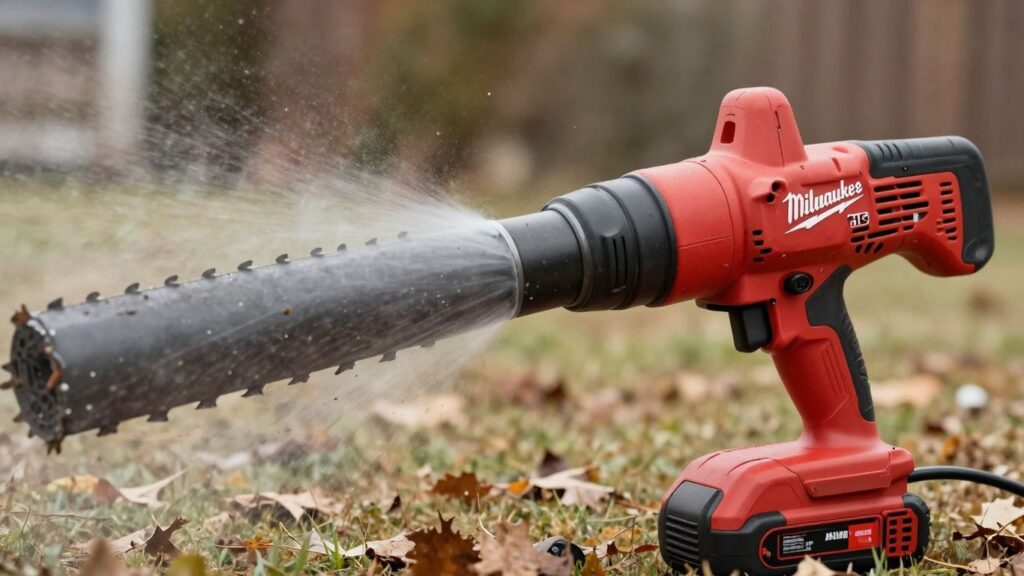
So, you’ve got this awesome Milwaukee M18 leaf blower, and you want it to keep running strong for as long as possible, right? It all comes down to how you treat the batteries. It’s not rocket science, but there are definitely some smart ways to handle them that make a big difference.
Proper Battery Storage Guidelines
When you’re not using your M18 batteries, where you put them matters. The best place is somewhere cool and dry, ideally between 40°F and 80°F. Think of it like storing fine wine – extremes are bad. Don’t leave them baking in the sun in your truck or out in the freezing garage. For longer periods when you won’t be using the blower, it’s better to store the batteries at a partial charge, around 40-80%, rather than fully charged or completely dead. Lithium-ion batteries don’t really like being at either extreme for too long.
Here’s a quick rundown:
- Temperature: Keep them between 40°F and 80°F.
- Charge Level: Aim for 40-80% for long-term storage.
- Environment: Avoid direct sunlight, extreme heat, or freezing cold.
Storing batteries properly helps maintain their chemical stability, which is key to their overall health and longevity.
Understanding Battery Capacity and Weight
When you’re looking at different M18 batteries, you’ll see different amp-hour (Ah) ratings, like 5.0Ah or 6.0Ah. Higher Ah means more juice, which translates to longer runtimes. For example, the M18 REDLITHIUM High Output XC6.0 offers about 30-40 minutes of use, while the M18 REDLITHIUM XC5.0 offers about 25-30 minutes. The trade-off for that extra runtime is usually a bit more weight. The XC6.0 is about 2.3 lbs, whereas the XC5.0 is closer to 1.6 lbs. If you’re doing a lot of blowing or have a large property, the extra runtime might be worth the slightly heavier battery. For quick jobs or if you prefer a lighter tool, the XC5.0 is a solid choice. You can find a great selection of these batteries at GenuineTools.
Charging Best Practices
Charging your batteries correctly is just as important as storing them. Milwaukee’s REDLINK Intelligence system in their chargers is pretty smart; it monitors the battery and adjusts the charge to protect the cells. Try not to let your batteries drain completely before recharging. It’s better for the lithium-ion chemistry to do partial charges. Also, using the Milwaukee chargers designed for these batteries is recommended, as they often have features to keep the battery cool during charging, which helps extend its life. If you’re using your blower frequently, having a couple of batteries on hand means you can always have one charging while you’re working with another.
So, Should You Get the Milwaukee M18 Leaf Blower?
Alright, let’s wrap this up. If you’re tired of messing with gas, the noise, and all the upkeep, the Milwaukee M18 FUEL leaf blower is definitely worth a look. It packs a serious punch, handling everything from light dust-ups to heavier leaf piles without breaking a sweat. Plus, it’s way quieter than those old gas models, which your neighbours will thank you for. While the battery life depends on what you’re using and which battery you’ve got, for most regular yard work, it gets the job done. It’s a solid choice if you want power, ease of use, and to ditch the gas can for good.
Frequently Asked Questions
How does the Milwaukee M18 leaf blower’s power stack up against gas models?
The Milwaukee M18 FUEL leaf blower, especially the dual battery model, is a real powerhouse. It can blow leaves at up to 145 miles per hour and move about 600 cubic feet of air per minute. This is right there with or even better than many gas-powered blowers you’d find.
Is the Milwaukee M18 leaf blower quieter than gas ones?
Yes, definitely! Gas leaf blowers can be super loud, often over 90 decibels, which is like being at a rock concert. The M18 leaf blower is much quieter, usually around 57 decibels. This means you can clear your yard without disturbing your neighbours too much.
What kind of battery life can I expect from the M18 leaf blower?
Battery life really depends on the battery you use and how hard you’re working the blower. For example, a 5.0Ah battery might give you about 25-30 minutes, while a bigger 6.0Ah High Output battery could last 30-40 minutes. It’s usually enough time for most regular yard jobs.
Do I need to do a lot of maintenance on the M18 leaf blower?
Not at all! That’s one of the best parts about battery-powered tools. You don’t have to deal with mixing gas and oil, changing spark plugs, or doing any engine tune-ups like you would with a gas blower. Mostly, you just need to take care of the batteries.
Which Milwaukee M18 battery is best for me?
If you have a larger yard or often deal with wet, heavy leaves, the M18 REDLITHIUM High Output XC6.0 battery is a great choice because it delivers more power and longer runtime. For smaller yards or general cleanup, the M18 REDLITHIUM XC5.0 battery is a good balance of performance and value. If you work in tough conditions with chemicals, the XC5.0 Resistant version offers extra protection.
How can I make my Milwaukee M18 batteries last longer?
To keep your batteries in good shape, try to store them somewhere cool, not too hot or too cold. It’s also best not to let them get completely dead before recharging. For longer storage, keeping them partly charged (around 40-80%) is better than fully charged or fully empty.