When buying a leaf blower, look for the right size, power, and features for your yard. Choose handheld models for small yards and light debris, or backpack models for large yards and heavy debris. Compare gas versus battery power, check CFM and MPH ratings, and prioritize comfort and extra functions.
Types of Leaf Blowers Explained
Choosing the right type of leaf blower can make all the difference in your yard cleanup efficiency. Each design offers distinct advantages depending on your property size and clearing needs.
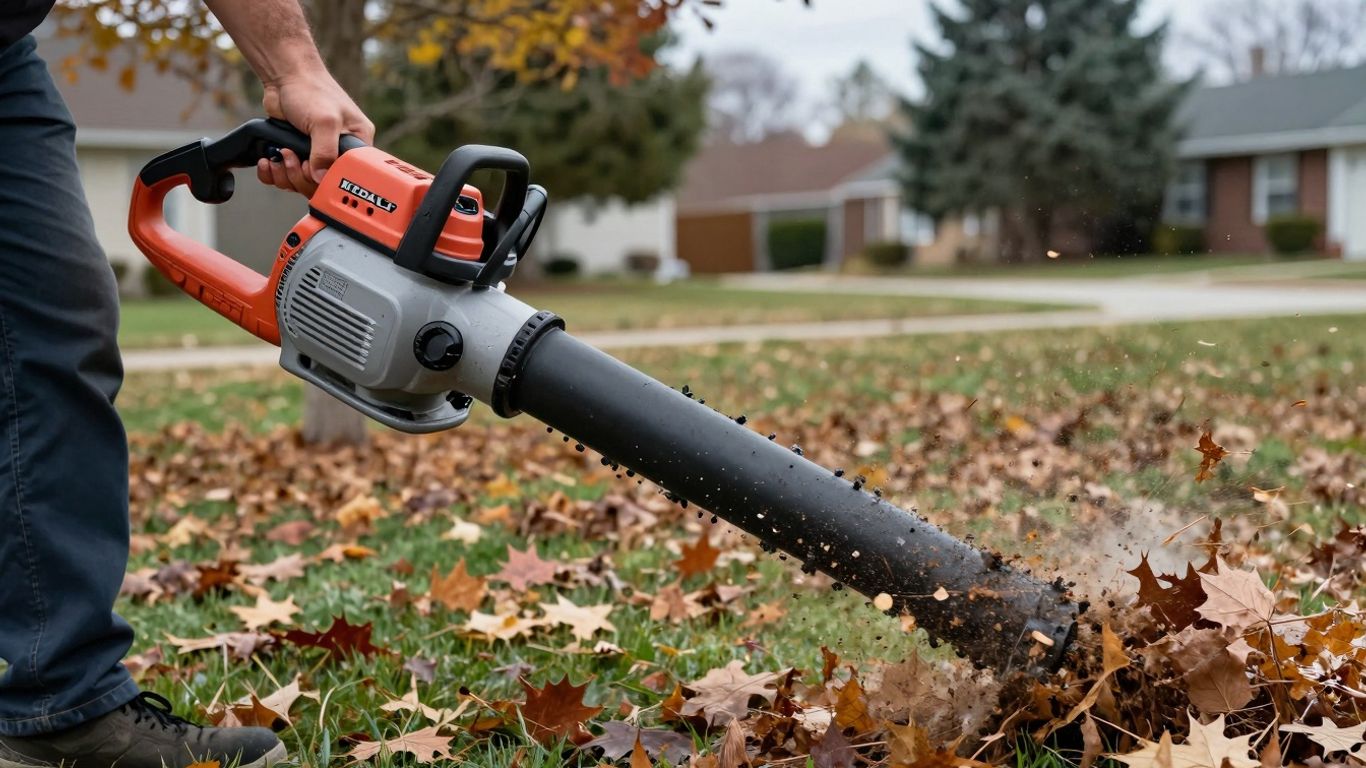
Handheld leaf blowers
These lightweight, portable units excel in maneuverability and convenience. Typically operating at 150-800 CFM and 75-260 MPH, handheld blowers are perfect for smaller properties and quick cleanup jobs. They come in three power variations:
- Corded electric models weigh about 8 pounds or less, cost between $50-$100, and offer consistent power without emissions.
- Cordless battery options provide freedom of movement without the limitations of a power cord, though they typically run for only about 30 minutes before needing a recharge.
- Gas-powered handhelds offer maximum mobility without charging, though they require regular maintenance and fuel mixing (for two-stroke engines).
For tight spaces like patios, flowerbeds, and smaller lawns, these agile tools offer excellent control without breaking your budget.
Backpack leaf blowers
When tackling larger properties or professional landscaping jobs, backpack blowers provide the perfect balance of power and comfort. Operating in a typical range of 400-1110 CFM and 150-240 MPH, these models distribute weight across your shoulders and back rather than straining your arms.
Most backpack models weigh around 17 pounds or more—almost twice as heavy as handheld gas blowers. Nevertheless, the ergonomic harness system makes them comfortable for extended use on larger properties. The price range for these powerful tools generally falls between $280 and $550, reflecting their professional-grade capabilities.
These blowers fall into two main categories: standard models for general professional use and high-performance models for commercial or industrial applications.
Walk-behind models
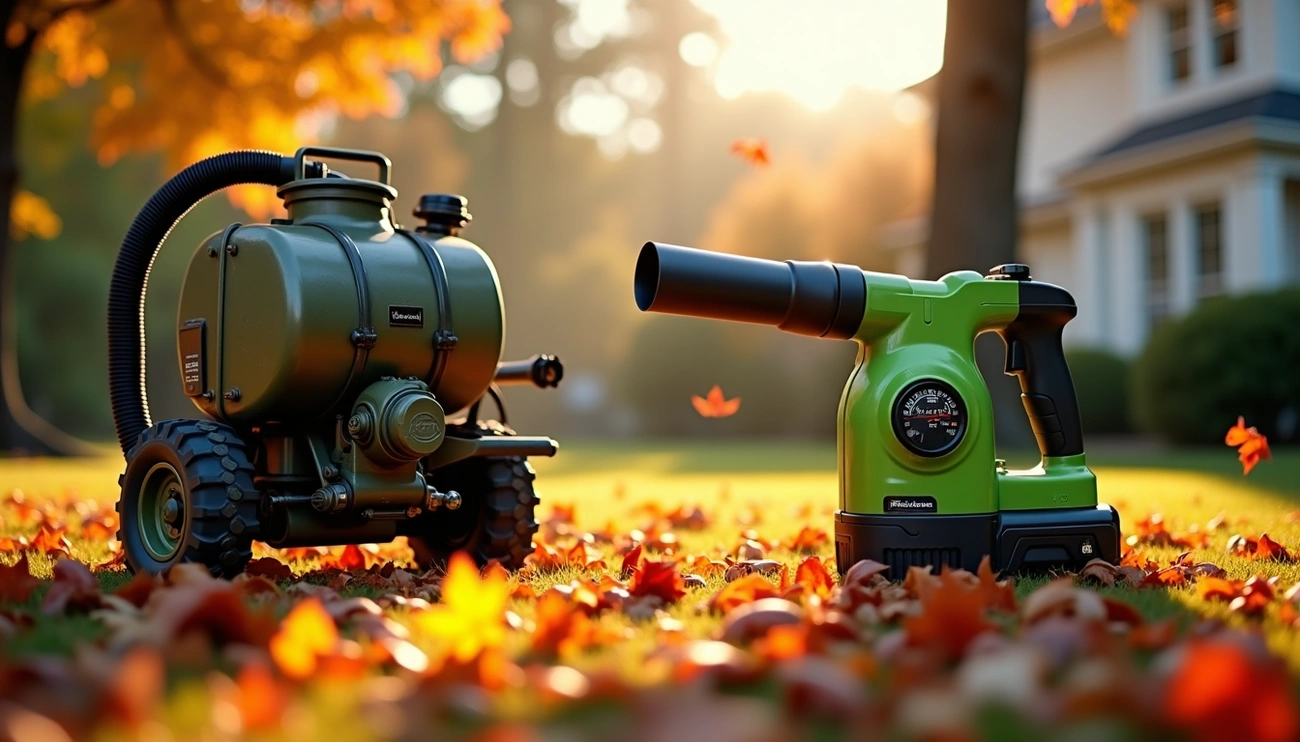
For extensive properties or commercial applications, walk-behind leaf blowers deliver exceptional clearing power. These wheeled units generate impressive air volume—many models produce up to 1200-2000 CFM with air velocity reaching 200 mph.
Despite their bulk (typically 100 pounds or more), these machines quickly clear large areas that would take significantly longer with handheld or backpack models. The price range for walk-behind blowers spans from $350 to $975, with self-propelled options available at the higher end.
Key features often include:
- 180-degree rotating nozzles for directional control
- Dashboard controls for airflow adjustment
- Turf-friendly wheels for lawn protection
- Self-propelled options with steering systems
Vacuum and mulcher combos
For those seeking versatility beyond just blowing leaves, vacuum-and-mulcher combination models offer a complete yard-cleanup solution. These systems collect debris through a vacuum tube and often include mulching capabilities that grind leaves and small twigs.
Many handheld models can switch between blowing and vacuuming modes with interchangeable attachments. Some models, like the WORX Trivac series, feature a metal impeller specifically designed for mulching performance.
The convenience of these combo units means less time spent raking and bagging. Look for models with reusable collection bags featuring wide openings for quick emptying. Some systems include zipper-free bags with roll-and-clip designs for simplified debris disposal.
When selecting your ideal leaf blower, consider your property size, typical debris volume, and storage space, along with your budget and physical capabilities. Each type offers specific advantages that make certain cleanup tasks significantly easier and more efficient.
Choosing the Right Power Source
The power source of your leaf blower fundamentally shapes its performance, mobility, and maintenance needs. Making an informed choice between gas, corded electric, and battery options ensures you’ll get a tool that aligns with your specific yard requirements.
Gas-powered blowers: pros and cons
Gas leaf blowers remain the go-to choice for demanding tasks and larger properties. These powerful machines excel at clearing heavy debris, such as wet leaves and small branches. With their robust engines, gas models deliver impressive performance without the constraints of cord length or battery life.
One major advantage is their extended run time—you can work continuously as long as you have fuel available. This makes gas blowers particularly suitable for properties with numerous trees or professional landscaping work. Furthermore, their mobility allows you to move freely around your yard without worrying about power outlets.
Nonetheless, gas blowers come with notable drawbacks. They tend to be louder than electric alternatives, often exceeding local noise ordinances. Regular maintenance is necessary, including refuelling, oil changes, and spark plug replacements. Additionally, their two-stroke engines emit pollutants like carbon monoxide and hydrocarbons, contributing to air pollution.
Corded electric blowers: when they work best
Corded electric blowers offer a reliable alternative for smaller yards where power outlets are accessible. These models provide consistent power output without the need for recharging or refuelling. Most residential yards can be effectively maintained with a corded blower, though it may struggle with large amounts of wet leaves.
The primary limitation is obvious—your movement is restricted to the length of the extension cord. Consequently, corded models are best suited for small to medium yards or areas near power sources.
Among their advantages, corded blowers are typically quieter than gas models, making them appropriate for residential areas with noise restrictions. They also require minimal maintenance and produce zero direct emissions during operation. In fact, corded electric blowers are generally more efficient than gas-powered alternatives.
Cordless battery blowers: freedom and limitations
Battery-powered leaf blowers combine mobility with environmental friendliness. These cordless tools allow unrestricted movement similar to gas blowers, yet operate quietly and produce no direct emissions. Recent advancements in battery technology have significantly improved their performance, making them viable for many residential needs.
The most evident constraint is battery life, which typically ranges from 20 to 45 minutes per charge depending on usage intensity. For larger properties, you may need additional batteries to complete your tasks without interruption. Fortunately, many manufacturers design their batteries to work across multiple tools, allowing you to build a compatible system of yard equipment.
Cordless blowers are generally lighter and easier to handle than gas models, with some weighing less than 5 pounds. Their minimal maintenance requirements—basically keeping batteries charged and the unit clean—make them particularly appealing to casual users.
Key Features to Look For
Beyond power source considerations, several key features will determine how effectively a leaf blower performs for your specific needs.
CFM vs MPH: what matters more
When examining leaf blower specifications, you’ll notice two primary metrics: CFM (Cubic Feet per Minute) and MPH (Miles Per Hour). CFM measures air volume—how much air the blower moves per minute—while MPH indicates air velocity or speed. Understanding the relationship between these measurements is crucial:
- High CFM (400-700) works best for moving large volumes of dry leaves across open spaces.
- High MPH (110-200) excels at dislodging wet, heavy, or stubborn debris.
For most residential applications, a blower with 400-700 CFM and 110-180 mph is sufficient. Ultimately, the ideal balance depends on your typical cleanup scenario rather than on maximizing a single metric.
Brushless motors and efficiency
Brushless motors represent a significant advancement in leaf blower technology. These motors deliver 40% more power while maintaining a more compact footprint than standard motors. Moreover, they operate more efficiently, extending runtime by up to 25%.
The increased efficiency translates to longer battery life—often twice as long as traditional brushed motors. For cordless models, this feature is especially valuable as it maximizes the utility of each battery charge.
Noise levels and local regulations
Noise restrictions have become increasingly common, with many communities limiting leaf blower operation. Most regulations specify a maximum decibel level, typically around 65 decibels. Accordingly, manufacturers now highlight noise ratings on product packaging.
Electric and battery-powered blowers generally produce less noise than their gas counterparts, which can exceed 100 decibels. Before purchasing, verify your local ordinances to ensure compliance and avoid potential fines.
Nozzle design and attachments
Nozzle selection significantly impacts performance. Round nozzles maximize air volume (CFM) for moving loose debris across large areas, whereas flat nozzles increase air speed (MPH) for tackling stubborn materials.
Many models offer interchangeable nozzles or attachments for specific tasks. Some even include specialized tools for gutter cleaning or vacuum capabilities. The ability to adjust your equipment based on the job at hand enhances versatility and efficiency.
Speed control and ease of use
Variable-speed controls allow precise adjustment of airflow intensity—use lower settings for delicate areas like flower beds and higher settings for wet leaves on pavement. Features like cruise control help prevent finger fatigue during extended use, while turbo or boost buttons provide extra power to clear stubborn debris.
Weight and balance also factor into usability. Look for ergonomic designs with padded grips and balanced weight distribution to minimize strain during extended cleanup sessions. Essentially, the right combination of features will make yard maintenance noticeably easier and more efficient.
How to Compare Leaf Blower Models
Making an informed choice starts with systematically comparing leaf blower models to your specific needs. Once you understand the basic types and features, the next step is matching those specifications to your property requirements.
Match blower specs to yard size
First and foremost, your property size determines which leaf blower will work best. For small yards under a quarter-acre, a lightweight electric or battery-powered handheld model should suffice. Medium yards between a quarter and half acre typically require more powerful handheld gas models or backpack blowers. For properties larger than half an acre, consider backpack blowers or walk-behind models for maximum efficiency.
In terms of power specifications:
- Small yards/patios (up to 2,000 sq. ft.): 150-200 CFM and 150-200 MPH
- Medium yards (2,000-5,000 sq. ft.): 200-400 CFM and 180+ MPH
- Large properties (5,000+ sq. ft.): 400+ CFM and 200+ MPH
Professional landscapers often select models with 500+ CFM and 200+ MPH for extensive properties, yet most homeowners dealing with dry leaves can achieve excellent results with 150-500 CFM and 110-190 MPH.
Understanding product labels and ratings
Whenever examining product specifications, look beyond just the MPH and CFM numbers. Interestingly, manufacturers may measure these figures differently—some record them from the end of the blower tube, while others measure air directly off the motor, potentially inflating the numbers.
Instead of focusing solely on these figures, check the “sweeping and loosening scores” in consumer ratings to see how effectively a model actually clears leaves. After all, a blower producing hurricane-force winds isn’t helpful if it can’t properly channel that force into an effective airstream
What size leaf blower do I need?
To determine the appropriate size, consider both your yard dimensions and the typical debris you encounter. For properties with wet climates or stubborn debris like pine needles, opt for models with higher MPH ratings. Whenever dealing with large volumes of leaves across wide spaces, prioritize higher CFM ratings.
For a half-acre lot with average leaf coverage, a model with approximately 400 CFM and 180 MPH is sufficient. Homes surrounded by dense tree coverage may need more powerful options regardless of yard size.
Ultimately, the right leaf blower balances your property’s characteristics with your physical capabilities and budget constraints. Prior to purchase, test the weight and handling to ensure comfort during extended use.
Maintenance and Safety Tips
Proper maintenance extends the life of your leaf blower investment and ensures optimal performance season after season. By following these essential care routines, you’ll maximize your tool’s efficiency and safety.
Gas blower maintenance checklist
For gas-powered models, regular maintenance prevents costly repairs. After every 10 hours of use, clean the air filter with mild dish soap and water, then coat it with clean SAE 30 oil once dry. Check and clean the spark plug after approximately 25 hours of operation.
For four-cycle engines, change the oil when the unit is slightly warm for better drainage. Monthly tasks should include replacing the fuel filter and cleaning the carburetor and fan blades.
Electric blower care tips
Electric models require less maintenance than their gas counterparts, yet still need attention. Regularly inspect for damaged parts or loose connections. For battery-powered units, maintain proper charging cycles and avoid completely draining the battery.
Keep air intakes clear of debris to prevent overheating, which can permanently damage internal components. Wipe down the exterior with a clean cloth after each use.
Storage and seasonal upkeep
Before seasonal storage, gas blowers should either be emptied of fuel or filled with stabilized fuel. For battery models, remove the battery and store it at approximately 40-60% charge in a cool, dry place. Check batteries every couple of months during extended storage. Store all blowers in well-ventilated, dry areas away from extreme temperatures.
Safety gear and best practices
Always wear eye protection to shield your eyes from flying debris. Add ear protection, especially with louder gas models that can exceed 100 decibels. Wear gloves, long pants, and long-sleeved shirts for additional protection. Before starting, check your surroundings for hazards and keep others away from the work area. Maintain proper posture—stand upright with relaxed shoulders and slightly bent knees.
Conclusion
Choosing the right leaf blower ultimately depends on understanding your specific needs and property requirements. Certainly, the perfect balance between power, mobility, and price exists for every yard maintenance situation. Gas-powered models offer maximum power and mobility for larger properties, while electric and battery options provide quieter, emission-free alternatives for smaller yards.
Rather than focusing exclusively on high MPH or CFM numbers, match these specifications to your actual clearing needs. For instance, a model with 400-700 CFM and 110-180 MPH will handle most residential tasks effectively. Additionally, consider practical features such as variable-speed controls, ergonomic design, and noise levels that comply with local regulations.
Before making your final decision, assess your property size, typical debris volume, and physical capabilities. Consequently, you’ll select a tool that makes yard maintenance significantly easier rather than one that causes frustration.